 Lynden Siding
 Siding Built for the Way Laurel Weather Actually Behaves
Homes in the Laurel area near Lynden sit in a part of Whatcom County that never quite dries out. Moist air moves in off the water and settles into the low-lying farmland and tree-lined lots that make this part of the county so livable — and so hard on exterior building materials. Add driving rain that comes in sideways during winter storms, and a moss season that can stretch from October well into spring, and you have a climate that punishes any siding product installed without real attention to water management.
This isn't a page about siding in general. It's about what siding installation specifically needs to look like for a home in Laurel, given what this micro-climate does to a wall system year after year. The right product, installed the wrong way, will still fail here. The wrong product, installed perfectly, will still cost you more in maintenance than it should. Getting both right is the whole job.
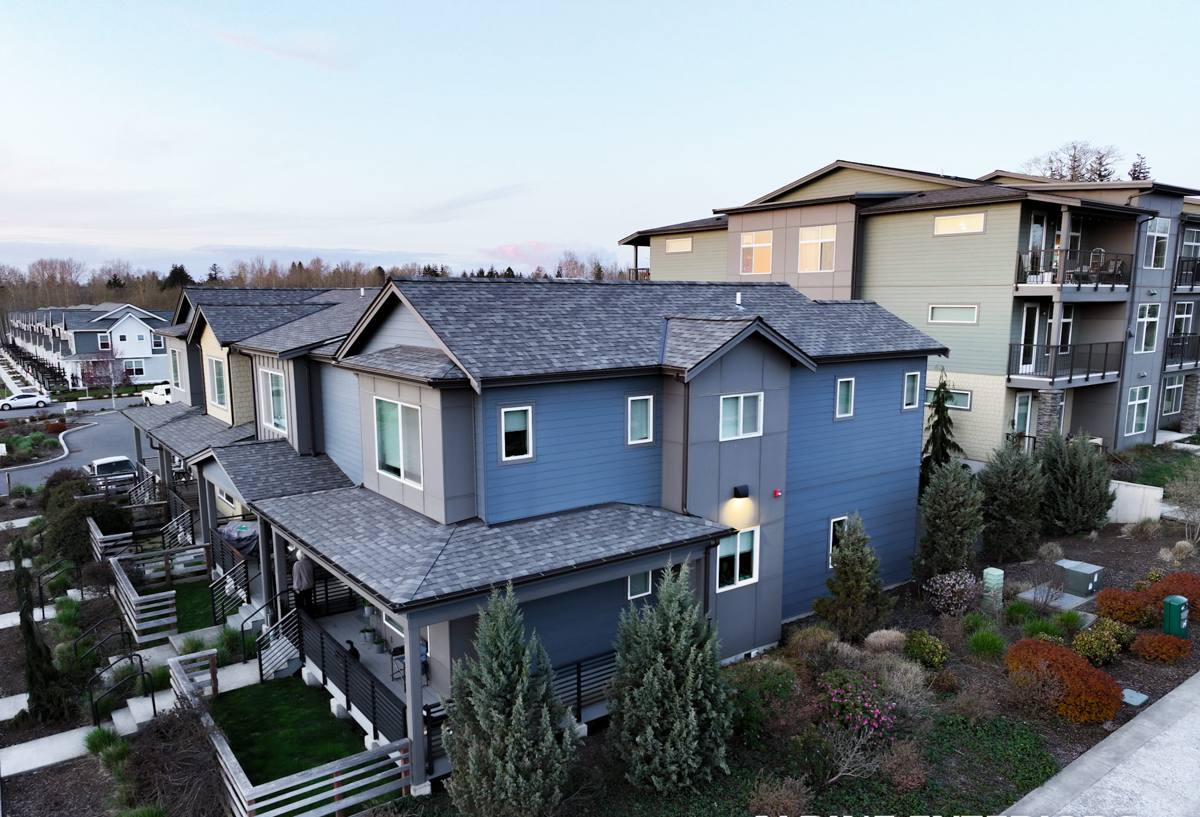
What Laurel's Climate Does to a Wall System
Salt Air and Moisture Load
Coastal-influenced air carries moisture and mineral content that accelerates corrosion on fasteners, trim, and any exposed metal flashing. Over time, this moisture also finds its way into seams, laps, and butt joints that weren't sealed or flashed correctly at installation. Siding doesn't fail all at once from salt air — it fails slowly, at the weak points a rushed installer left behind.
Driving Rain and Wind-Driven Water
Whatcom County storms don't just drop rain straight down — wind pushes it sideways into wall assemblies, forcing water up under laps and behind trim if the drainage plane isn't built correctly. A siding job that looks fine in dry weather can leak for years before anyone notices rot behind the wall.
The Long Moss Season
Shaded, tree-covered lots common around Laurel keep siding damp longer after every rain event. Moss and algae take hold fastest on north-facing walls and anywhere siding stays wet without enough sun or airflow to dry between storms. Left unchecked, organic growth traps moisture against the surface and accelerates whatever material is underneath it.
What Correct Siding Installation Actually Involves
A siding job is only as good as the water management system underneath it. The visible siding is the last layer installed and the first thing anyone sees — but it's the layers behind it that determine whether a Laurel home stays dry for the next 30 years or starts showing problems in five.
- A continuous, correctly lapped weather-resistive barrier (house wrap) with no gaps or reverse laps
- Properly flashed windows, doors, and any wall penetration, with flashing that directs water out and away, not into the wall cavity
- Correct fastener type, spacing, and depth — over-driven or under-driven fasteners are one of the most common causes of premature siding failure
- Adequate clearance between the bottom of the siding and grade, decks, patios, and roof lines, so water and moss don't have a running start
- Sealed and back-primed cut ends and joints, especially at corners and trim transitions
- Rain-screen or drainage gap detailing where the wall assembly calls for it, to let any incidental moisture drain and the wall breathe
Skip any one of these steps and it doesn't matter how good the siding product is. This is where most callbacks and premature failures actually originate — not the material, the installation.
Why We Install Only James Hardie Fiber Cement
We install one siding system on Laurel homes: James Hardie fiber cement, in the HZ product lines engineered for this climate zone. That's not a marketing preference — it's a decision based on how different siding materials actually perform in sustained damp, coastal-influenced conditions over decades, not just the first few years.
Fiber cement is non-combustible, dimensionally stable, and doesn't absorb and swell with moisture the way wood-based products can. The factory-applied ColorPlus finish is baked on under controlled conditions, which matters in a climate where field-applied paint has to cure and adhere in unpredictable weather. Hardie's HZ5 line in particular is engineered for regions with more moisture exposure — thicker moisture-management characteristics and a warranty structure built around that reality.
We don't install LP SmartSide, vinyl, Cemplank, Allura, primed spruce, or cedar. Each of those has legitimate uses somewhere, and we're not here to trash a competitor's product line. But we've made a professional call: for the moisture load, salt air, and moss exposure a Laurel home deals with every year, fiber cement from a manufacturer with a track record and engineered regional product lines is what we're willing to put our name behind. A strong, transferable warranty only means something if the product underneath it is built to actually last that long.
Cost Factors for a Laurel Siding Project
Every home is different, but the same handful of factors drive most of the cost variation we see on Laurel projects. This isn't a quote — it's a way to think about where your number will land before we're standing at your house.
| Factor | Why It Matters Here |
|---|---|
| Home size and wall complexity | More corners, gables, and dormers mean more cuts, more flashing detail, and more labor time |
| Existing siding removal | Tear-off and disposal of old siding, especially if it's hiding moisture damage, adds time and sometimes sheathing repair |
| Moisture damage found underneath | Rot or compromised sheathing found once old siding is off has to be repaired before new siding goes on — this is common on older Laurel-area homes |
| Product line and profile | HZ5 vs. HZ10, lap width, and factory finish selection all affect material cost |
| Trim, corner, and soffit detail | More architectural detail means more precision work at transitions where water intrusion risk is highest |
| Access and site conditions | Mature trees, fencing, and tight lot lines common around Laurel can affect scaffolding and staging time |
Our Installation Process
1. On-Site Assessment
We walk the home, check existing siding and trim condition, look for signs of past moisture intrusion, and talk through what the wall assembly needs given the home's exposure to wind, shade, and rain.
2. Tear-Off and Sheathing Check
Old siding comes off and we inspect the sheathing underneath before anything new goes up. Any soft or damaged sheathing gets repaired — installing new siding over compromised sheathing just hides a bigger problem.
3. Weather-Resistive Barrier and Flashing
House wrap goes on with correct laps and taped seams, followed by flashing at every window, door, and penetration. This layer does the real waterproofing work — the siding is the second line of defense, not the first.
4. Hardie Installation to Manufacturer Spec
Panels and lap siding go up with correct fastener spacing, clearances, and joint treatment, following James Hardie's installation instructions to the letter — which is also what keeps the manufacturer's warranty intact.
5. Trim, Caulking, and Final Detail
Corners, trim, and butt joints get sealed correctly. This is where a rushed crew cuts corners and where most future leaks originate if it's done wrong.
6. Final Walkthrough
We walk the finished job with the homeowner, point out what was done and why, and answer questions about care going forward.
Signs a Laurel Home May Need New Siding
- Persistent moss or algae growth that returns quickly after cleaning
- Visible warping, bubbling, or soft spots, especially on shaded or north-facing walls
- Paint that's peeling or failing faster than it should between repaints
- Cracked or separating caulk lines at trim and corners
- Rising energy bills that suggest the wall assembly isn't sealing the way it used to
- Visible rot or staining at the base of walls, near grade, or below deck ledgers
Living With Hardie Siding Through Moss Season
Correctly installed fiber cement siding doesn't stop moss and algae from landing on a shaded wall — nothing does, in this climate. What it does is give you a surface that handles periodic cleaning without degrading, and a factory finish that doesn't need repainting every few years just to keep looking right. A gentle wash once or twice a year on the shadiest walls, along with keeping nearby vegetation trimmed back for airflow, is typically enough to keep growth from taking hold long-term.
Why Hiring a Crew That Already Works Laurel Matters
A crew that installs siding across different climates might do fine work in general, but the details that matter most in Laurel — flashing sequencing for wind-driven rain, clearance requirements given shaded, damp lot conditions, fastener choices that hold up to salt-influenced air — are the details a crew learns by working this specific ground repeatedly. We're not guessing at what this climate does to a wall assembly. We've seen it, and we build accordingly.
If your home is due for new siding, we'd rather walk your property and give you a straight answer than sell you on a product that isn't right for where you live. Reach out for a free, no-pressure estimate — we'll look at your home's actual exposure and tell you what it needs.