 Lynden Siding
 Why Siding Fails Faster in the Nooksack Area
Nooksack sits in the river valley just east of Lynden, in a part of Whatcom County where the weather doesn't do anything gently. Winters bring long stretches of rain that comes in sideways more often than straight down, summers are short, and the transition seasons stay damp for weeks at a time. Add in the shade from mature trees and windbreak rows common on farm and rural properties out here, and you get siding that dries out slower than it would in a more open, sunnier location. That slower drying cycle is the root cause behind most of the repair calls we see in this area.
Driving rain and wind-driven moisture
Whatcom County's proximity to the Salish Sea means storms often arrive with real wind behind the rain, not just falling straight down. Wind-driven rain finds every gap in caulking, every loose butt joint, and every spot where flashing was skipped or installed short. Over years, that repeated wetting works its way behind the siding rather than staying on the surface, which is why so many repair jobs turn out to be about hidden moisture damage rather than anything visibly wrong from the driveway.
Moss, algae, and the long gray season
The same conditions that make Whatcom County green also make it hospitable to moss and algae on anything that stays damp and shaded for long periods. On siding, that growth does more than look bad. Moss holds moisture directly against the surface, and on materials that aren't built to handle constant dampness — untreated wood, some engineered wood products, and aging caulk joints — that sustained contact accelerates rot and finish breakdown well beyond what the same house would see in a drier climate.
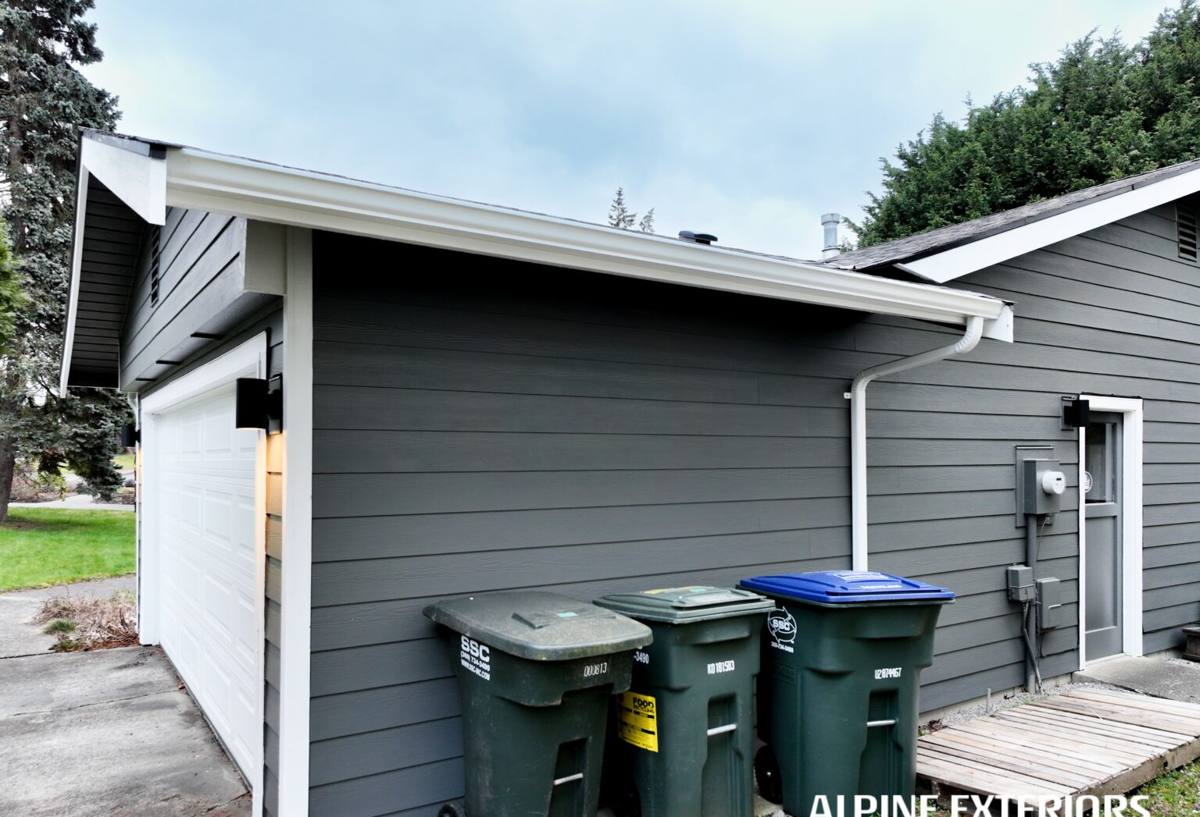
Signs Your Siding Needs Repair
Most homeowners call us after noticing one obvious problem, but a proper inspection usually turns up two or three related issues nearby. Here's what we look for on a Nooksack-area repair visit:
- Soft or spongy spots when you press on the siding, especially near the bottom courses or around window and door trim
- Visible cracking, splitting, or buckling in individual boards or panels
- Peeling, bubbling, or chalky paint that keeps coming back in the same spots even after repainting
- Dark staining or streaking below seams, nail heads, or trim joints — a sign water is tracking through, not just sitting on the surface
- Persistent moss or algae growth that returns within a season or two of cleaning
- Gaps opening up at caulked joints, corners, or where siding meets trim, windows, or the foundation
- A musty smell or visible mold on the interior wall directly behind an exterior trouble spot
- Impact damage from storm debris, falling branches, or equipment contact, common on rural and tree-lined properties
What a Correct Siding Repair Actually Involves
Finding the real cause, not just patching the surface
A repair that only replaces the damaged board without figuring out why it failed is a repair you'll be paying for again in a few years. Before we touch anything, we pull back enough siding to see what's happening underneath: is the house wrap intact, is flashing present and lapped correctly at windows and penetrations, is there a gap for water to drain and dry, or has moisture been trapped against the sheathing for a while? On older homes in this area, we sometimes find that the original installation skipped basic drainage details that were standard practice even at the time — which is often the actual reason a section keeps failing no matter how many times it's patched.
Matching material, texture, and color
Once we know the cause is addressed, the visible repair still has to look right. That means matching plank width, exposure, and texture to the surrounding siding, and getting the color right — not just close. On homes finished with a factory coating system, we work from the manufacturer's color line to find an exact or near-exact match rather than guessing with a field-mixed paint that will visibly shift tone within a year or two.
Repair or Replace? How We Decide
Not every damaged section needs a full re-side, and not every problem is a quick patch. We walk through the same factors on every job to give you an honest recommendation instead of defaulting to the biggest possible scope of work.
| Factor | Leans toward repair | Leans toward replacement |
|---|---|---|
| Extent of damage | Isolated to a few boards or one wall section | Spread across multiple elevations |
| Underlying sheathing | Dry, solid, no rot found | Soft, delaminated, or water-stained over a wide area |
| Age of existing siding | Mid-life, otherwise sound material | Near or past its expected service life |
| Cause of failure | One-time event (impact, isolated flashing gap) | Systemic issue (widespread original install defects) |
| Material match available | Product still made or close match exists | Discontinued profile or unmatchable color |
Common Nooksack Repair Scenarios We See
Because this area has a mix of older farmhouses, mid-century homes, and newer construction, we run into a wide range of siding types on repair calls — not just one product. A few patterns come up regularly:
- Cracked or shrunken caulking at trim and corner joints that has let water track behind the siding for one or more wet seasons
- Rot at the bottom courses of wood or wood-composite siding, usually where it sits too close to grade, a deck, or a downspout discharge point
- Impact damage from storm debris or tree limbs, common on properties with mature trees or windbreak rows
- Butt joints that were never properly flashed or sealed during the original install, now showing staining directly below
- Older engineered wood or vinyl siding that has warped or delaminated in ways that can't be spot-repaired without replacing the affected run
Why We Repair — and Rebuild — Almost Exclusively with James Hardie Fiber Cement
When a repair calls for replacing more than a board or two, the material you replace it with matters as much as the workmanship. We install James Hardie fiber cement exclusively — we don't carry LP SmartSide, vinyl, Cemplank, Allura, or unfinished wood siding. That's a deliberate standard, not a lack of options. Fiber cement doesn't rot, doesn't feed moss and algae the way untreated or lightly treated wood products can, and it holds up to the wind-driven rain this region sees without the ongoing maintenance burden of repainting and recaulking every few years. Hardie's ColorPlus factory finish also means a color-matched repair section will weather at roughly the same rate as the surrounding siding, instead of a field-painted patch fading or yellowing at a different pace and standing out within a season or two.
If your home currently has a different siding product and needs a small, isolated repair, we'll still repair it honestly and correctly — we're not going to talk you into a full re-side for a single damaged board. But when the scope grows into a wall section or more, we'll walk you through why we'd recommend transitioning that area to Hardie rather than continuing to chase repairs on a product that's already showing its age.
Our Repair Process
- On-site inspection where we identify every affected area, not just the spot you called about, and check behind the siding where damage suggests moisture intrusion
- A written explanation of what we found, what caused it, and a straightforward repair-or-replace recommendation with reasoning you can follow
- A clear estimate broken out by scope, so you know what you're paying for before work starts
- Repair work itself: removing damaged material, correcting the underlying issue (flashing, house wrap, drainage gap, or trim detail), and installing matched replacement material
- Final sealing and finish work, including color-matched caulking and touch-up so the repair blends in rather than standing out
- A walkthrough with you before we consider the job done
Why Hiring a Crew That Already Works This Area Matters
Siding repair done wrong is expensive in a way that isn't obvious until years later — a patch that traps moisture instead of shedding it can do more damage than the original problem. A crew that regularly works the Lynden and Nooksack area already understands how this climate behaves on real houses here: which directions take the worst of the wind-driven rain, how fast moss reestablishes on shaded walls, and how older homes in this part of Whatcom County were typically built and flashed the first time around. That local pattern recognition is what separates a repair that lasts from one that just moves the problem a few years down the road.
If you've got a section of siding that's cracked, staining, growing moss it shouldn't, or just doesn't look right anymore, we're happy to take a look and give you a straight answer — repair or replace, no pressure either way. Reach out for a free estimate using the form below.