 Lynden Siding
 Nooksack's Climate Is Hard on Decks — Here's Why
Homes in and around Nooksack sit in one of the wetter, greener corners of Whatcom County, and that's exactly the combination that shortens a deck's life. Long stretches of driving rain soak into end grain and fastener holes, marine-influenced humidity off the Sound keeps wood damp for days after a storm passes, and shaded, tree-lined lots grow moss faster than almost anywhere else in the state. Moss isn't just a cosmetic problem — it holds moisture against the decking surface, keeps boards from drying out between rains, and accelerates rot underneath a deck that still looks fine from a distance.
We see the same failure pattern on deck after deck out here: the surface boards look weathered but survivable, while the real damage is happening in the framing, ledger connection, and footings underneath — the parts nobody checks until a board flexes or a post feels soft. A deck built without that climate in mind might look identical to one built correctly, right up until it isn't.
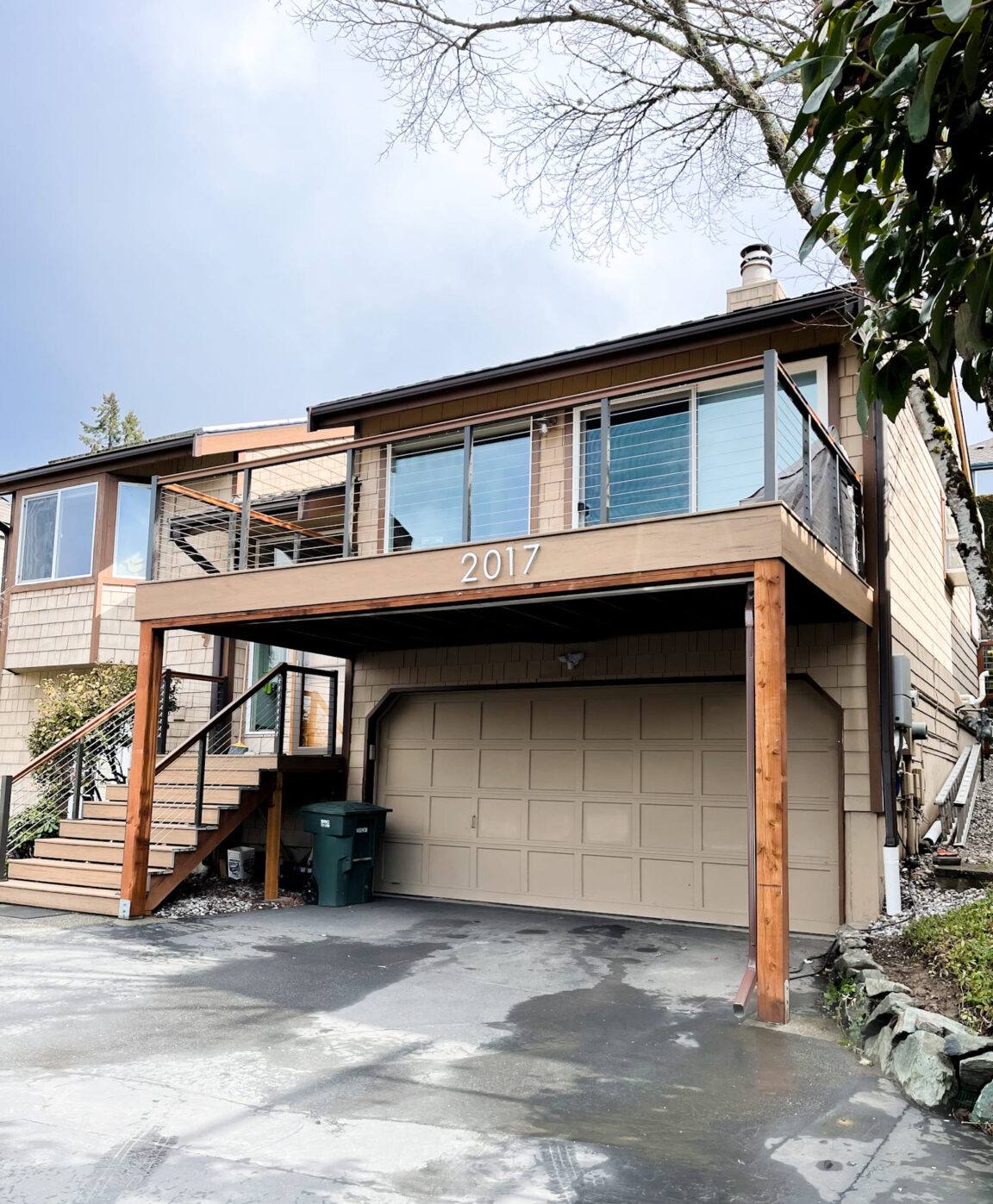
Signs a Nooksack Deck Needs Replacement, Not Just Repair
Not every tired-looking deck needs a full teardown. But there's a point where patching individual boards is just delaying a bigger, more expensive problem. Walk your deck and check for these:
- Soft or spongy spots when you press on decking boards, especially near the house or in shaded corners
- Persistent green or black moss/algae staining that comes back within weeks of cleaning
- Visible gaps, cupping, or splitting concentrated on the north or shaded side of the deck
- Rust streaking or loose fasteners around ledger boards and joist hangers
- A ledger board attachment to the house that looks original, undersized, or poorly flashed
- Posts or footings that feel loose, or a deck that has a noticeable bounce when you walk across it
- Railings that wiggle at the post connection — often a sign the post itself has begun to rot at the base
If you're seeing two or more of these, especially the structural ones, repair usually turns into a patchwork of short-term fixes. Replacement lets us correct the underlying moisture and drainage issues instead of building new decking on top of a compromised frame.
What a Correct Deck Replacement Actually Involves
Footings and Substructure
This is the part that never gets photographed and matters the most. In our wetter Whatcom County soils, footings need to be sized and set below frost depth with proper drainage around them, not just poured to whatever depth was convenient the first time. We also size joists and beams for our snow and wind load requirements, not the minimum a big-box span table allows — a deck that's marginal on day one only gets worse as wood ages and moisture cycles through it.
Ledger Board and Flashing
The ledger — where the deck attaches to the house — is the single most common failure point on older decks in this area, and it's almost always a moisture problem, not a structural one. Correct flashing, with proper step flashing integrated behind the siding or trim and a real gap for water to escape, keeps rain from working its way behind the band board. We don't caulk over a bad ledger connection and call it done; we rebuild the flashing detail so water sheds away from the house instead of pooling against it.
Decking Material Selection
What goes on top matters, but it matters less than what's underneath. That said, in a climate that grows moss on nearly any horizontal surface, material choice affects how much maintenance you'll actually do versus how much you'll wish you'd done. We'll walk through the honest trade-offs for your budget and how much shade your deck sits in, since a fully shaded deck under fir trees behaves very differently than one that gets afternoon sun.
Comparing Decking Materials for This Climate
| Material | Moisture Behavior | Moss/Algae Resistance | Maintenance |
|---|---|---|---|
| Pressure-treated wood | Absorbs and releases moisture; prone to cupping if not sealed regularly | Low — needs regular cleaning and treatment | Annual cleaning, periodic staining/sealing |
| Cedar | Naturally moisture-resistant but still an organic surface | Moderate — better than treated pine, still needs upkeep in shade | Periodic cleaning and finish renewal |
| Capped composite | Doesn't absorb water into the core; surface can still hold surface moisture | Moderate to good, varies by brand and cap quality | Occasional wash; no staining or sealing |
| PVC decking | Fully non-organic core; sheds water at the surface | Good — least food source for moss and algae | Lowest — mostly rinsing off debris |
None of these materials are moss-proof if a deck sits in constant shade under conifers with poor airflow — that's a design and placement issue as much as a material one. We'll be straightforward with you about which option fits your budget and your deck's actual sun exposure, rather than steering everyone toward the most expensive product.
Cost Factors Homeowners Should Actually Weigh
| Factor | Why It Changes the Price |
|---|---|
| Deck size and shape | Multiple levels, angles, or curves add framing complexity and labor time |
| Height off grade | Taller decks need larger footings, more bracing, and often guardrails to code |
| Ledger and siding condition | Rotted band boards or damaged siding behind the ledger add repair scope before rebuilding can start |
| Decking material | Treated wood costs less upfront; composite and PVC cost more but reduce upkeep over the deck's life |
| Railing style | Cable, glass, and composite rail systems cost more than standard wood or metal baluster rail |
| Access to the site | Tight side yards or decks over slopes take longer to frame and haul materials to |
We give a firm, itemized estimate after seeing the deck in person — not a phone quote based on square footage alone, since the ledger and substructure condition is usually what actually drives the number.
How Our Deck Replacement Process Works
- On-site evaluation. We inspect the existing deck, ledger connection, footings, and framing to confirm replacement is the right call and identify anything hidden — like siding damage behind the ledger — before we quote.
- Design and material walkthrough. We go over layout, railing options, and decking material trade-offs in plain terms, based on your budget and how much sun or shade the deck actually gets.
- Permitting. Deck replacements of most sizes require a building permit; we handle the application and inspections so you're not chasing paperwork.
- Demolition and disposal. Old decking, framing, and hardware are removed and hauled off, with the site protected so demolition debris doesn't damage landscaping or siding.
- Rebuild from the ground up. New footings, framing, ledger flashing, decking, and railing are installed to current code, not just matched to what was there before.
- Final walkthrough. We check every rail connection, stair, and board fastener with you before calling the job finished.
Permits and Whatcom County Requirements
Most deck replacements in Whatcom County — including work in and around Lynden and Nooksack — require a building permit, particularly when footings, framing, or railings are being rebuilt rather than just re-decked. Permit requirements can shift based on deck height, size, and proximity to property lines, so we pull the correct permit for your specific project rather than assuming a blanket approach. Skipping this step might save a little time up front, but it creates real problems later — unpermitted decks can complicate a home sale or an insurance claim down the road.
Setbacks and Site-Specific Factors
Rural and semi-rural lots around Nooksack often have more room to work with than in-town lots, but setback requirements from property lines still apply, and septic system locations can limit where footings can go. We check these details during the site evaluation so there are no surprises once permitting starts.
Why Hiring a Crew That Already Works in Nooksack Matters
Deck framing isn't regional, but how a deck holds up over time absolutely is. A crew that builds decks in drier parts of the state may not think twice about drainage details that matter a great deal here — ledger flashing, footing drainage, and gaps between decking boards that let water and debris pass through instead of collecting moss and organic buildup. We work on homes throughout Lynden and the surrounding Whatcom County communities, including Nooksack, and we design every deck assuming it will spend a lot of its life wet, shaded, and exposed to moss-friendly conditions — because that's the reality here, not the exception.
Knowing the area also means knowing what tends to go wrong first. Ledger rot near the kitchen slider, footing movement on lots with heavier clay soil, moss buildup on the shaded side of a deck under mature trees — these aren't hypotheticals, they're patterns we plan around from the first site visit.
Maintaining Your New Deck
Whatever material you choose, a little seasonal upkeep goes a long way in this climate:
- Sweep debris and needles off the deck regularly, especially in fall — trapped organic matter is what feeds moss growth
- Rinse or lightly scrub composite and PVC decking a couple times a year to prevent surface film buildup
- Re-seal or stain wood decking on the schedule recommended for the product, not just when it looks faded
- Keep gutters and downspouts near the deck clear so runoff isn't dumping directly onto or under it
- Check railing posts and stair connections annually for movement, especially after a hard winter
If your deck is showing its age or you're just planning ahead, we're happy to take a look and give you an honest read on repair versus replacement — no pressure, no upsell. Fill out the form below for a free estimate on your Nooksack deck replacement.