 Lynden Siding
 Why Blaine Roofs Wear Differently Than Roofs Inland
Blaine sits close to the water and close to the Canadian border, which puts homes there in a different weather pattern than roofs even a short drive inland in Whatcom County. The salt content in the coastal air, the frequency of wind-driven rain coming off the water, and the amount of shade and dampness that keeps moss growing for most of the year all add up to faster wear on a roofing system. A roof built the same way you'd build one in a drier, more sheltered part of the county simply won't hold up as long out here. We've installed and repaired roofs across Whatcom County long enough to know that Blaine homes need a few specific things done right — not extra upsells, just the correct materials and details in the right places.
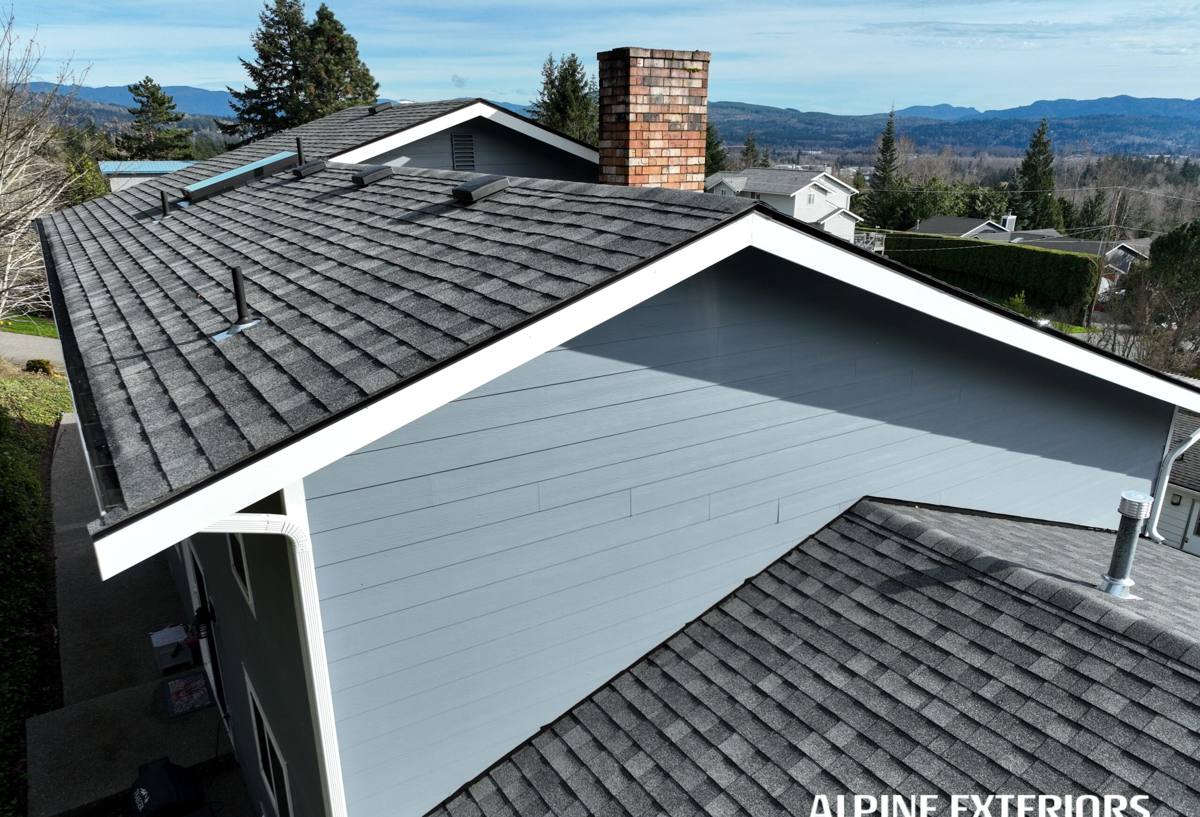
What Salt Air, Rain, and Moss Actually Do to a Roof
Salt Air and Metal Components
Salt in the air accelerates corrosion on any exposed metal — flashing, fasteners, vent caps, gutter hardware. Standard galvanized fasteners and thin flashing can start showing rust and pitting years before they would inland. This isn't a dramatic failure; it's a slow one, and it usually shows up first as small rust streaks below flashing or nail heads working loose as the metal degrades around them.
Wind-Driven Rain and Water Intrusion Points
Rain that comes in sideways behaves differently than rain that falls straight down. It gets pushed up under shingle tabs, into valleys, and around any penetration — vent pipes, chimneys, skylights — that isn't flashed and sealed correctly. A roof that would be watertight in calmer weather can still leak in a Blaine-style storm if the flashing details weren't built for wind-driven conditions in the first place.
Moss, Shade, and Trapped Moisture
Whatcom County's moss season runs long, and shaded, north-facing, or tree-covered roof sections in and around Blaine barely dry out between rain events. Moss holds moisture directly against the shingle surface, which shortens shingle life, and moss growing under tabs or around fasteners can physically lift material and create a path for water. Left unaddressed for years, moss buildup is one of the more common reasons a roof needs full replacement earlier than its rated lifespan would suggest.
Signs Your Blaine Home Needs a New Roof, Not Another Repair
Repairs make sense when the damage is isolated and the rest of the roofing system is sound. Full replacement makes sense once the damage is spread out, the materials are past their functional life, or repairs would just be patching symptoms of a bigger problem. Signs it's time to talk about replacement rather than another patch:
- Granule loss heavy enough that you can see bare or shiny patches across multiple slopes, not just one spot
- Shingles that are cracked, curling, or brittle in more than one area of the roof
- Persistent moss coverage that comes back within a season or two of cleaning, even after treatment
- Rust staining or visible corrosion on flashing, vent caps, or exposed fasteners
- Soft spots, sagging, or spongy decking felt when walking the roof
- Interior water stains, especially ones that appear or worsen during wind-driven storms
- A roof that's already had two or more repair visits for separate leaks in the last few years
- Age — most asphalt roofing in this climate is showing real wear by the 18–20 year mark, sooner on shaded or moss-prone slopes
Matching the Roofing System to Blaine's Conditions
There's no single "best" roofing material for every home — the right choice depends on the home's exposure, roof pitch, budget, and how much shade the roof gets. What matters for a Blaine installation specifically is how each option handles salt air, sustained moisture, and moss pressure over time.
| Material | How It Handles Salt Air & Moisture | Moss Resistance | Cost Factor |
|---|---|---|---|
| Standard 3-tab asphalt shingle | Adequate with correct flashing; lower-grade fasteners corrode faster near the coast | Low without added protection; needs regular cleaning | Lowest upfront cost |
| Architectural (laminate) shingle | Better wind and water resistance from thicker construction and better sealant strips | Moderate; algae/moss-resistant granule options available | Mid-range |
| Metal roofing (standing seam) | Excellent when finished and fastened with coastal-rated hardware | High — smooth surface sheds moss more easily | Higher upfront, longer lifespan |
| Synthetic/composite shingle | Good moisture resistance; doesn't absorb water like organic materials | Moderate to high depending on product | Mid to upper range |
For most Blaine homes we recommend at minimum an architectural shingle rated for high wind, or metal where the roof design and budget support it. We steer away from lower-grade 3-tab products on heavily shaded or coastal-facing roofs specifically because the maintenance burden — more frequent moss removal, shorter realistic lifespan — ends up costing homeowners more over time than the upfront savings are worth.
What a Correct Installation Actually Involves
Tear-Off and Deck Inspection
We remove the old roofing down to the deck rather than installing over existing layers. That's the only way to actually see the condition of the sheathing underneath. In a climate with this much sustained moisture, hidden rot or soft decking is common enough that skipping this step is how leaks come back within a year or two of a "new" roof.
Underlayment and Ice/Water Barrier
A synthetic underlayment rated for high wind and moisture goes down over the full deck, with self-adhering ice-and-water membrane at the eaves, valleys, and any low-slope transitions — the areas most exposed to wind-driven rain and standing water. This layer is what protects the deck if wind ever forces water past the shingles themselves.
Flashing Details
Every penetration — vent pipes, chimneys, skylights — and every valley and wall transition gets new flashing, not reused flashing from the old roof. Given how quickly salt air corrodes metal here, we use flashing and fasteners rated for coastal exposure rather than standard galvanized hardware.
Fasteners and Hardware
Corrosion-resistant fasteners cost more per box than standard ones, but in a salt-air environment the difference between the two shows up as rust streaks and loosened shingles within a handful of years. This is one of the details that's invisible once the roof is finished but matters most for how long it actually lasts.
Ventilation and Moss Prevention Built Into the Job
A new roof is also a chance to correct ventilation problems that contribute to both moss growth and premature shingle failure. Balanced intake at the soffits and exhaust at the ridge keeps the attic space closer to outside temperature and humidity, which reduces the condensation and trapped moisture that feed moss and rot. On roof sections that stay shaded most of the day, we'll also talk with you about zinc or copper strip placement near the ridge, which helps slow moss regrowth over time as rain washes trace metal down the slope. None of this replaces periodic moss cleaning, but it meaningfully extends the time between cleanings.
Our Installation Process
- On-site inspection and honest assessment of whether repair or replacement makes sense for your roof
- Written estimate covering materials, scope, and timeline — no pressure, no same-day-signature tactics
- Material selection based on your home's exposure, roof pitch, and budget
- Permitting handled on our end where required
- Full tear-off and deck inspection, with any rot or damaged sheathing repaired before anything new goes down
- Underlayment, ice-and-water membrane, and flashing installed at all vulnerable points
- New roofing material installed to manufacturer specifications for wind and moisture exposure
- Ventilation checked and corrected as part of the job, not left for a separate visit
- Full site cleanup, including magnetic sweep for stray fasteners
- Final walk-through so you understand what was done and why
Why a Lynden-Based Crew Matters for Blaine Homeowners
We're based in Lynden, and we work throughout Whatcom County, including Blaine on a regular basis. That matters for a few practical reasons: we already know the permitting process for this county, we're not driving across state lines to reach a callback if something needs a second look, and our reputation in this area is built on jobs that hold up — not on a one-time sale. A crew that only occasionally works this far north doesn't always account for the salt air and moss pressure that Blaine roofs deal with year-round. We do, because it's part of the same regional climate we build for on every roof we install.
If your roof is showing its age, dealing with recurring moss, or you just want an honest opinion on whether repair or replacement makes more sense, we're happy to take a look. Fill out the form below for a free, no-pressure estimate.