 Lynden Siding
 Metal Roofing for Birch Bay: Built for Salt Air, Wind, and Moss
Birch Bay sits right on the water in northern Whatcom County, and that waterfront position changes what a roof has to deal with compared to a home even a few miles inland. Salt-laden air moves off the bay constantly, wind pushes rain sideways into roof valleys and wall transitions instead of letting it fall straight down, and mild, damp conditions keep moss and algae growing across most of the year on shaded or north-facing slopes. It's a tougher environment for a roof than a lot of homeowners realize until they've already had a few seasons of dealing with it.
We're based in Lynden, and we send crews out to Birch Bay regularly for metal roofing specifically — not as a side offering alongside asphalt shingle work, but as its own specialty with its own installation details. Metal roofing has real advantages in a climate like this: it sheds water and moss better than most alternatives and holds up to wind exceptionally well. But those advantages only show up when the panels, fasteners, and flashing are chosen and installed correctly for a waterfront exposure. A metal roof installed the same way you'd install one in a dry, inland climate will corrode and leak faster here than the material's reputation suggests it should.
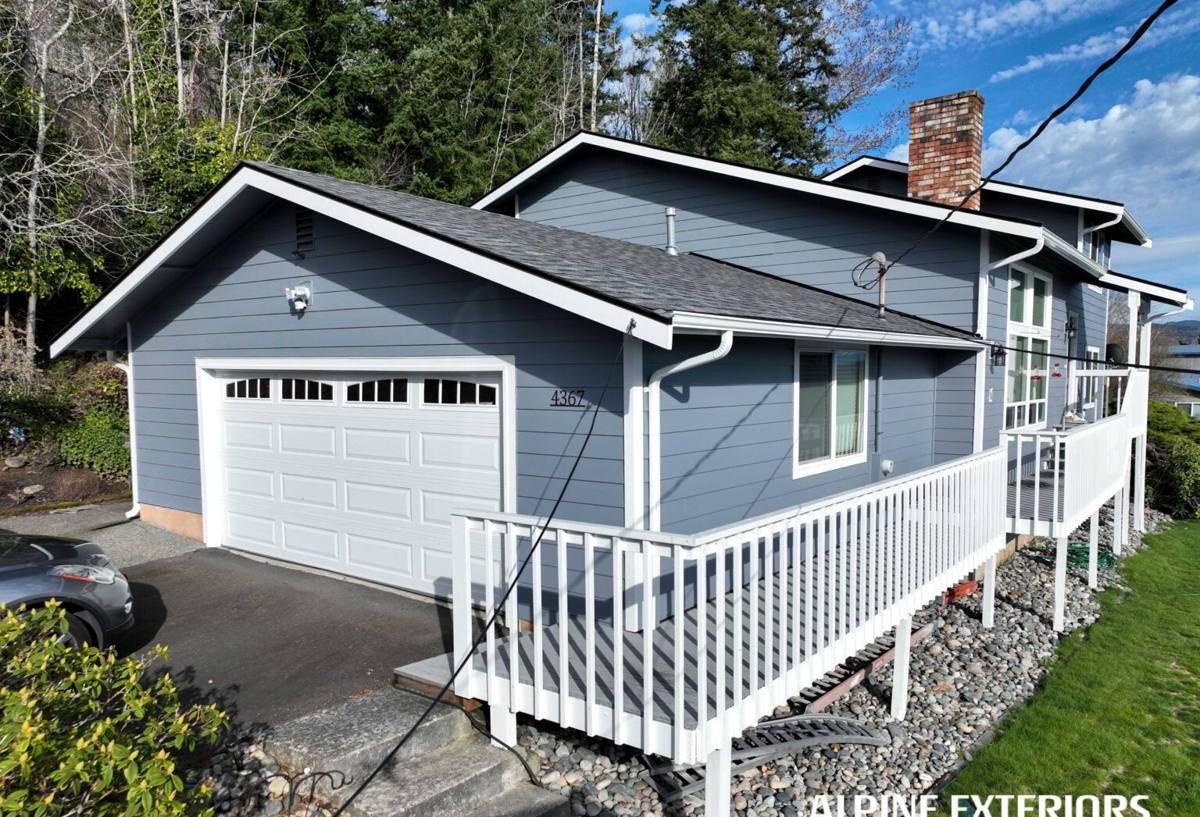
What Birch Bay's Climate Actually Does to a Metal Roof
Salt Air and Corrosion
Direct exposure to salt-laden marine air is the single biggest factor that separates a Birch Bay metal roof from one installed inland. Salt accelerates corrosion at fastener heads, cut panel edges, and any spot where a protective coating has been scratched or worn through during installation. A roofing crew that doesn't account for this will use standard fasteners and standard handling practices, and the results show up as rust streaking and fastener failure years before they should. Every component on the roof — not just the panels themselves — needs to be rated for this kind of exposure.
Wind-Driven Rain and Panel Seams
Waterfront wind doesn't just blow harder; it drives rain sideways into seams, laps, and penetrations that would stay dry under a calmer, straight-down rainfall pattern. That matters a lot for metal roofing, because the whole system depends on how well the seams between panels are formed and sealed. A seam or fastening method that performs fine on a sheltered inland roof can let water in on a home with open exposure to the bay, especially during the wind-driven storms that come through in fall and winter.
Moss, Algae, and a Long Wet Season
Metal sheds moss and algae far better than porous roofing materials because there's no rough surface for spores and organic debris to grab onto. That's one of metal roofing's real advantages here. But it isn't immune — moss and debris still collect in valleys, around penetrations, and in any spot where water doesn't drain freely, and a long wet season means those spots stay damp for extended stretches. Roof design and drainage detailing still matter, even with a material that resists growth better than shingles or wood.
Standing Seam vs. Exposed-Fastener Metal Roofing
These are the two main metal roofing systems homeowners choose between, and the right one depends on budget, roof pitch, and how much long-term maintenance you want to take on. Both can perform well in a coastal climate like Birch Bay's, but they get there in different ways.
| System | How It Handles Water | Maintenance Over Time | Typical Cost Position |
|---|---|---|---|
| Standing seam | Concealed fasteners under raised seams; no exposed penetrations for water to work into | Very low; little to no routine maintenance needed | Higher upfront cost |
| Exposed-fastener panel | Fasteners penetrate the panel face directly, each one a potential leak point over time | Moderate; fastener washers and seals should be checked periodically | Lower upfront cost |
On a waterfront property with regular wind-driven rain, standing seam is generally the more forgiving long-term choice, since it removes the exposed fastener as a recurring maintenance item. Exposed-fastener panels aren't a bad option — they're used successfully on plenty of homes in this area — but they do ask more of the homeowner in terms of periodic fastener checks, and the washers and seals at each penetration are the part most likely to need attention as the roof ages.
What Correct Metal Roof Installation Actually Involves
Metal roofing has a reputation for longevity, and it earns that reputation when it's installed correctly. Most of the metal roof problems we get called out to inspect trace back to shortcuts taken during installation, not a flaw in the material itself. On every metal roofing job, that means:
- Fasteners and clips rated specifically for corrosion resistance in a marine environment, not generic hardware store stock
- A solid, code-appropriate underlayment layer, since metal panels alone aren't the full waterproofing system
- Properly formed and sealed seams at every panel joint, sized and fastened to the manufacturer's actual specification
- Correctly lapped flashing at valleys, chimneys, vent penetrations, and roof-to-wall transitions, where wind-driven rain causes the most trouble
- Panel expansion allowance so the metal can move with temperature changes without stressing seams or fasteners
- Careful handling during installation to avoid scratching or denting the protective coating on cut edges and panel faces
None of these steps are optional add-ons — they're the baseline that determines whether a metal roof delivers the forty-plus-year lifespan it's capable of, or starts showing corrosion and leaks within the first decade.
Choosing Panel Material and Finish for a Waterfront Exposure
Steel, Aluminum, and Coating Options
Both steel and aluminum panels are used successfully on homes near the water, and each has trade-offs. Galvanized and Galvalume-coated steel panels offer strong performance and a lower cost than aluminum, provided the coating stays intact — any exposed raw steel edge becomes a rust starting point in salt air. Aluminum doesn't rust the way steel can, which makes it an appealing option directly on the waterfront, though it typically costs more and dents more easily than steel of a comparable gauge. We talk homeowners through both options honestly rather than defaulting to whichever is easier to source.
Why Finish Quality Matters More Here Than Inland
The paint or coating finish on a metal panel is what actually faces the weather day to day, and in a salt-air environment, finish quality matters more than it would on an inland roof. Higher-grade PVDF (often marketed as Kynar 500) finishes resist fading, chalking, and coating breakdown significantly better than basic painted finishes over a coastal exposure lifespan. It's a real cost difference upfront, but it's the part of the roof most directly exposed to salt air and UV, and it's not the place to cut corners on a Birch Bay installation.
Signs an Existing Metal Roof in Birch Bay Needs Attention
- Rust streaking around fasteners, screw heads, or cut panel edges
- Visible gaps, lifting, or separation at seams between panels
- Loose or backed-out fasteners on exposed-fastener panel systems
- Moss or debris buildup collecting in valleys or around penetrations
- Denting or scratched coating from storm debris or foot traffic
- Water staining on interior ceilings near roof-to-wall transitions or chimney flashing
- Fading or chalking of the finish well ahead of its expected service life
Metal roofs generally need less routine attention than shingle roofs, but that doesn't mean they need none. A quick visual check after major windstorms and once a year overall catches most of these issues while they're still a minor repair.
Cost Factors for a Birch Bay Metal Roof
Metal roofing costs more upfront than asphalt shingles, generally by a meaningful multiple, and several factors specific to a waterfront property affect where a given project lands within that range.
| Factor | Why It Matters in Birch Bay |
|---|---|
| Standing seam vs. exposed-fastener system | Concealed-fastener systems cost more upfront but reduce long-term maintenance exposed to salt air |
| Steel vs. aluminum panels | Aluminum resists corrosion better directly on the water but typically costs more per square |
| Coating grade (standard paint vs. PVDF/Kynar) | Higher-grade finishes cost more but hold up far longer against salt air and UV exposure |
| Roof complexity and penetrations | More valleys, dormers, and penetrations mean more flashing detail, which is where labor time concentrates |
| Existing roof tear-off vs. new construction | Removing an old roof and addressing any deck damage underneath adds to project scope |
We walk through these factors on-site rather than quoting a number sight unseen, since roof pitch, penetration count, and current condition all affect the real cost for a specific home.
Why a Lynden Crew That Already Works Birch Bay Matters
Metal roofing forgives fewer installation mistakes than shingle roofing does — a seam that's slightly off-spec or a fastener that isn't rated for salt exposure won't show a problem on day one, but it will a few years in. A crew that works Birch Bay regularly already knows which panel systems, fasteners, and coating grades actually hold up on this stretch of coastline, because they've seen the roofs that didn't hold up and why. That's a different starting point than a crew installing its first metal roof anywhere near open water.
A Simple Checklist Before Hiring for Metal Roofing in Birch Bay
- Ask what fastener and clip hardware they use, and whether it's rated for marine/coastal exposure
- Confirm current Washington contractor licensing and active liability insurance
- Ask which panel material and coating grade they recommend for a waterfront lot, and why
- Ask how they detail flashing at valleys, chimneys, and wall transitions specifically for wind-driven rain
- Get a written manufacturer warranty and a clear, written scope of work before signing anything
Our Process
We start with an on-site look at the existing roof or roof deck, checking pitch, penetrations, and any current moisture or corrosion issues before recommending a system. From there we put together a clear written scope covering panel type, fastener hardware, and finish grade, so there's no ambiguity about what's being installed. On installation day, the flashing, seam, and fastener details that matter most in a salt-air environment are standard practice for us, not optional upgrades priced separately.
If you're weighing a metal roof for a home in Birch Bay, we're glad to walk the roof with you and give an honest read on what it needs and what it would cost. Reach out below for a free, no-pressure estimate.