 Lynden Siding
 Asphalt Shingle Roofing Built for Maple Falls Conditions
Maple Falls sits up against the foothills east of Lynden, and that location comes with its own roofing challenges. Homes here deal with more rainfall and a longer wet season than properties closer to town, plus heavier tree cover that keeps roofs shaded, damp, and slow to dry out after a storm. Add in the salt-tinged marine air that moves through Whatcom County off the Sound, and you've got a combination that's hard on any roofing material — but especially hard on shingles that weren't installed with this climate in mind. A correctly installed asphalt shingle roof can handle all of it. A roof installed to a generic spec, without attention to ventilation, underlayment, and moss resistance, tends to show problems years earlier than it should.
This page covers what an asphalt shingle roof actually needs to hold up in Maple Falls, what our installation process looks like, and why local experience on this specific terrain matters more than most homeowners realize.
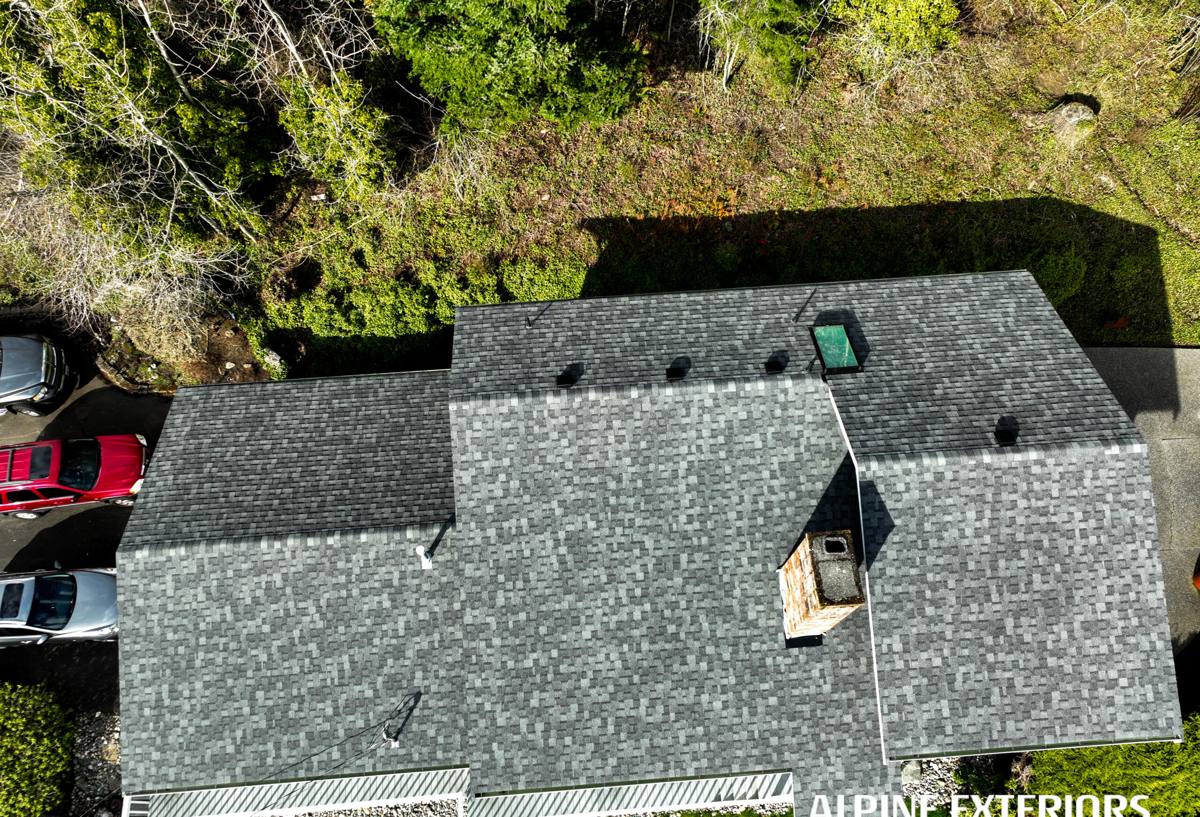
What This Climate Does to a Shingle Roof
Moss and Organic Growth
The tree cover around Maple Falls means more shade, more falling debris, and slower drying after rain — ideal conditions for moss, lichen, and algae to take hold. Moss isn't just cosmetic. It holds moisture against the shingle surface, works its way under tabs and shingle edges, and can lift granules and shingle mat over time. Left unchecked for several seasons, moss growth shortens the effective life of a shingle roof regardless of the product's rated warranty.
Driving Rain and Wind-Driven Water
Storms in this area don't always come straight down. Wind-driven rain pushes water sideways and upward under shingle edges, around penetrations, and into valleys — spots where a roof either sheds water cleanly or lets it find a way in. Underlayment quality and flashing detail matter more here than in drier climates where a roof rarely faces sustained wind-driven rain.
Extended Wet Season
A long stretch of overcast, damp weather means roofing materials spend more time wet and less time drying out compared to sunnier regions. That extended dampness is exactly what shortens the life of poorly ventilated attics and undercuts shingles installed without a proper moisture barrier underneath.
Salt Air Exposure
While Maple Falls is inland compared to waterfront Whatcom County communities, salt-laden marine air still moves through the region and accelerates corrosion on exposed metal — nails, flashing, vents, and fasteners. Roofing hardware rated for coastal exposure holds up longer than standard hardware in this environment.
What a Correct Asphalt Shingle Installation Involves
A shingle roof is only as good as everything underneath it. The visible shingle layer gets all the attention, but the components homeowners never see are what actually determine whether the roof performs for its full expected lifespan in a climate like this one.
- Ice-and-water shield at eaves, valleys, and around all penetrations — not just the code minimum, but extended coverage where wind-driven rain is a known risk
- Synthetic underlayment across the full deck, providing a secondary water barrier if any shingle is ever compromised
- Balanced attic ventilation — intake at the eaves and exhaust at the ridge, sized correctly for the attic volume, so moisture doesn't get trapped against the underside of the deck
- Corrosion-resistant fasteners and flashing rated for coastal-adjacent exposure
- Proper nailing pattern per manufacturer specification — this is the single most common shortcut that voids warranties and causes premature blow-off
- Algae-resistant (AR) shingle granules where moss and organic growth are a known regional issue
Any one of these done wrong doesn't necessarily cause an immediate failure. It causes a slow one — moisture creeping in over a few winters, moss taking hold two years earlier than it should, or a section of shingles lifting in the next windstorm because the nailing pattern was off by an inch. That's why we treat the underlayment and ventilation work as seriously as the shingle brand itself.
Our Process, Start to Finish
1. Inspection and Assessment
We start with a full roof inspection — deck condition, existing ventilation, signs of moss or moisture intrusion, and flashing condition around chimneys, skylights, and vents. We also check the attic from the inside where possible, since ventilation problems usually show up there before they show up on the surface.
2. Honest Scope and Estimate
We tell you what actually needs to happen — full replacement, partial repair, or ventilation correction — and give you a written estimate before any work begins. If your existing roof has years of life left and just needs moss treatment or a repair, we'll say so.
3. Tear-Off and Deck Check
For a full replacement, we remove existing roofing down to the deck and inspect for rot or soft spots, particularly around valleys and penetrations where water tends to concentrate over time. Damaged decking gets replaced before anything new goes down — installing new shingles over a compromised deck just hides the problem.
4. Underlayment and Flashing
Ice-and-water shield goes down first at vulnerable areas, followed by synthetic underlayment across the full roof. New flashing is installed at all penetrations, valleys, and roof-to-wall transitions.
5. Shingle Installation
Shingles go down per manufacturer nailing specifications, with attention to proper exposure, alignment, and sealing at edges and ridges. This is where corner-cutting shows up years later, so we don't rush it.
6. Ventilation Check and Final Walkthrough
We confirm intake and exhaust ventilation is balanced before closing out the job, then walk the completed roof with you, covering care recommendations specific to your property's exposure and tree cover.
Cost Factors for a Maple Falls Shingle Roof
Every roof is priced based on its own conditions, but the factors that typically move the number for homes in this area are consistent enough to lay out honestly.
| Factor | Why It Matters Here |
|---|---|
| Roof pitch and access | Steeper roofs and limited equipment access around trees increase labor time |
| Deck condition | Moisture-related rot found during tear-off adds material and labor not visible from a surface inspection |
| Existing ventilation | Homes with inadequate intake or exhaust often need vent additions or corrections as part of the job |
| Valley and penetration count | More valleys, skylights, and vent penetrations mean more flashing detail and labor |
| Shingle tier selected | Standard three-tab, architectural, and premium algae-resistant lines carry different material costs |
| Tree cover and debris | Heavier tree cover can mean additional gutter and valley protection recommendations |
We walk through these factors on-site so the estimate reflects your actual roof, not a generic per-square-foot number that ignores the conditions specific to Maple Falls properties.
Shingle Options and What We Recommend
Not every shingle product is a good fit for this climate. We steer customers toward algae-resistant architectural shingles for most Maple Falls homes because the copper- or zinc-infused granules resist the moss and algae growth this area is prone to, and the heavier architectural profile handles wind-driven rain better than a standard three-tab. Standard three-tab shingles are a lower-cost option and can be the right call on a budget or on outbuildings, but we're upfront that they show algae and moss growth sooner in a shaded, damp environment and generally carry a shorter service life here than in drier parts of the state. We'll lay out the real trade-offs for your specific roof rather than pushing one product line by default.
Maintenance That Actually Extends Roof Life Here
- Keep gutters and valleys clear of needles and leaf debris, especially heading into the wet season
- Have moss growth treated before it spreads across a full slope, rather than after
- Trim back overhanging branches where practical to reduce shade and debris buildup
- Schedule a roof check after major windstorms to catch lifted shingles early
- Confirm attic ventilation isn't blocked by insulation or storage that's been added over time
None of this is complicated, but it's the difference between a shingle roof that reaches its full expected lifespan and one that needs premature repair because moss or trapped moisture went unaddressed for a few seasons.
Why Local Experience in This Area Matters
Maple Falls isn't identical to downtown Lynden or the flatter parts of Whatcom County — the elevation, tree cover, and rainfall patterns are their own thing. A crew that installs roofs across this specific area day in and day out knows which valleys collect debris, which exposures take the worst of the wind-driven rain, and which ventilation setups actually work once winter sets in. That local pattern recognition is hard to replicate with a crew that's only worked flatter, less shaded terrain, and it's part of why the underlayment and ventilation details matter as much as the shingle brand on the invoice.
Get a Free, No-Pressure Estimate
If your Maple Falls roof is showing moss, past its expected age, or you just want an honest read on its condition, we're happy to take a look. The estimate is free, there's no pressure to move forward, and you'll get a straight answer about what your roof actually needs. Use the form below to get started.