 Lynden Siding
 Roof Repair Built for Aldergrove's Weather
Aldergrove sits close enough to the water and to the Fraser Valley weather patterns that roofs here take on a specific combination of problems: salt-laden air moving in off the coast, long stretches of driving rain through fall and winter, and a moss season that can run most of the year in shaded, north-facing sections of a roof. None of those three things is dramatic on its own. Together, over several years, they're what turns a small flashing leak into a rotted deck, or a light moss dusting into shingles that are lifting at every tab.
We work roofs on both sides of the border out of Lynden, and Aldergrove roofs behave differently than roofs twenty minutes inland. Homes with more tree cover hold moisture longer. Homes closer to open exposure take wind-driven rain sideways into laps and flashing that were never designed to handle water moving that direction. A repair that's correct for one house isn't automatically correct for the one next door, which is part of why we look at the whole roof before we start work, not just the spot the homeowner called about.
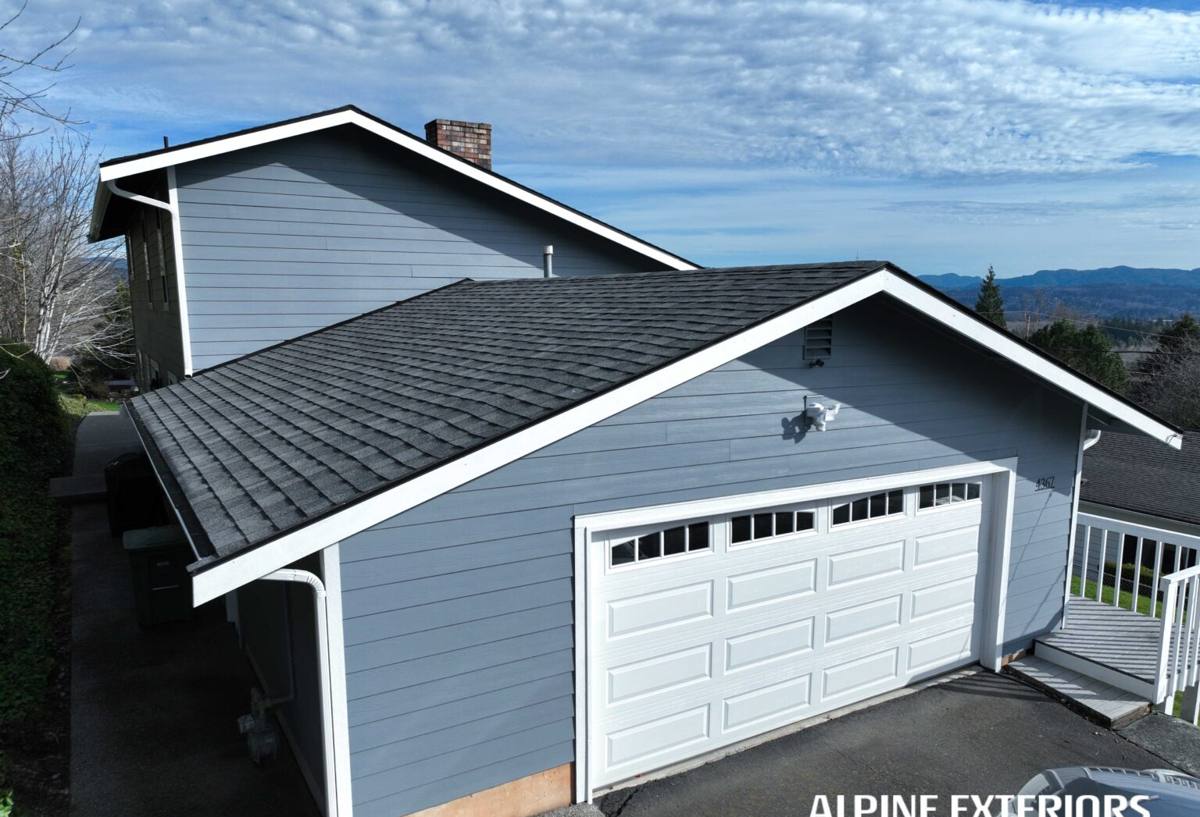
Signs a Roof Needs Repair Now, Not Later
Most roof repairs we get called out for started as something small that got ignored for a season or two. Salt air and moisture don't announce themselves — they work quietly at seams, fasteners, and flashing until something finally gives. Watch for these:
- Granules collecting in gutters or at the base of downspouts — a sign shingles are wearing thin
- Dark streaking or green-black moss patches, especially on north-facing slopes
- Curling, cupping, or lifted shingle edges, particularly along ridges and valleys
- Soft or spongy spots when walked (we check this, not something to test yourself)
- Water stains on interior ceilings or in the attic, even faint ones
- Rust streaks or gaps at flashing around chimneys, vents, and skylights
- Daylight visible through the roof deck from inside the attic
Any one of these can be a contained, inexpensive fix if it's caught early. Left alone through another wet season, most of them turn into deck replacement, insulation replacement, or interior repair — costs that have nothing to do with the roof itself but everything to do with water that got in through it.
What a Correct Roof Repair Actually Involves
A roof repair done right isn't just patching the spot that's leaking. Water rarely enters exactly where it shows up inside the house — it travels along the deck, down a rafter, or behind a wall before it becomes a visible stain. A repair that only addresses the visible symptom often leaves the actual entry point untouched.
Diagnosis before repair
We start by tracing the leak from the inside where possible, then confirming from the roof surface. That means checking flashing, underlayment condition, fastener pattern, and the shingles themselves — not just the immediate area, but everything upslope of it, since that's where water is coming from.
Matching materials and technique
A patch that doesn't match the existing shingle profile, weight, or exposure creates a new weak point even if it stops the immediate leak. We match materials to what's already on the roof whenever the roof is in good enough shape overall to justify a repair rather than a full replacement.
Sealing the right way
Caulk and roofing cement have their place, but they're not a substitute for correct flashing and shingle overlap. Homes in this region see enough sustained rain that a sealant-only fix tends to fail within a season or two once it dries out and cracks.
Common Repairs We Handle Around Aldergrove
The specific repairs we're called out for most often here track directly with the local climate:
Moss and organic growth removal
Moss doesn't just look bad — it holds moisture against the shingle surface and works its way under tabs, lifting them over time. Removal has to be done carefully; scraping too aggressively strips granules and shortens the life of shingles that were otherwise fine. We remove growth, treat the surface to slow regrowth, and check for shingle damage underneath before calling the job finished.
Flashing repair and replacement
Chimneys, skylights, vent pipes, and roof-to-wall transitions are where the large majority of leaks actually originate — not the open field of shingles. Driving rain finds gaps in flashing that a light rain never would, which is why flashing failures here often show up first during a hard fall or winter storm.
Wind and storm damage
Wind-driven rain can lift shingle edges and drive water underneath even when the shingles themselves aren't torn off. After a hard storm, we check for lifted tabs and compromised seals, not just missing shingles.
Valley and gutter-line repair
Valleys carry a disproportionate amount of water off a roof and are one of the first places that shows wear. Combined with gutters that aren't keeping up with volume, a failing valley can send water into the fascia and soffit before it ever reaches a shingle problem visible from the ground.
Repair or Replace? What Actually Decides It
Homeowners often assume a leak means the whole roof is done. Usually it doesn't. The decision comes down to a handful of practical factors:
| Factor | Favors Repair | Favors Replacement |
|---|---|---|
| Roof age | Under 12-15 years | Approaching or past material's rated lifespan |
| Extent of damage | Localized — one section, one flashing point | Spread across multiple slopes or repeated in the same areas |
| Deck condition | Solid, no soft spots | Soft, rotted, or delaminating in multiple areas |
| Shingle condition elsewhere | Granule loss minimal, tabs intact | Widespread curling, brittleness, granule loss |
| Repair history | First or second repair on this roof | Third-plus repair in the same general area |
We'll tell you honestly which side of that table your roof falls on. A repair on a roof that's genuinely near the end of its life is money that doesn't carry forward into anything — it buys a season, maybe two, and then you're paying for a full replacement anyway on top of what you already spent.
Our Repair Process
The process is straightforward, and we keep it that way on purpose:
- Inspection. We walk the roof, check the attic where accessible, and identify not just the obvious problem but anything upslope that's contributing to it.
- Written scope. You get a clear explanation of what's actually wrong, what we recommend, and why — including if we think repair isn't the right call.
- The repair itself. Matched materials, correct flashing technique, and attention to how water actually moves across this specific roof, not a generic patch job.
- Final check. We confirm the fix from both the roof surface and, where relevant, the attic side before we consider the job done.
We don't upsell repairs into replacements to pad a job, and we don't patch something that needs more than a patch just to keep the price low. Both approaches cost homeowners more in the long run, and both are easy to avoid with an honest first look.
Materials: What We Use and Why
For repair work, matching what's already on the roof usually matters more than which brand is "best" in the abstract. A mismatched shingle profile or weight can create a new failure point even when the repair itself is done well. Where we do have a choice — flashing metal, underlayment, sealants — we lean toward materials with a track record in wet, salt-exposed coastal conditions rather than options that perform fine in drier climates but degrade faster here. That's a maintenance and longevity call, not a brand endorsement; different products have different trade-offs in moisture resistance, installation sensitivity, and how they age, and we'll walk you through why we're recommending a specific one for your repair.
What to Check Before You Hire a Roof Repair Crew
- Are they licensed and insured to work on both sides of the border, if that matters for your property?
- Will they give you a written explanation of the cause, not just the fix?
- Do they inspect beyond the immediate leak, including flashing and valleys upslope?
- Will materials match your existing roof's profile and age?
- Do they tell you honestly when a repair isn't the right call?
- Are they familiar with how coastal moisture and moss behave on roofs in this specific area?
Why a Crew That Already Works Aldergrove, BC Matters
Roofing problems here aren't generic. A crew that mostly works drier, inland climates tends to under-diagnose moss damage and treat flashing repairs as more routine than they are in a region where driving rain is a near-annual event. We work roofs in and around Lynden and across the border into Aldergrove regularly enough to know which failure patterns show up in which conditions — a north-facing slope under tree cover behaves differently than an open, wind-exposed one, and the repair approach should reflect that, not follow a one-size template.
Whatcom County's coastal-influenced weather and the Fraser Valley conditions just across the line share enough in common — persistent rain, salt-carrying air, long damp stretches that favor moss and algae — that experience on one side of the border translates directly to the other. That's part of why we treat this as one service area rather than two separate markets with separate approaches.
Get an Honest Look at Your Roof
If you're seeing granules in the gutter, moss creeping across a slope, or a stain that showed up after the last hard rain, it's worth getting a straight answer before it gets worse. We offer free, no-pressure estimates for roof repair in Aldergrove and the surrounding area — use the form below to get one scheduled.