 Lynden Siding
 Windows Built for Laurel's Weather, Not Just Any Weather
Laurel sits in a part of Whatcom County that takes a steady beating from the Pacific — salt-laden air drifting in off the water, driving rain that comes sideways more often than straight down, and a moss season that seems to stretch longer every year. None of that is unique to any one house, but it adds up differently on windows than it does on roofs or siding. Windows are the weak point in any exterior envelope: they're a hole in the wall with moving parts, seals, and trim details that either shed water or trap it. In a climate like this one, the margin for error on installation is small.
We install windows throughout the Lynden area, and Laurel homes tend to show the same wear patterns: swollen sashes that stop closing flush, condensation trapped between panes, soft trim at the sill, and drafts that show up the moment the wind shifts out of the southwest. Most of that isn't a window quality problem — it's an installation and flashing problem that shows up years after the crew that did the work is long gone.
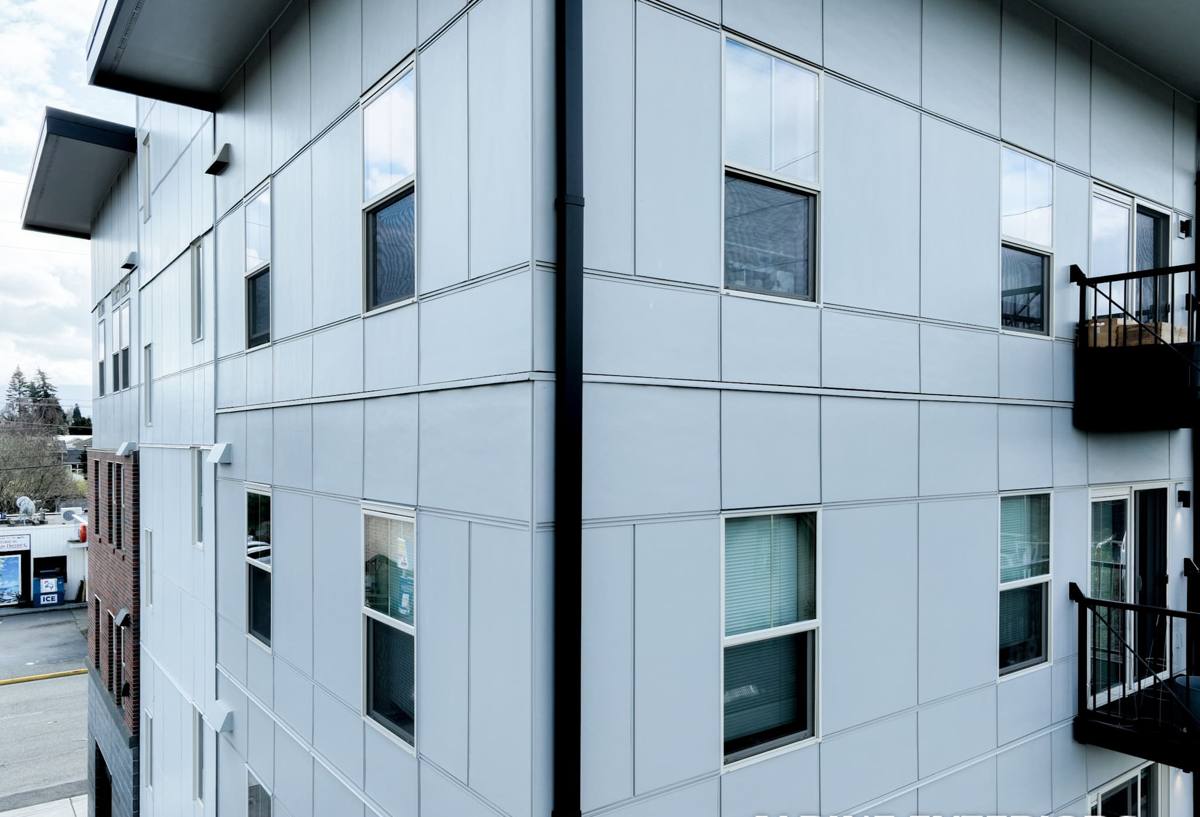
How Coastal Climate Wears Down Windows Over Time
Salt Air and Hardware
Salt in the air accelerates corrosion on window hardware — hinges, locks, balance mechanisms, and screen frames. Cheaper or improperly finished hardware pits and seizes years before it should. It's a slow process, so homeowners often don't connect a stiff crank or a lock that won't quite catch to the air they're breathing every day.
Driving Rain and Wind-Driven Water
Rain that comes in at an angle behaves differently at a window opening than rain falling straight down. It gets pushed up under sills, behind trim, and into any gap where flashing wasn't lapped correctly. A window can be perfectly sealed on a calm day and still leak during a wind-driven storm if the flashing sequence underneath it was never right.
Moss, Algae, and Trapped Moisture
A long moss season means prolonged dampness sitting against exterior surfaces for months at a time. Around windows, that moisture has to have somewhere to go. When head flashing, sill pans, and weep paths are missing or blocked, water sits against wood trim and sheathing instead of draining away — which is how a small gap turns into rot nobody sees until the trim is soft to the touch.
Signs It's Time to Have Your Windows Looked At
- Visible fog or moisture trapped between the panes of a double-pane window
- Sashes that stick, won't stay open, or don't latch fully closed
- Soft, discolored, or spongy trim and sill material
- Noticeable drafts near the frame during windy weather
- Paint or finish peeling from the inside of the frame, not just the outside
- Visible daylight or gaps between the frame and the siding or trim
- A musty smell near a window that gets worse after rain
What a Correct Window Installation Actually Involves
Window installation is often treated as a swap: pull the old unit, drop in the new one, caulk the edges. That approach works fine on a dry day in a mild climate. It does not hold up in Whatcom County. A proper installation is really a small waterproofing project that happens to have a window in the middle of it.
The Opening Comes First
Before a new window goes in, the rough opening needs to be checked for square, level, and — more importantly — for what's happening behind the existing trim. If there's rot, compromised sheathing, or old flashing that's failed, that gets addressed before anything new goes in. Installing a good window into a bad opening just delays the same problem.
Flashing and Drainage Are Not Optional
Every opening needs a sill pan to catch any water that gets past the window and route it back out, plus properly lapped flashing at the jambs and head so water sheds downward and outward at every layer — never trapped behind the next one. This is the part of the job that's invisible once the trim goes back on, and it's the part that determines whether the window is still performing correctly in ten years.
Sealing the Right Way
Sealant has a job, but it's a backup to good flashing, not a substitute for it. Interior air sealing (foam or backer rod, not just caulk) prevents condensation from forming inside the wall cavity, while exterior sealant is applied only where it's supposed to let trapped moisture drain rather than boxing it in.
Fit and Function
A window that's shimmed and fastened correctly opens and closes without binding for years. One that's slightly out of square binds early, stresses the seals, and wears out its hardware faster — which shows up first as a hard-to-close sash and eventually as a full seal failure.
Choosing a Window Type for a Laurel Home
There's no single "best" window — the right choice depends on sun exposure, how exposed the wall is to wind-driven rain, and how much upkeep you want to take on. Here's how the common options stack up for this climate:
| Frame Material | How It Handles This Climate | Maintenance |
|---|---|---|
| Vinyl | Good moisture and salt-air resistance, no corrosion-prone hardware exposed to the elements | Low — occasional cleaning |
| Fiberglass | Very stable in temperature swings and wind-driven rain, holds paint and seals well long-term | Low to moderate |
| Wood (unclad) | Attractive but needs consistent upkeep to resist the moisture and moss exposure here | High — regular refinishing |
| Wood-clad (vinyl or aluminum exterior) | Combines a wood interior with a weather-resistant exterior shell; performs well if flashed correctly | Moderate |
| Aluminum | Durable but conducts cold and can be prone to condensation without a thermal break | Low |
For most Laurel homes, we lean toward vinyl or fiberglass on wind- and rain-exposed walls, and reserve wood or wood-clad options for more protected elevations where the upkeep is manageable. We're honest about the trade-offs either way — no option is maintenance-free, and the installation quality matters more than the brand name on the sticker.
Our Process, Start to Finish
- On-site assessment — we look at existing windows, the condition of trim and sheathing, and how the wall performs against prevailing wind and rain direction.
- Honest recommendation — we tell you which windows make sense for that specific wall, not just what's on the truck.
- Removal — old units come out carefully so we can inspect the opening underneath before anything goes back in.
- Repair as needed — any rot or compromised sheathing gets addressed before the new window goes in, not covered up.
- Flashing and sill pan installation — built to shed water outward at every layer.
- Window installation — shimmed square and plumb, fastened per manufacturer spec so warranty coverage stays intact.
- Interior and exterior sealing — air sealed inside, drainage-friendly sealant outside.
- Trim and finish work — restored to match the house, not just patched.
- Final walkthrough — every sash opens, closes, and locks the way it should before we call it done.
What Affects the Cost
Every home is different, so we don't quote sight-unseen, but these are the main factors that move a window project up or down in price:
| Factor | Why It Matters |
|---|---|
| Number and size of windows | Larger and taller units cost more in material and labor |
| Frame material | Vinyl is typically the most budget-friendly; fiberglass and wood-clad cost more upfront |
| Condition of the existing opening | Hidden rot or failed flashing adds repair time before the new window goes in |
| Access and story height | Second-story or hard-to-reach windows take longer and need more setup |
| Trim and finish work | Matching existing trim profiles or repainting adds to the scope |
| Full-frame vs. insert replacement | Full-frame replacement (recommended when flashing needs redoing) costs more than an insert but corrects underlying problems |
Why Hire a Crew That Already Works in Laurel
Window installation done wrong doesn't usually fail on day one — it fails in year three or four, after the caulk has weathered and the first real wind-driven storm finds the gap nobody flashed correctly. That's a hard thing to catch from a bid alone, which is why experience specific to this area matters. A crew that regularly works Lynden and the surrounding Whatcom County communities has already seen how salt air, driving rain, and a long moss season play out on real houses here, and builds the flashing and sealing details around that — not around a generic install spec written for a drier climate.
It also means we're not guessing at which side of a Laurel home takes the worst of the weather. Orientation matters: a wall facing the prevailing wind and rain needs more attention to flashing and material choice than a sheltered one. Local experience means that gets factored in before the first window comes out, not discovered after a callback.
Keeping New Windows Performing for the Long Haul
A correctly installed window still benefits from a little attention:
- Clear debris and moss buildup from sills and tracks each fall before the wet season sets in
- Check that weep holes on the exterior stay unblocked so water can drain out
- Lubricate hardware periodically to slow corrosion from salt air
- Re-caulk exterior joints if you notice cracking or separation — small gaps are easier to fix early
- Watch for condensation between panes, which signals a seal failure rather than a cleaning issue
If you're noticing drafts, sticking sashes, or soft trim around your windows in Laurel, it's worth having them looked at before the next round of Whatcom County storms finds the gap. We're happy to come take a look, tell you honestly what we see, and put together a free, no-pressure estimate — no obligation either way.