 Lynden Siding
 Deck Building in Laurel: Designed for the Weather, Not Just the Look
Laurel sits in the rural stretch between Lynden and Bellingham, in a part of Whatcom County where homes tend to sit on larger lots with more open exposure to weather than you'd get in a tighter subdivision. That matters for decks specifically. A deck is the one part of a house's exterior that's built almost entirely horizontal, which means every board, joist, and connector is exposed to standing water, salt-tinged marine air, and the kind of driving rain that this corner of the state gets for a good chunk of the year. Add in a moss and algae season that runs long on shaded, north-facing decks, and you've got a structure that will punish shortcuts faster than almost anything else on a house.
We build decks with that reality in mind, not as an afterthought after the framing is already up. That means starting with the ledger connection and drainage plan, choosing hardware rated for the exposure this area actually sees, and being straight with homeowners about which decking materials hold up here and which ones look good on day one and become a maintenance chore by year three.
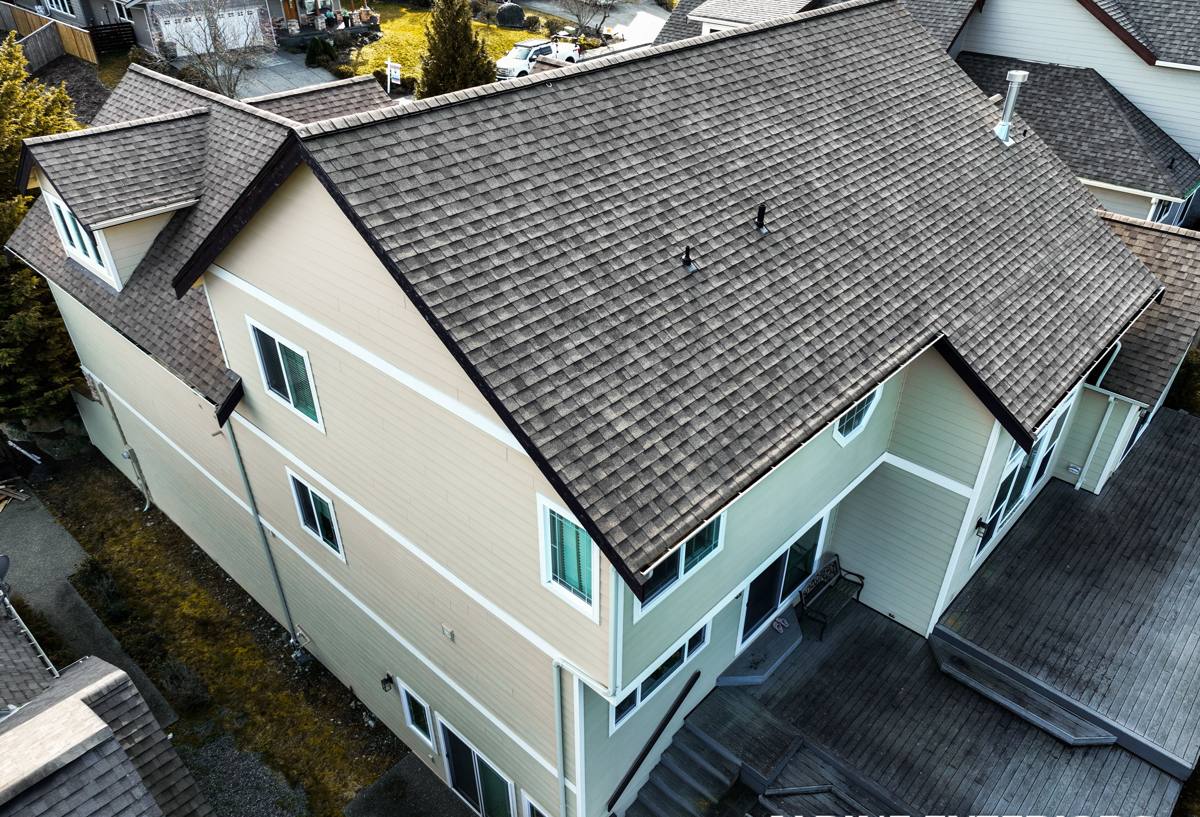
What Laurel's Climate Actually Does to a Deck
Salt Air and Fasteners
Laurel isn't waterfront, but it's close enough to Puget Sound and Georgia Strait that marine air moves through on a regular basis, especially with weather systems pushing in off the water. Over years, that salt-laden air accelerates corrosion on any fastener, bracket, or hanger that isn't rated for it. On a deck, that's not cosmetic — it's structural. Joist hangers, ledger bolts, and post hardware are load-bearing, and corroded hardware is one of the more common reasons an older deck fails inspection or starts to feel spongy underfoot.
Driving Rain, Ledger Boards, and Standing Water
Rain in this part of Washington rarely falls straight down. It comes in sideways during fall and winter storms, which pushes water into places a fair-weather build wouldn't account for — behind ledger boards, into end grain on stair stringers, and into any gap where flashing was skipped or installed loosely. A deck ledger that isn't properly flashed and separated from the house wall is one of the most common points where water works its way into rim joists and sheathing over time, and it's usually hidden until the damage is already done.
Moss, Algae, and Shaded Deck Surfaces
Whatcom County's long wet season keeps moss and algae active on exterior surfaces for most of the year, and decking is no exception, particularly on boards that sit in shade from mature trees or the house itself. Beyond making a deck slippery, sustained moss growth holds moisture against the board surface, which shortens the life of wood decking and can void warranties on some composite products if drainage and airflow underneath weren't built in from the start.
Decking Material Options, Honestly Compared
There's no single right answer for every homeowner in Laurel — budget, maintenance tolerance, and how the deck will actually be used all factor in. Here's how the common options hold up in this specific climate.
| Material | Upfront Cost | Maintenance in This Climate | Typical Lifespan |
|---|---|---|---|
| Pressure-treated wood | Lowest | Annual cleaning, periodic staining/sealing to fight moss and moisture | 10-15 years with upkeep |
| Cedar | Moderate | Regular sealing needed; grays and can develop moss without upkeep | 15-20 years with upkeep |
| Traditional composite | Higher | Low, but uncapped boards can absorb moisture at cut edges over time | 20-25 years |
| Capped composite / PVC | Highest | Lowest — sealed shell resists moisture and moss buildup | 25-30+ years |
For a lot of Laurel homes, capped composite ends up being the practical middle ground: it costs more up front than wood, but it holds up against moss and moisture without the annual sealing schedule that wood decking demands in this climate. That said, we still build plenty of wood decks for homeowners who prefer the look and are willing to keep up with maintenance — the material choice is yours, but we want you making it with accurate information about what each option actually asks of you here.
Why We Don't Push Uncapped Composite in This Area
Older-generation uncapped composite decking can perform fine in drier climates, but in a wet, moss-prone environment like this one, exposed cut ends and fastener holes can slowly wick moisture, which leads to swelling and, eventually, mold at those exposed points. It's not that the product is bad everywhere — it's that our professional standard for this specific climate favors fully capped products or well-maintained natural wood, because both give a homeowner a predictable maintenance path instead of a hidden failure point.
What a Correctly Built Deck Actually Involves
A deck that lasts in Whatcom County comes down to details that aren't visible once the project is finished. These are the ones we treat as non-negotiable:
- Footings sized and set below frost depth, on undisturbed or properly compacted soil
- Ledger board flashed with a proper drip cap and separated from the house wall to shed water away from the rim joist
- Stainless steel or coated hardware rated for exterior, coastal-influenced exposure — not standard interior-grade fasteners
- Joist tape or flashing on top of every joist to protect the wood from standing moisture under the decking
- Proper board spacing and airflow underneath to let the structure dry out between rain events
- Stairs and railings built to current code for rise, run, and guard height, with hardware matched to the same corrosion resistance as the deck itself
Skipping any one of these doesn't usually show up right away. It shows up in year four or five, as soft spots near the ledger, rust streaks below hardware, or a railing post that's gone loose. Building it right the first time costs less than fixing it later, and it's the difference between a deck that needs occasional cleaning and one that needs structural repair.
Our Process for a Laurel Deck Project
Site Visit and Honest Assessment
We start by looking at the actual site — sun and shade exposure, drainage slope, how close the deck sits to grade, and what the house's siding and framing look like at the ledger connection. That tells us more about the right build approach than a generic spec sheet would.
Material and Layout Conversation
We walk through decking material trade-offs in plain terms, size the deck to how you'll actually use it, and settle on railing and stair placement before anything gets ordered.
Permitting
Deck projects in Whatcom County typically require a building permit depending on size and height above grade. We handle that process and build to what the permit and inspection require rather than treating code minimums as optional.
Build
Footings and framing first, with every ledger, hanger, and fastener installed to the standard above — then decking, stairs, and railings. We don't skip inspection points to save a day on the schedule.
Walkthrough
Before we consider the job done, we walk the finished deck with you, point out anything you should know about care for the specific material you chose, and answer questions directly rather than handing you a generic care sheet.
Railings, Stairs, and Code in Whatcom County
Guard rail height, baluster spacing, and stair rise-and-run are all governed by building code, and inspectors in this county check them closely because they're the parts of a deck most tied to safety. We build to those requirements as the floor, not the ceiling — meaning if a homeowner wants a sturdier railing connection or a wider stair than the minimum, we're glad to build it that way. What we won't do is under-build a railing to save material cost, since that's the one part of a deck failure that has real consequences beyond property damage.
Realistic Maintenance for a Laurel Deck
Whatever material you choose, plan on some seasonal upkeep given the local climate:
- Clear leaves and debris from between boards and off the surface before fall rains set in, so moisture doesn't sit against the wood or composite
- Rinse or lightly scrub moss and algae buildup at least once a year, more often on shaded sections
- Check railing posts and stair connections annually for movement, especially after the first couple of winters
- For wood decking, plan on resealing or restaining every 1-3 years depending on sun exposure
- For composite decking, an occasional wash is usually all that's needed, but keep gutters and downspouts nearby clear so runoff isn't draining onto the deck surface
Why a Crew That Already Works This Area Matters
Deck building in Laurel isn't different in kind from deck building anywhere in western Washington, but it does reward experience with this specific set of conditions — the salt influence, the amount of driving rain, and how long moss stays active on a shaded surface here. A crew that already builds and repairs decks around Lynden and the surrounding Whatcom County communities has usually already seen what fails in this climate and why, which shapes decisions like hardware grade, flashing detail, and material recommendations before problems start rather than after a homeowner calls about a soft board or a loose railing. That's the value of hiring local: not sentiment, but familiarity with exactly the weather your deck will sit in for the next twenty-plus years.
If you're planning a new deck or replacing an aging one in Laurel, we're glad to come take a look and give you a straightforward, no-pressure estimate. There's a form below — tell us a bit about the project and we'll go from there.