 Lynden Siding
 Storm Damage Roof Repair Built for Kendall's Conditions
Kendall sits at the edge of the Whatcom County foothills, where open farmland gives way to timber and the weather changes fast. Homes out here take a different kind of beating than roofs closer to town. Wind funnels down through the tree line during winter storms, rain comes in sideways off the Nooksack valley, and the shade from surrounding fir and cedar keeps roofs damp long after a storm has passed. That combination — wind stress, saturating rain, and a moss season that barely takes a break — is what actually shortens the life of a roof out here, more than any single dramatic storm event.
Storm damage repair in Kendall isn't just about patching what obviously broke. It's about understanding how a storm interacts with a roof that's already carrying moisture and moss load from the season before, and making sure the repair holds up to the next one.
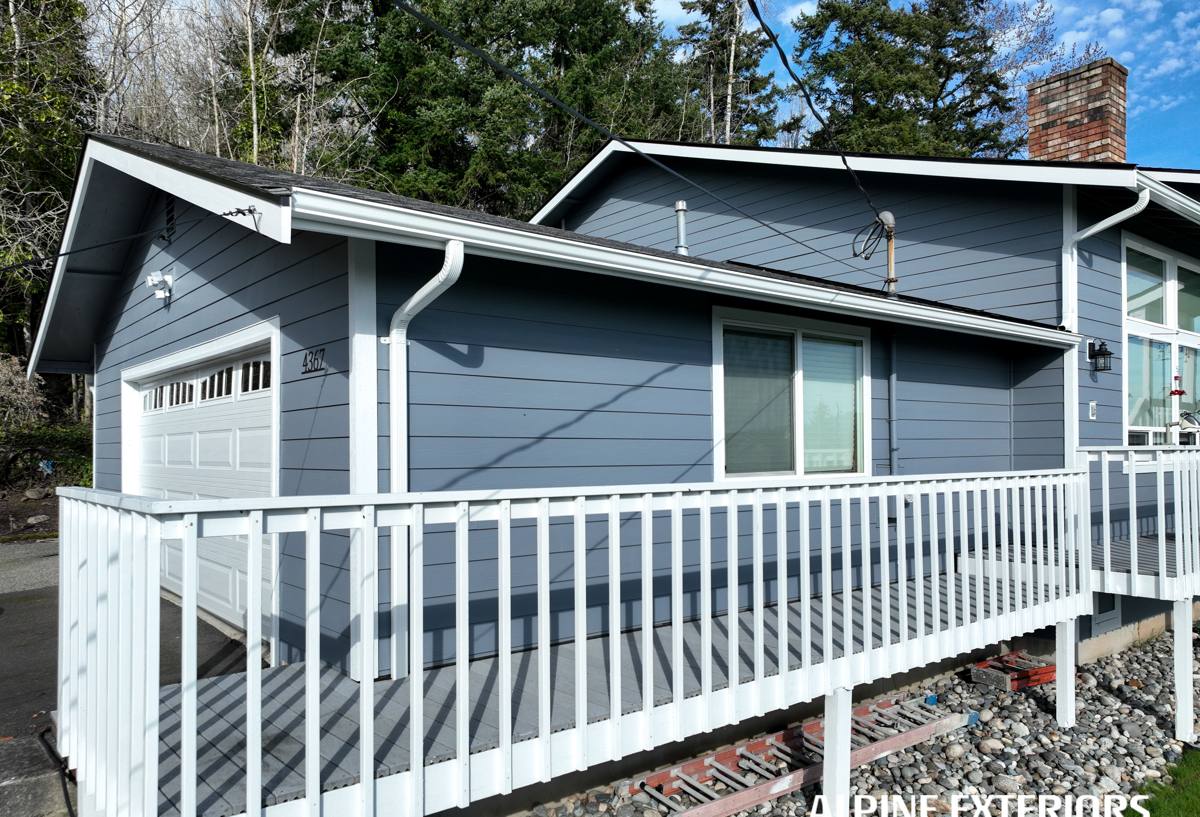
What a Storm Actually Does to a Kendall Roof
Most storm damage isn't the roof caving in — it's smaller and easier to miss, which is exactly why it causes problems later.
Wind Damage
Wind doesn't need to be a named storm to do damage. Sustained gusts lift shingle edges and break the seal strip underneath, even when nothing looks visibly wrong from the ground. Once that seal is broken, the next rain gets underneath it, and the shingle doesn't have to be missing for water to get in.
Wind-Driven Rain
Rain that comes in at an angle finds every weak point in flashing, especially around chimneys, skylights, and roof-to-wall transitions. On properties with more roof valleys or dormers, this is usually where leaks start — not out in the open field of shingles.
Falling Debris
Kendall's tree cover is part of what makes the area feel rural and private, but it also means branches, cones, and moss debris come down in every windstorm. Impact damage can crack shingles, dent metal flashing, or clog valleys and gutters so that water backs up under the roofing instead of running off.
Moss and Trapped Moisture
Shaded, north-facing sections of roof stay damp for days after a storm. Moss growing in that dampness holds water against the shingle surface, works its way under tabs, and lifts them over time. A storm that wouldn't hurt a dry, sun-exposed roof can do real damage to one that was already softened by months of moss growth.
Signs You Have Storm Damage — Even If You Didn't See It Happen
- Granules collecting in gutters or at downspout discharge points
- Shingles that look "cupped," curled at the edges, or slightly lifted at the tab
- Bent, creased, or missing flashing around chimneys, vents, and skylights
- Moss or dark streaking concentrated on shaded slopes, especially near the ridge or under trees
- A soft or spongy feel when walking a section of roof (usually a sign of trapped moisture in the deck)
- Water stains on interior ceilings, especially near exterior walls or after a windy rain event
- Debris accumulation in valleys that wasn't cleared before the last storm
- Gutters pulling away from the fascia or overflowing during moderate rain
Any one of these on its own might not mean much. Two or three together, especially after a windstorm, is worth a professional look before the next system rolls through.
Repair or Replace? How We Make the Call
Not every storm-damaged roof needs to come off. But guessing wrong in either direction costs the homeowner — either paying for a full replacement that wasn't necessary, or patching a roof that's actually past the point where patching holds.
| Factor | Usually Points to Repair | Usually Points to Replacement |
|---|---|---|
| Extent of damage | Isolated to one slope or a handful of shingles | Spread across multiple slopes or the whole roof |
| Roof age | Under 12–15 years, otherwise in good shape | Near or past expected lifespan for the material |
| Decking condition | Solid, dry, no soft spots | Soft, delaminating, or moisture-stained plywood |
| Moss history | Recently treated, minimal growth | Long-term untreated moss with lifted shingles underneath |
| Flashing condition | Localized bent or loose sections | Widespread corrosion or failed seals throughout |
We walk the roof, check the decking where we have access, and give a straight answer — not the answer that happens to cost more.
How We Handle a Storm Damage Call
1. Immediate Assessment
If there's active leaking or a tarp situation, that comes first. We stop water intrusion before we worry about the permanent fix. A roof that's actively taking on water in the Nooksack valley's wet season can't wait for a full repair timeline.
2. Full Roof Inspection, Not Just the Obvious Spot
Storm damage rarely shows up in only one place. We check the whole roof — valleys, flashing, ridge caps, and the shaded slopes where moss tends to concentrate — because a storm strong enough to cause one problem usually stressed the whole roof, not just the visible section.
3. Documentation
We photograph and note damage clearly enough to support an insurance claim if you're pursuing one, including close-up shots of granule loss, lifted tabs, and flashing failures that aren't obvious from ground level.
4. The Repair Itself
Matching shingles, resealing tabs, replacing flashing, and rebuilding valleys correctly — with proper underlayment and ice-and-water shield in the areas most exposed to wind-driven rain — rather than just caulking over a symptom.
5. Moss and Debris Cleanup
Since moss and trapped debris are part of what makes storm damage worse out here, we clear valleys and gutters as part of the job, not as a separate upsell.
What Correct Storm Repair Looks Like in This Climate
Flashing That Actually Sheds Water
Flashing failures are the single most common source of "mystery leaks" after a storm. Correct repair means new step flashing and counter-flashing installed to shed water downhill at every transition, not just a bead of sealant over the old metal.
Underlayment in the Right Places
Valleys and eaves take the brunt of wind-driven rain. We use ice-and-water shield membrane in those zones so that even if wind pushes rain uphill under the shingle edge, there's a second line of defense underneath.
Matching Materials, Not Just Colors
When we replace storm-damaged sections, we match not just the shingle color but the granule type and profile as closely as the manufacturer allows, so the repair doesn't stand out or age differently than the surrounding roof.
Ventilation Check
A roof that's already fighting moss and moisture problems often has a ventilation issue underneath — poor attic airflow keeps the deck cooler and damper than it should be, which speeds up moss growth and shingle aging. We check this as part of any storm repair, because fixing the surface without addressing airflow just means the same damage comes back.
Insurance Claims: What Helps and What Doesn't
Wind and impact damage are usually covered under standard homeowner's policies, but claims move faster and get approved more cleanly when the documentation is thorough and the damage is clearly tied to a specific weather event rather than general wear.
- Get an inspection soon after the storm — delayed reporting raises questions about when the damage actually occurred
- Ask for dated photos of the specific damage, not just a general roof condition report
- Keep any tarping or emergency work invoiced separately, since most policies cover reasonable emergency mitigation
- Be honest with your adjuster and your contractor about pre-existing moss or maintenance issues — mixing storm damage with long-term wear can slow down or complicate a claim
Why a Kendall-Familiar Crew Matters
A roof repair crew that mostly works subdivisions closer to Bellingham doesn't necessarily know how differently a shaded, tree-lined Kendall property behaves compared to an open-lot home in town. We work roofs throughout Whatcom County, including the more rural stretches around Kendall and the Nooksack River corridor, and we've seen firsthand how much faster moss and moisture problems develop under heavy tree cover versus open exposure.
That matters for storm repair specifically, because a repair that assumes "normal" drying conditions on a roof that actually stays damp for days after every rain will fail sooner than it should. We build repairs for the roof and property in front of us, not a generic template.
A Quick Checklist Before Your Next Storm
- Gutters and valleys clear of moss, needles, and debris
- No visibly lifted, cracked, or missing shingles
- Flashing around chimneys and vents intact and sealed
- No soft spots or sagging when the roof was last walked
- Attic checked for daylight, staining, or musty odor
- Any prior repairs holding up, not showing new lifting or gaps
If you can't confidently check off that list, it's worth having someone look before the next storm system moves through rather than after.
If a recent storm has you wondering about the condition of your roof, we're happy to take a look. We offer free, no-pressure estimates for Kendall homeowners — just fill out the form below and we'll get you scheduled.