 Lynden Siding
 Why Roofs in Kendall Wear Differently Than Roofs Inland
Kendall sits back in the Whatcom County foothills, but the weather here doesn't behave like an inland climate. The same moisture-laden marine air that moves off the Salish Sea rides up the Nooksack River valley and settles against the hillsides around Kendall, where it lingers under tree cover longer than it does in open country. Add the driving, sideways rain that comes with fall and winter storms, and you get a roof that's wet more often than it's dry for a good stretch of the year.
That combination — persistent dampness, shaded lots, and slow-drying surfaces — is exactly what moss and algae need to take hold. On a lot of Kendall roofs we've looked at, the north-facing slopes and anything under a tree canopy show moss well before the rest of the field does. Left alone, moss doesn't just look bad. It holds water against the roofing material, works its way under shingle tabs, and lifts the edges enough for wind-driven rain to get underneath. A new roof installation out here has to be built with that reality in mind from the first course of underlayment, not treated as an afterthought.
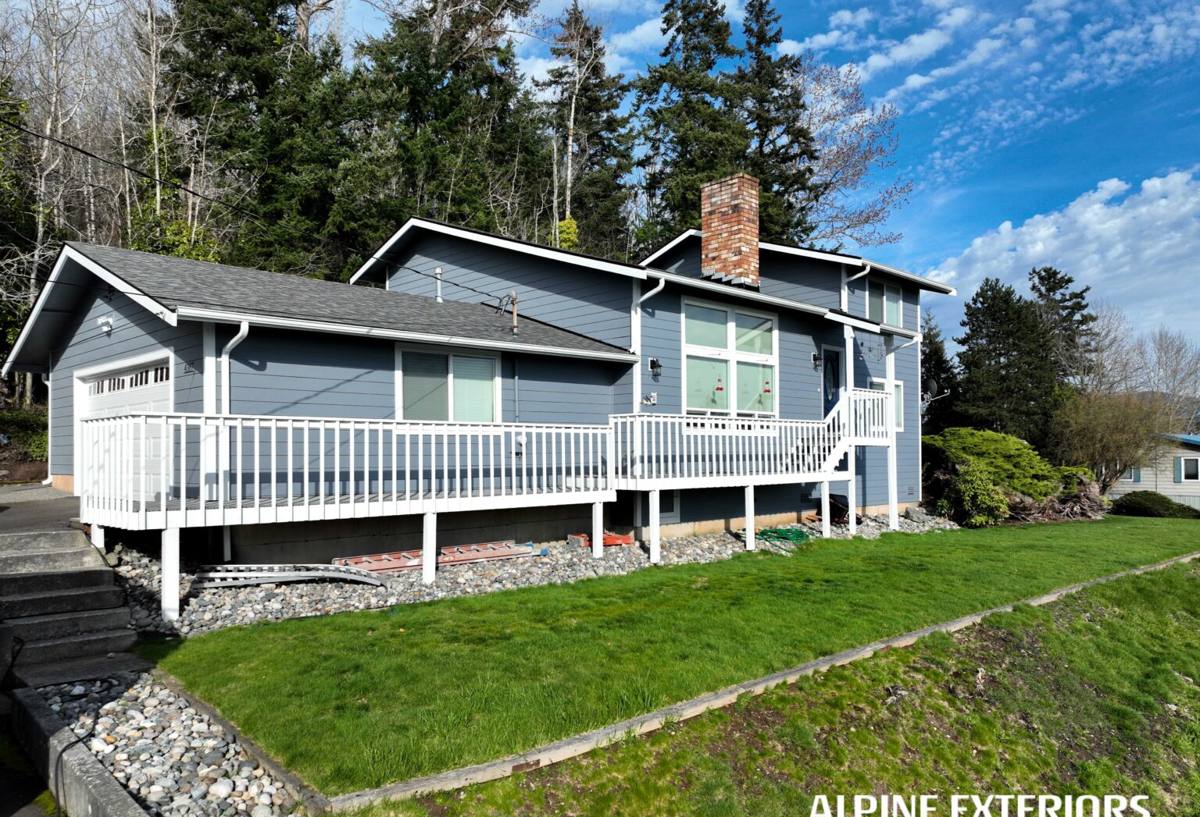
What "Correct" Actually Means on a Kendall Roof
A roof replacement is only as good as what's underneath the shingles or panels. In this climate, corners cut on the details below the surface are what turn into leaks two or three winters later — long after the crew that did the work is gone.
Tear-Off and Deck Inspection
We remove the old roofing down to the deck rather than layering over it. That's the only way to actually see what's going on with the sheathing — soft spots, delaminated plywood, or rot around old vent penetrations don't show up until the old material is off. Any deck section that's compromised gets replaced before anything new goes down; installing new roofing over a soft deck just hides the problem until it's bigger and more expensive.
Ice, Water, and Underlayment
Given how much of the year Kendall roofs stay wet, we treat underlayment as a real waterproofing layer, not a formality. Self-adhered ice-and-water membrane goes at eaves, valleys, and around every penetration — chimneys, vent stacks, skylights — because those are the spots where wind-driven rain finds a way in first. The rest of the deck gets a synthetic underlayment that holds up better than old felt paper if the roofing above takes longer than expected to finish in a wet stretch.
Flashing
Flashing failures cause more roof leaks than worn-out shingles do. Every roof-to-wall transition, chimney, valley, and vent gets new metal flashing set correctly into the underlayment layers, not just caulked over the old flashing. Caulk is a maintenance item, not a waterproofing strategy — it fails long before the roof around it does.
Ventilation
A roof that can't breathe traps moisture in the attic, which shortens the life of the decking and the roofing material from underneath. We balance intake at the soffits with exhaust at the ridge so air actually moves through the attic space instead of stalling out — that matters more here than in a drier climate, because the roof deck is already dealing with moisture pressure from outside.
Choosing a Roofing Material for a Kendall Home
There's no single "best" roofing material — the right choice depends on your roof's exposure, your budget, and how much maintenance you want to take on. Here's how the common options compare for a property with Kendall's mix of shade, moisture, and moss pressure.
| Material | Moss/Moisture Resistance | Typical Lifespan | Maintenance |
|---|---|---|---|
| Architectural asphalt shingle | Good with proper ventilation and periodic cleaning | 25–30 years | Occasional moss treatment, especially on shaded slopes |
| Standing seam metal | Excellent — sheds water fast, little for moss to grip | 40–50+ years | Very low; check fasteners and sealant over time |
| Synthetic/composite shake | Good — engineered to resist moisture absorption | 30–50 years | Low; periodic debris clearing |
| Cedar shake | Requires active upkeep in a wet, shaded climate | 20–30 years with maintenance | Regular treatment and cleaning to prevent rot and moss |
We're honest with clients about that last row: real cedar shake looks great, but on a shaded, moisture-prone Kendall lot it demands a maintenance schedule most homeowners don't keep up with, and moss and rot show up faster than the material's reputation suggests. If the look matters to you, a synthetic shake product gets you closer to that appearance without the same upkeep burden.
Dealing With Moss at the Source, Not Just the Symptom
Cleaning moss off an old roof buys a little time, but it doesn't fix the conditions causing it. On a new installation, we build in a few things that actually reduce how fast moss comes back:
- Zinc or copper control strips installed near the ridge, which release trace metal ions with every rain that slow moss and algae growth on the slopes below
- Proper ridge and soffit ventilation so the roof deck dries out between rain events instead of staying damp
- Correct shingle or panel selection for shaded, north-facing slopes where moss pressure is heaviest
- A frank conversation about tree canopy — if branches are hanging low over the roof, trimming back overhead growth does more for moss prevention than any product we install
None of this makes a roof moss-proof forever. It shifts the maintenance from "why is my roof failing" to "hose it off every year or two," which is a much cheaper and easier problem to have.
Our Installation Process
Every roof is a little different, but the sequence stays consistent from job to job:
- On-site inspection and honest assessment — including whether repair is actually a reasonable option before we ever talk about full replacement
- Written estimate that spells out materials, scope, and pricing with no vague allowances
- Material delivery and site protection — landscaping, driveways, and gutters get covered before tear-off starts
- Full tear-off and deck inspection, with any damaged sheathing replaced
- Underlayment, ice-and-water membrane, and flashing installed at every vulnerable point
- Roofing material installed to manufacturer specification, with ventilation balanced properly
- Full site cleanup, including a magnetic sweep for nails
- Final walkthrough so you can see the finished work before we call the job done
Permits and Local Requirements
New roof installations in unincorporated Whatcom County, which covers Kendall, typically require a building permit. We handle that paperwork as part of the job rather than leaving it to the homeowner. We also account for the elevation and exposure typical of foothill properties near Kendall — roofs here can see heavier seasonal rain volume and, depending on the specific site, more wind exposure than roofs closer to town, which factors into fastening patterns and material choice.
Signs Your Roof Needs Replacement, Not Another Repair
Not every roofing problem calls for a full tear-off. But a few signs usually mean patching is just delaying the inevitable:
- Granule loss heavy enough that shingles look bald or patchy in spots
- Shingles that are cracked, curling, or lifting across multiple areas of the roof, not just one spot
- Moss buildup that's returned repeatedly despite cleaning, especially on north-facing slopes
- Daylight visible through the attic decking, or damp insulation after storms
- A roof that's already had two or more repairs in the last few years
- Roofing material that's past or near the end of its expected lifespan for its type
If your roof shows one or two of these, a repair might still make sense. If it shows several at once, a new installation is usually the more cost-effective path — you stop paying for repeated patch jobs on a system that's failing as a whole.
Why Local Experience Matters for This Job
Roofing crews that don't regularly work in areas like Kendall tend to build to a generic standard — enough ventilation for an average climate, standard underlayment coverage, no real plan for moss. That's a mismatch for a property dealing with heavy shade, driving rain, and a moss season that runs longer than most parts of the country ever see. A crew that already works this part of Whatcom County knows which slopes on a given roof design are going to hold moisture, where ice-and-water membrane needs to go beyond code minimum, and what ventilation balance actually holds up here rather than on paper. That local pattern recognition is the difference between a roof that needs attention again in five years and one that goes the full length of its expected life.
If your roof is showing its age or you just want a straight answer on whether repair or replacement makes sense for your Kendall property, we're happy to take a look. Reach out for a free, no-pressure estimate using the form below.