 Lynden Siding
 Maple Falls Sits in a Tougher Microclimate Than Most of Whatcom County
Maple Falls is up the Mt. Baker Highway corridor, higher in elevation and closer to the timber than homes down in Lynden proper. That difference matters more than most homeowners realize. Tree cover means more shade on walls that never fully dry between storms. Proximity to the forested slopes means wood debris, needles, and organic buildup collect against siding and trim in ways a more open, in-town lot doesn't see. And like the rest of Whatcom County, marine-influenced air pushes inland up the Nooksack Valley, keeping humidity high even when it isn't actively raining.
Add in driving rain that comes sideways during winter storms, and a moss season that can run eight or nine months out of the year on shaded elevations and north-facing walls, and you have a set of conditions that will find every weakness in a siding system. Paint that's too thin, caulk joints that were never meant to be a moisture barrier, seams that trap water instead of shedding it — all of it shows up faster in Maple Falls than it would on a dry, sun-exposed lot in a different part of the state.
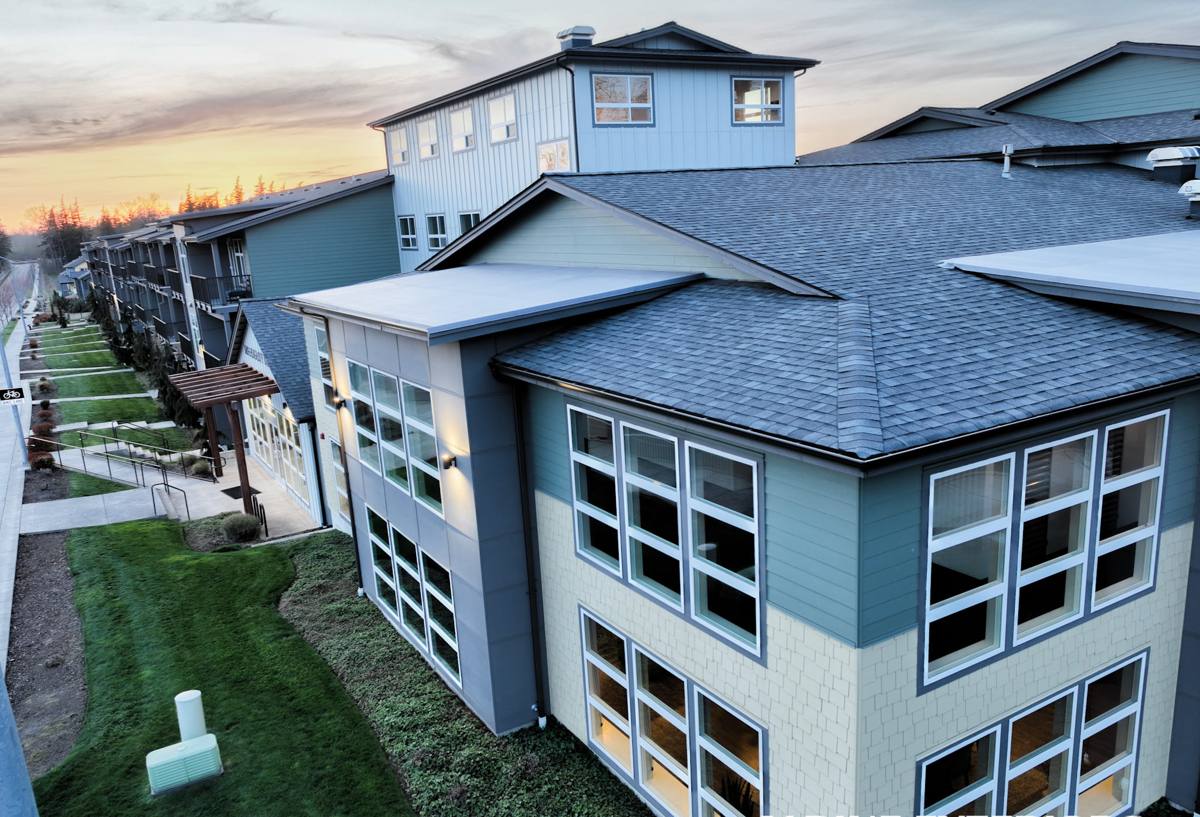
Why We Only Install James Hardie Here
We install James Hardie fiber cement exclusively — no LP SmartSide, no vinyl, no Cemplank or Allura, no primed spruce or cedar. That's a deliberate standard, not a sales preference, and it matters even more in a community like Maple Falls.
Non-Combustible Matters Near the Trees
Homes closer to forested land carry a different risk profile than homes in a dense residential grid. Fiber cement is non-combustible, which is a meaningful consideration for a home sitting closer to wooded slopes than a typical in-town lot. This isn't a scare tactic — it's simply a real trade-off, and it's one reason we don't stock combustible alternatives.
ColorPlus Finish vs. Field-Applied Paint
James Hardie's ColorPlus finish is baked on at the factory under controlled conditions, then cured — it isn't rolled or sprayed on-site the way paint goes on wood or primed products. In a climate where walls stay damp for long stretches, a factory finish that's been engineered to resist fading and moisture intrusion holds up more consistently than field-applied coatings, which depend heavily on weather conditions during application.
Built for This Region's Moisture, Not Just Its Look
Hardie's HZ5 product line is engineered specifically for climates with sustained moisture exposure and freeze-thaw cycling — which describes the Maple Falls area well. That's a different design intent than siding built primarily for appearance or cost, and it shows over a 15- or 20-year timeline, not in the first season.
What a Correct Installation Actually Involves
Fiber cement siding is only as good as its installation. A rushed or under-specified job can fail years before the material itself would have. On a Maple Falls home, we pay particular attention to:
- Proper starter strip and flashing at the base of every wall, so water is directed out and away rather than behind the cladding
- Correct gapping and fastening per Hardie's published installation specifications — not shortcuts that void the warranty
- Weather-resistive barrier installed and lapped correctly behind the siding, with all penetrations sealed before panels go up
- Kick-out flashing at roof-wall intersections, which is one of the most common failure points on homes with any roof complexity
- Trim and joint sealant chosen and applied for long-term flexibility, not just a clean look on install day
- Ventilation gaps maintained behind the cladding so shaded, damp walls can actually dry out between storms
Every one of these details is invisible once the job is finished — which is exactly why they matter. A siding job that looks right on day one and a siding job that's still performing at year fifteen come from the same set of decisions made during installation, not from the product label.
Our Process, Start to Finish
We keep the process straightforward because Maple Falls homeowners don't need a sales pitch — they need a clear plan.
1. On-Site Assessment
We walk the exterior, check for existing moisture damage (especially at shaded north walls and roof-wall intersections), and take real measurements rather than estimating from a distance.
2. Written Scope and Estimate
You get a specific scope of work and a real number — not a range that leaves the details vague. We explain what's included: tear-off, any sheathing repair found underneath, house wrap, flashing, and the Hardie product and profile we're recommending.
3. Install to Manufacturer Spec
Our crews install to James Hardie's published specifications, which is what keeps the manufacturer's warranty intact and is also simply the right way to do the work.
4. Final Walkthrough
We walk the finished job with you before we consider it done, not before we invoice it.
Hardie vs. the Alternatives, for This Climate Specifically
| Factor | James Hardie Fiber Cement | Vinyl | LP SmartSide / Wood-Based |
|---|---|---|---|
| Moisture behavior in sustained damp shade | Engineered for moisture exposure; doesn't rot | Doesn't rot, but can trap moisture behind panels if installed loose | Wood-based core is vulnerable if the factory seal is ever breached |
| Combustibility | Non-combustible | Combustible | Combustible |
| Finish longevity | Factory-cured ColorPlus finish | Color molded in, but can fade or become brittle over time | Factory-primed or coated; edges need re-sealing if cut or damaged |
| Moss and organic growth cleanup | Withstands regular gentle cleaning without degrading | Withstands cleaning; can crack in cold if flexed | Sensitive to prolonged moisture at any exposed edge |
| Warranty structure | Long-term, transferable manufacturer warranty on the product | Varies widely by manufacturer and grade | Warranty often conditional on maintaining the factory coating intact |
None of these alternatives are junk products — vinyl and engineered wood siding both have a place in the market. We simply concluded that for the moisture load and shade conditions typical of this part of Whatcom County, fiber cement's trade-offs favor the homeowner more consistently over a 15-to-20-year ownership window, which is why we standardized on it and stopped installing the rest.
Signs a Maple Falls Home May Need New Siding
Because so much of a siding system's real condition is hidden behind the surface, we recommend homeowners check for these signs rather than waiting for something obvious:
- Soft or spongy spots when you press on the siding, especially near the bottom courses or below windows
- Persistent dark streaking or moss growth that returns quickly after cleaning, even on gently sloped or shaded walls
- Visible gaps, warping, or buckling panels, particularly after a hard freeze-thaw stretch
- Peeling or bubbling paint, which often signals moisture is already moving through the wall assembly
- Higher-than-expected heating bills, which can point to a compromised weather barrier behind the cladding
- Trim or corner boards that have separated from the wall, a common early failure point on older installations
Maintenance During a Long Moss Season
James Hardie siding doesn't require the kind of upkeep wood siding does, but it isn't zero-maintenance in a climate like this. A yearly gentle wash — a garden hose and soft brush, not a pressure washer aimed directly at seams — keeps moss and organic buildup from taking hold on shaded walls. Check caulk joints around windows, doors, and trim annually; caulk is the one component in the system that does wear out on a predictable cycle, regardless of what siding is behind it. Keep gutters clear so overflow doesn't run down the wall face, and trim back vegetation that's shading a wall more than necessary — the faster a wall can dry after rain, the less moss and mildew it will hold long-term.
Why Hiring a Crew That Already Works Maple Falls Matters
Siding installation isn't generic. A crew that primarily works drier, more open lots elsewhere in the state may not think twice about a detail that's routine for us here: extra attention to shaded wall assemblies, ventilation gaps that account for slower drying times, and flashing details built for driving rain rather than occasional showers. We work this specific stretch of Whatcom County regularly, which means we're not guessing at what the climate does to a wall over a decade — we've already seen it on homes near yours.
That local familiarity also means a straightforward logistics advantage: we're not routing a crew a long distance for a service call, a warranty question, or a follow-up after a storm. For a homeowner, that translates into faster response and a contractor who has a real stake in how the job holds up locally, not just on install day.
Get a Straightforward Estimate
If you're weighing new siding for a Maple Falls home — whether it's a full replacement or you're just trying to understand what shape your current siding is really in — we're happy to take a look and give you a clear, no-pressure estimate. Use the form below to get started.