 Lynden Siding
 Deming's Climate Puts Real Stress on Exterior Walls
Deming sits in the Nooksack River valley east of Lynden, tucked closer to the foothills and tree cover than the open farmland closer to town. That location changes how a house takes weather. Homes here get less direct sun exposure on shaded elevations, hold moisture longer after a storm, and stay damp for extended stretches during the fall and winter rainy season. Add in Whatcom County's marine-influenced climate — steady drizzle, high humidity, and a long stretch of gray months — and you get siding conditions that punish anything not built to shed water fast and dry out completely.
We've worked on homes throughout the Lynden area, including Deming, long enough to see the pattern: it's rarely one big storm that ruins siding out here. It's the slow, repeated cycle of rain, shade, and incomplete drying that eventually finds every weak seam, every gap in the water barrier, and every spot where the wrong material was asked to do a job it wasn't built for.
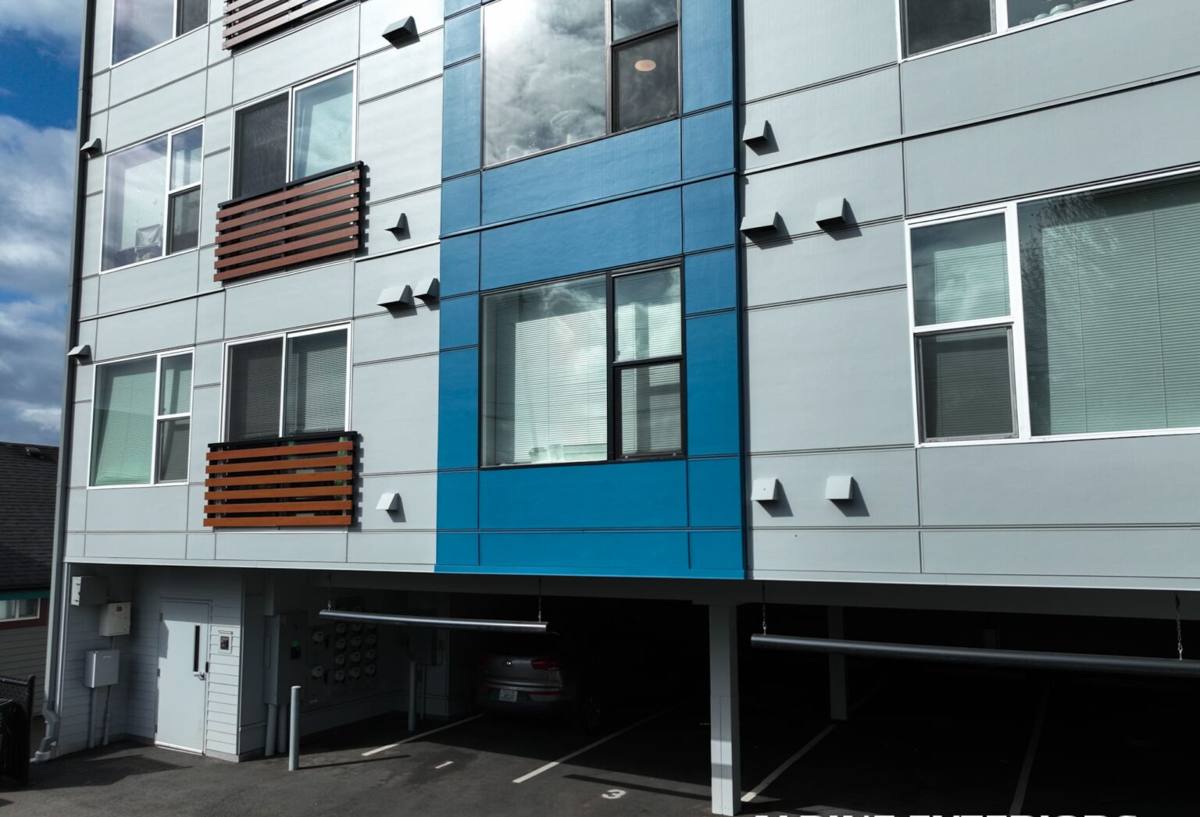
What Correct Siding Must Solve For in This Area
A siding job in Deming has to handle a specific combination of problems, not just "keep the rain out" in the abstract. The real list looks like this:
- Extended damp periods. Shaded lots and tree-lined lots dry more slowly after rain, so siding needs to resist moisture absorption, not just repel it briefly.
- Moss and algae growth. Shade plus moisture is exactly what moss needs. Porous or wood-based siding gives moss something to root into over time; a dense, factory-sealed surface gives it far less to hold onto.
- Driving rain against exposed walls. Wind-driven rain doesn't just hit a wall — it pushes water sideways and upward behind poorly lapped or poorly flashed siding.
- Wide seasonal swings. Wet winters and drier summers mean siding expands and contracts. Materials that don't hold dimension well eventually gap, cup, or crack at the seams.
None of this is exotic — it's ordinary Pacific Northwest weather. But it's demanding on a wall system year after year, and it's why the material and the installation both matter more here than they would in a dry climate.
Why We Install Only James Hardie Fiber Cement Siding
We don't install vinyl, LP SmartSide, primed spruce, cedar, or other fiber cement brands like Cemplank or Allura. That's a standard we hold across every job, not just Deming. It comes down to what performs over the long run in exactly the conditions described above.
Vinyl is inexpensive and low-maintenance in mild climates, but it softens, warps, or cracks under temperature swings, and it isn't rigid enough to hold a tight seal against driving rain the way a dense fiber cement panel does. Wood-based products like LP SmartSide and cedar look good going in, but they rely on an intact factory or field coating to keep moisture out — any breach, and the wood substrate underneath absorbs water and starts to swell or rot from the inside, which is hard to catch early. Other fiber cement brands aren't necessarily bad products, but we've standardized on one manufacturer so our crews install to one spec, source one warranty, and know exactly how the material behaves in this climate rather than juggling different install requirements across brands.
James Hardie fiber cement is non-combustible, engineered specifically for Pacific Northwest moisture exposure in its HZ5 product line, and finished with a factory-applied ColorPlus coating that's baked on and backed by its own finish warranty — it doesn't rely on a field-painted top coat to hold up against years of rain and shade.
What "HZ5" Actually Means
Hardie engineers its siding by climate zone. HZ5 is the formulation built for regions like ours, with wetter winters and moderate but real freeze-thaw cycles. It's not a marketing label — it affects the moisture resistance and durability of the actual board.
What Goes Into a Correct Installation
Fiber cement siding is only as good as the wall assembly behind it. A rushed or careless install can undercut even the best material, and in a damp climate like Deming's, mistakes show up faster. A correct job includes:
- A continuous, properly lapped weather-resistive barrier (house wrap) underneath, with no gaps or reversed laps that let water track behind it.
- Correct flashing at every window, door, and roofline intersection — the single most common failure point on older siding jobs we've replaced.
- Proper clearance at the ground line and at any deck or patio surface, so siding never sits in standing water or constant splash-back.
- Manufacturer-specified fastener type, spacing, and penetration — Hardie has exact requirements, and skipping them voids the warranty and weakens wind and moisture resistance.
- Correct panel gaps and joint treatment, sealed with a compatible sealant rather than caulked and hoped-for.
- Field-cut edges sealed per spec, since a cut edge that's left raw is a direct entry point for moisture.
Every one of these is a small detail that's invisible once the job is finished — and every one of them is what determines whether the siding lasts 10 years or 40.
Our Installation Process, Step by Step
1. On-Site Assessment
We walk the home, check the condition of the existing siding and sheathing, note shaded and moisture-prone elevations, and identify any rot or water damage that needs to be addressed before new siding goes on.
2. Removal and Sheathing Check
Old siding comes off and we inspect the sheathing underneath. Any soft, water-damaged, or compromised sheathing gets repaired or replaced — covering over a damaged wall with new siding just hides the problem.
3. Water Barrier and Flashing
We install a continuous weather-resistive barrier and flash every penetration, window, door, and transition point before a single piece of siding goes up.
4. Hardie Panel Installation
Panels, fasteners, and joint spacing are installed to James Hardie's published specifications for our climate zone — not shortcuts, not "close enough."
5. Trim, Caulking, and Finish Detail
Trim is fitted, seams are sealed with compatible sealant, and touch-up is done using Hardie-matched product so the ColorPlus finish stays consistent.
6. Final Walkthrough
We walk the finished job with the homeowner, point out what was done, and answer questions before calling it complete.
Comparing Siding Options for a Deming Home
| Material | Moisture / Moss Resistance | Maintenance | Typical Lifespan |
|---|---|---|---|
| James Hardie Fiber Cement | High — dense, factory-sealed surface resists moss rooting and moisture absorption | Low — occasional wash, no repainting needed for years | 30+ years with proper install |
| Vinyl | Moderate — sheds water but seams and panels can warp, allowing moisture behind | Low, but limited repair options once damaged | 15–25 years |
| LP SmartSide / Wood-Based | Lower — performance depends entirely on an intact coating; wood core swells if breached | Higher — coating needs monitoring and eventual maintenance | 15–20 years typical, shorter if moisture gets in |
| Cedar | Lower — natural wood absorbs moisture and is a food source for moss/algae | High — regular sealing or staining required | Varies widely with maintenance |
Costs vary by home size, elevation complexity, and existing wall condition, so we don't quote broad numbers without seeing the house — but material and maintenance differences like these compound over the 20–30 year window most homeowners actually care about.
Signs Your Current Siding Is Already Failing
Because Deming's shade and moisture cycle work slowly, siding problems can be underway well before they're obvious from the street. Worth checking for:
- Dark streaking or green/black growth concentrated on shaded or north-facing walls
- Soft spots or slight give when you press on wood-based or composite siding
- Bubbling, peeling, or chalky paint that keeps returning after repainting
- Visible gaps, warping, or panels that no longer sit flush at the seams
- Musty smell or discoloration on interior walls that back onto exterior siding
- Cracking or splitting at corners and around window trim
Any of these is worth a closer look before it turns into a sheathing repair, not just a siding repair.
Why Local Experience in the Nooksack Valley Matters
A crew that only occasionally works this side of Whatcom County will treat Deming like any other job site. A crew that regularly works the Lynden area already knows which elevations sit in shade most of the day, how much moss pressure a shaded, tree-lined lot actually sees compared to open farmland, and how the valley's damp air changes drying time during installation itself — which matters for sealant cure and moisture readings before panels go up. That local pattern recognition doesn't replace following the manufacturer spec, but it does mean fewer surprises and a job planned around how this specific area actually behaves through a wet winter.
Caring for Your New Siding After Installation
James Hardie siding is low-maintenance, not no-maintenance. A simple annual routine keeps it performing as designed:
- Rinse siding with a garden hose once or twice a year to clear pollen, dust, and early moss growth before it takes hold
- Keep gutters clear so overflow doesn't run down siding repeatedly during heavy rain
- Trim back vegetation and tree limbs that keep a wall section shaded and damp longer than necessary
- Inspect caulking at trim and joints every year or two and have any cracked sealant redone
If you're weighing a siding replacement on a Deming home, we're happy to take a look, walk the property, and give you a straight answer on what your walls actually need — no pressure, no obligation. Reach out below for a free estimate.