 Lynden Siding
 Windows Built for Deming's Weather, Not Just the Showroom
Deming sits back from the coast, tucked into the Nooksack River valley with the North Cascades rising close behind, but the weather that shapes this part of Whatcom County still runs on Pacific Northwest rules. Marine air pushes inland off Bellingham Bay and the Salish Sea, driving rain sideways during fall and winter storms, and the tree-shaded, river-bottom lots common around Deming stay damp long after the rest of the county has dried out. That combination of moisture, shade, and temperature swings between valley floor and mountain foothills is hard on windows that weren't installed with this specific climate in mind.
A window that performs fine in a dry inland climate can fail quietly here. Seals soften, frames trap moisture instead of shedding it, and glass fogs between panes years before it should. We install and replace windows across Deming with that reality built into every decision, from the products we recommend to the flashing details around the rough opening.
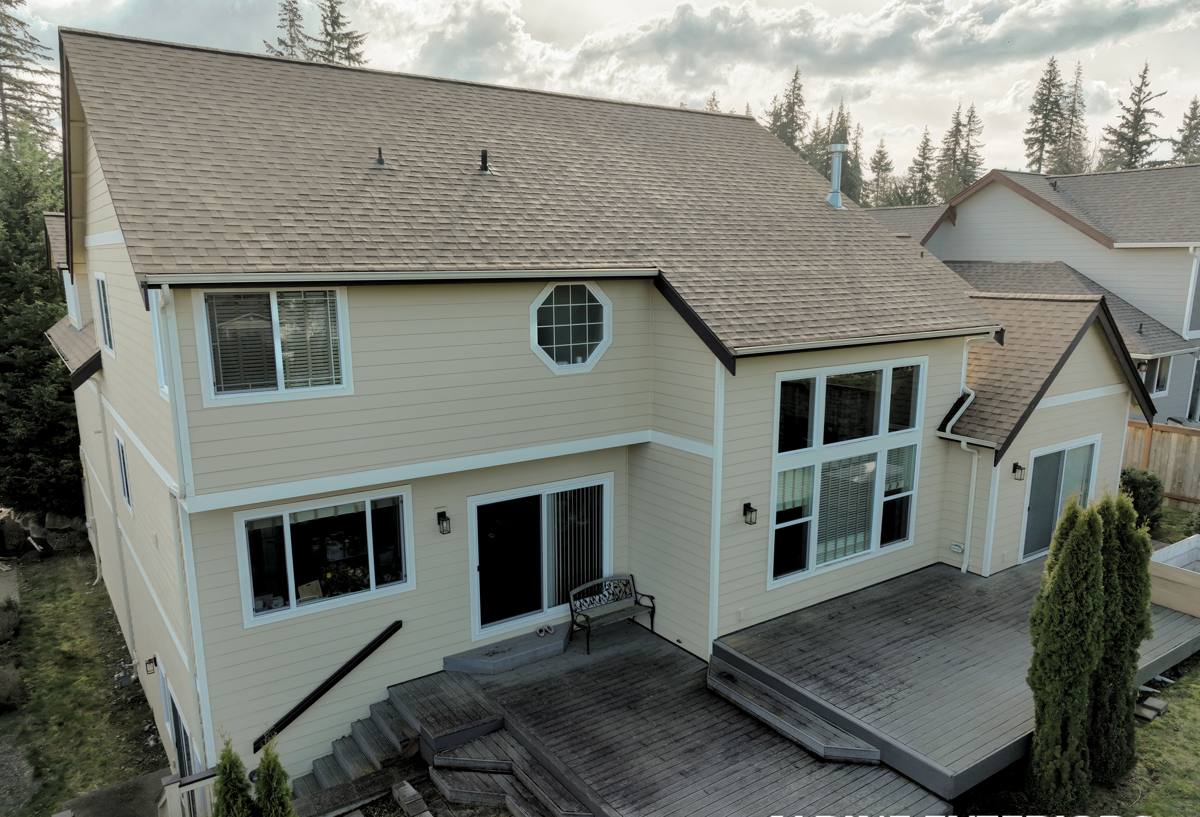
What This Climate Actually Does to Windows Over Time
Driving Rain and Wind-Driven Moisture
Whatcom County storms rarely deliver rain straight down. Wind pushes it sideways and up under trim, sills, and poorly sealed frames. Over years, that wind-driven moisture works into gaps that looked fine on installation day. Once water gets behind a window, the damage happens where you can't see it — in the framing, the sheathing, and the insulation around the opening — long before it shows up as a stain on your interior wall.
Moss, Mildew, and Shade
Deming's tree cover and river-valley humidity mean surfaces here hold moisture longer than they do on more open, wind-exposed lots. Wood sills and trim in shaded spots are especially prone to a slow buildup of moss, algae, and mildew if they're not detailed to drain and dry properly. That's less about the window unit itself and more about how the trim, sill pan, and surrounding materials are built to shed water instead of holding it.
Temperature Swings Between Valley and Foothills
Deming sees a wider temperature range than lowland Whatcom County — colder overnight lows in winter, warmer summer afternoons, and more freeze-thaw cycling than you'd get closer to the water. That swing stresses seals, glazing compounds, and frame materials differently than a milder coastal microclimate. Products and installation methods that hold up fine in Bellingham or Lynden proper can be pushed harder out here.
Signs Your Deming Home's Windows Are Underperforming
Most window problems don't announce themselves with a leak. They show up as small, easy-to-dismiss symptoms first. Worth checking before winter each year:
- Fog or haze between the panes of a double- or triple-pane window — a sign the seal has failed and the gas fill is gone
- Noticeable draft near the frame even with the window fully latched
- Condensation forming on the inside of the glass regularly, not just on the coldest mornings
- Wood trim or sills that feel soft, or show dark staining, moss, or paint that keeps bubbling
- Windows that are hard to open, close, or lock — often a sign the frame has shifted or swelled
- A noticeable difference in room temperature near the window compared to the rest of the house
- Rising heating bills without a clear cause elsewhere in the home
Any one of these on its own isn't an emergency. Several of them together, especially on a home more than 15–20 years old, usually means it's time for a real look rather than another caulk-and-patch fix.
What "Energy-Efficient" Actually Means Around Here
The term gets used loosely in this industry. For a Deming home, the parts that matter most are the ones that address our actual conditions: sideways rain, humidity, and a real winter-to-summer swing. That comes down to three things working together — the glass package, the frame material, and how tightly the unit is installed and sealed into the opening. A high-end glass package in a poorly installed frame will still leak air and moisture. The reverse is also true.
| Feature | What It Does | Why It Matters in Deming |
|---|---|---|
| Low-E glass coating | Reflects heat back into the room in winter, blocks solar heat gain in summer | Helps even out the valley's wider seasonal temperature swing |
| Argon or krypton gas fill | Reduces heat transfer between panes | Improves comfort near windows during cold overnight lows common in the valley |
| Warm-edge spacer bar | Reduces condensation risk at the glass edge | Fewer damp edges for mildew to take hold in shaded, humid conditions |
| Multi-point locking hardware | Pulls the sash tight against the frame for a consistent seal | Resists wind-driven rain intrusion during storms |
| Proper flashing and sill pan | Directs any water that does get past the seal back outside | The single biggest factor in preventing hidden rot around the opening |
Notice that the last row isn't a product feature at all — it's an installation detail. In this climate, how a window is flashed and sealed into the wall matters as much as what glass is in it.
Frame Material: What Holds Up and What Doesn't
Frame choice is where a lot of Deming homeowners get steered wrong by whatever a big-box retailer happens to stock. Here's how the common options actually compare under our conditions:
| Material | Strengths | Trade-offs Here |
|---|---|---|
| Vinyl | Budget-friendly, low maintenance, doesn't rot | Can expand/contract more in wide temperature swings; quality varies a lot by manufacturer |
| Fiberglass | Very stable through temperature swings, strong, low maintenance | Higher upfront cost than vinyl |
| Wood | Classic look, good insulator | Needs consistent upkeep to resist moss, rot, and moisture in shaded, humid spots |
| Wood-clad (wood interior, metal/composite exterior) | Interior warmth of wood with a weather-resistant exterior shell | Cladding must be detailed correctly at joints or moisture can still work in behind it |
We don't push one material on every job. A shaded, low-airflow spot on a Deming property calls for different thinking than a sunnier, more exposed wall on the same house. Our standard is to match the material to the specific exposure, not to sell whatever's easiest to install.
How We Approach a Window Job in Deming
- On-site assessment. We look at each window's actual exposure — sun, shade, wind direction, roof overhang, and any existing moisture or rot signs — not just the home as a whole.
- Honest product recommendation. Based on that exposure, we recommend glass, frame, and hardware suited to the spot, and explain the trade-offs in plain terms.
- Removal and opening inspection. Once the old window is out, we check the framing and sheathing underneath for hidden moisture damage before anything new goes in. This is the step that gets skipped by installers in a hurry, and it's the one that matters most.
- Flashing and sill pan installation. We build a drainage path so any water that reaches the opening has somewhere to go, rather than sitting against the framing.
- Window installation and air-sealing. The unit goes in level, plumb, and square, then gets sealed with materials rated for our climate — not just caulk at the trim line.
- Interior and exterior trim finish. Trim gets sealed and finished to shed water, particularly on shaded elevations where moss and mildew take hold fastest.
- Final walkthrough. Every window gets operated, checked for a tight seal, and reviewed with the homeowner before we consider the job done.
Why Hiring a Crew That Already Works Deming Matters
A lot of window problems in this region trace back to installation, not product quality. A crew that mostly works drier, more sheltered areas doesn't always think about wind-driven rain, valley humidity, or shaded lots that hold moisture longer. Working regularly in and around Lynden and out into Deming means we're used to sizing up a wall's real exposure before we ever pick a window, and we've seen firsthand what happens when flashing or sealing gets rushed in this climate — because we're often the ones called back to fix it years later.
It also means we're not guessing at permitting, weather timing, or the kind of moisture issues that show up specifically in river-valley properties. We plan installation windows around the wetter stretches of the year when possible, and we know to slow down and inspect rather than assume an opening is dry and sound just because the old window looked fine from the outside.
Maintenance That Protects the Investment
Even a correctly installed, high-quality window benefits from basic upkeep, especially on a shaded or river-adjacent Deming lot:
- Clear debris and moss from sills, tracks, and weep holes a couple of times a year, more often on heavily shaded elevations
- Check exterior caulking annually for cracking or gaps, particularly after a hard winter
- Keep gutters and downspouts clear so runoff isn't sheeting directly down over window heads
- Operate every window at least a few times a year, even ones you rarely open, so hardware doesn't seize up
- Watch for early condensation between panes — it's a seal failure, not a cleaning problem, and it won't fix itself
What Affects the Cost
Every home is different, so we won't quote a number without seeing the job, but the main cost drivers are consistent across most Deming projects: the number of windows, frame material, glass package, whether the opening size is changing, and how much repair work is needed once we open up the wall. A straightforward swap into a sound opening costs less than a job where hidden rot needs to be addressed first — which is exactly why the inspection step in our process matters as much as the window itself. We'll always tell you plainly if we find something that needs attention, and why, before any work moves forward.
If your windows are drafty, fogged, hard to operate, or just older than you'd like to admit, we're happy to take a look and give you a straightforward, no-pressure estimate — no obligation, just an honest read on what your home actually needs. Use the form below to get started.