 Lynden Siding
 Deck Replacement Built for Deming's Wet, Wooded Climate
Deming sits back from the water, tucked into the tree-covered foothills along the Mount Baker Highway corridor in Whatcom County, and that setting shapes what a deck out here goes through. Homes are often surrounded by conifers and big leaf maples, sit near the Nooksack River drainage, and get long stretches of shade even in summer. Add in the marine-influenced air that pushes inland off Bellingham Bay and the Salish Sea, and you get a climate that's tough on any exterior wood or wood-frame structure: driving rain that comes in sideways during fall and winter storms, a moss season that can run eight or nine months of the year, and humidity that never fully clears out from under a shaded deck. A deck built or repaired without that in mind will show it within a few seasons — soft boards, black staining, spongy spots near the house, and railings that wiggle more than they should.
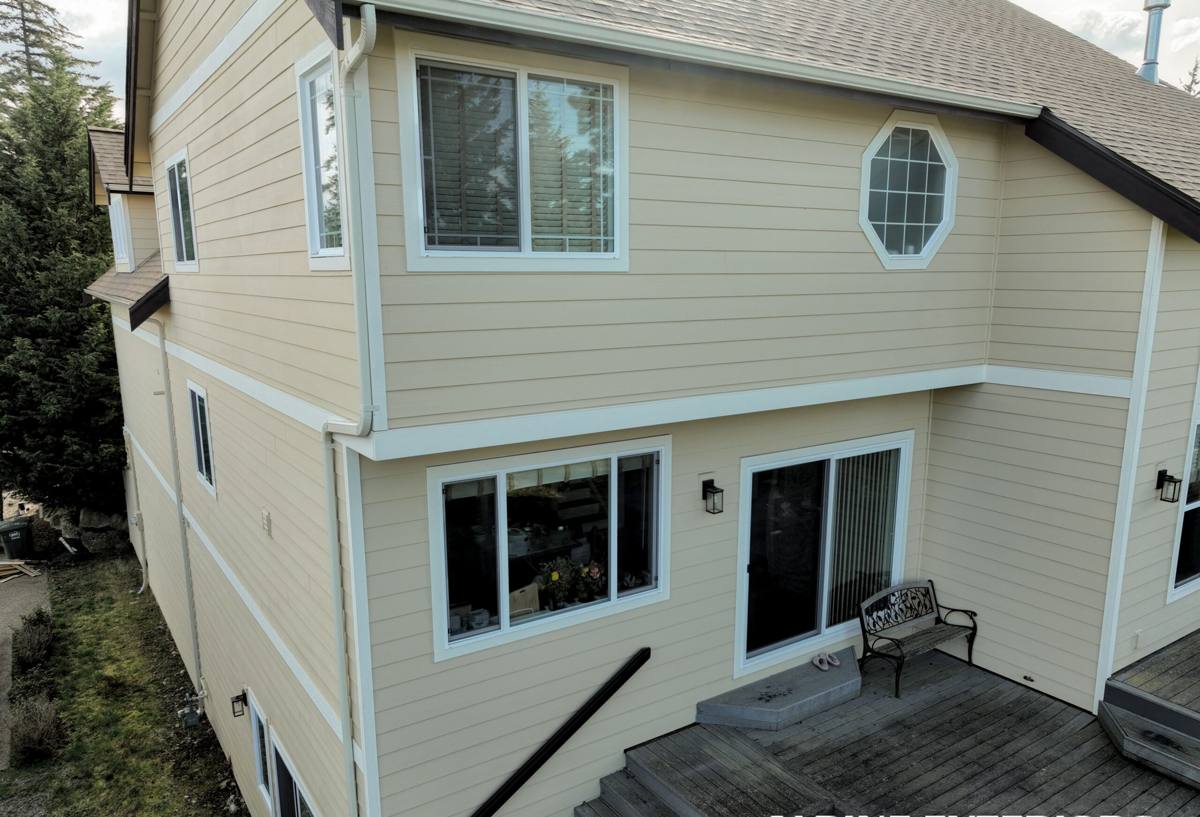
Why Decks Wear Out Faster in Deming
Shade, Tree Cover, and Moss
Tree cover is a mixed blessing. It's part of why people live out here, but it also means decks dry out slower after every rain. Moss and algae take hold on boards that stay damp, and once moss gets a foothold it holds moisture against the wood or decking surface around the clock. On older wood decks this leads to soft, punky spots you can push a screwdriver into. On composite decking it mostly shows up as staining and a slick, slippery surface — not structural rot, but not something you want to walk on barefoot either.
Driving Rain and the Nooksack Valley
Storms moving up the valley tend to drive rain at an angle rather than straight down, which pushes water into places a flat-roof mindset doesn't account for — under railing base plates, behind fascia boards, and into the ledger connection where the deck meets the house. Whatcom County's fall and winter rain events aren't just heavy, they're sustained, which matters more than any single downpour. Water finds the same weak point over and over until something gives.
Marine Air Reaches Inland Too
Deming isn't waterfront, but the same marine air mass that carries salt and moisture across Whatcom County reaches well inland, especially with the prevailing westerly flow. It's a slower, lower-grade exposure than a deck built right on the water, but combined with shade and rain it still accelerates corrosion on cheap fasteners and hardware, and it's one more reason generic, big-box deck specs undersell what actually holds up here.
Signs Your Deck Is Due for Replacement, Not Repair
Not every problem deck needs to come out entirely. But there's a point where patching individual boards is just delaying the same conversation. Walk your deck and look for these signs before deciding which way to go:
- Soft, spongy, or bouncy sections of decking, especially near the house or in shaded corners
- A ledger board that shows dark staining, gaps, or separation where it meets the siding or foundation
- Posts or railings that move when you push on them, not just squeak
- Persistent black or green staining that scrubbing and cleaner won't remove for more than a season
- Fasteners that are rusting, backing out, or leaving dark streaks down the boards
- Visible gaps or rot at joist ends, especially where joists meet beams or the ledger
- A deck more than 20-25 years old built to an older framing standard, regardless of surface condition
If you're only seeing one or two isolated issues on a structure that's otherwise solid, repair may be the honest answer. We'll tell you that on the estimate rather than push a full tear-out you don't need.
What a Correct Deck Replacement Actually Involves
Tearing Out the Old Structure Properly
A real replacement means removing decking, railings, and framing down to what's sound, and that includes checking the ledger and the posts, not just swapping the boards on top. It's common to open up an old deck and find the surface boards were replaced once already while the framing underneath was never addressed — that's how a deck ends up looking fine and failing anyway.
The Ledger Board — Where Most Failures Start
The ledger is the board that bolts the deck to the house, and it's the single most important connection on the whole structure. In a climate that drives rain against the house for months at a time, the ledger needs proper flashing that sheds water away from the band joist and siding behind it, not caulk alone. We use flashing details and fasteners rated for exterior, wet-service conditions, and we check that the ledger attaches to solid framing, not just sheathing. This is also the point where a lot of hidden rot gets found once the old decking comes off — it's better to find it now than have it found by a soft spot underfoot later.
Footings and Framing Built for the Ground Here
Footings need to be sized and set to the depth Whatcom County's building code requires for frost protection, on soil that can hold water longer than you'd expect given how well it drains on the surface. We use pressure-treated or naturally durable framing lumber, hardware rated for treated lumber's chemical makeup, and joist spacing sized for the decking material going on top, since composite and wood have different span requirements.
Decking Material Installation
Whatever surface material you choose, hidden fastener systems, correct board spacing for drainage and seasonal movement, and proper end-gapping all matter more here than in a dry climate, where sloppy spacing just looks a little off instead of trapping water.
Choosing a Decking Material for a Deming Property
There's no universally "best" decking material — the right choice depends on how much shade your lot gets, how much upkeep you want to do, and your budget. Here's how the common options actually perform under Whatcom County's rain and moss pressure:
| Material | Upfront Cost | Maintenance | Moisture/Moss Behavior | Typical Lifespan |
|---|---|---|---|---|
| Pressure-treated wood | Lowest | Annual cleaning, periodic sealing/staining | Prone to moss in shade if not maintained; can check and splinter over time | 15-20 years with upkeep |
| Cedar | Mid-range | Regular cleaning and refinishing to hold color and repel moisture | Naturally moisture- and insect-resistant, but still needs sealing in shaded, wet spots | 15-25 years with upkeep |
| Capped composite | Higher | Occasional washing; no staining or sealing | Won't rot, but can get slick with algae/moss film in deep shade and needs periodic scrubbing | 25-30+ years |
We don't push one material on every homeowner. If your deck sits in open sun most of the day, a well-maintained wood deck can look great and cost less up front. If it's tucked under trees the way a lot of Deming properties are, composite earns its higher price back in avoided maintenance — though we'll still tell you it needs the occasional scrub, because no product here is truly maintenance-free.
Permits, Setbacks, and Whatcom County Code
Deming is unincorporated, which means deck permitting runs through Whatcom County rather than a city building department. A structural deck replacement — new footings, new framing, or a deck over a certain height — typically requires a permit and an inspection, and guardrails, stair geometry, and baluster spacing all have to meet current code, not whatever standard was in place when the original deck went up decades ago. We handle the permit application and schedule the inspections as part of the job, so you're not left figuring out county requirements on your own or discovering a code issue after the work is done.
Our Deck Replacement Process, Start to Finish
- On-site inspection — we check the ledger, framing, footings, and surface, and tell you honestly whether it's a repair or a full replacement
- Written estimate and material selection — clear pricing, material options, and what's included, no vague allowances
- Permit and scheduling — we pull the Whatcom County permit and plan around weather windows so framing isn't sitting exposed during a storm cycle
- Demolition — full removal of decking, railings, and any compromised framing, with debris hauled off
- Framing and ledger work — new footings, joists, and a properly flashed ledger connection
- Decking, railing, and stairs installed — to the spacing and fastening details the material and code require
- Final walkthrough and county inspection — we sign off with you before we consider the job done
Maintaining Your New Deck Through a Deming Winter
A correctly built deck still needs a little seasonal attention out here. This short routine will keep moss and moisture from getting a head start:
- Sweep off fallen needles and leaves regularly in fall — they hold moisture against the surface and feed moss growth
- Rinse or lightly scrub composite decking a couple of times a year in shaded areas to keep algae film from building up
- Re-seal or re-stain wood decking on the schedule the product calls for, usually every 1-3 years depending on sun exposure
- Check railing posts and stair stringers each fall for any movement before winter storms arrive
- Keep gutters and downspouts near the deck clear so runoff isn't dumping extra water onto the structure
- Trim back overhanging branches where practical to let more light and air reach the deck surface
Why a Crew That Already Works in Deming Matters
A deck detail that works fine in a dry, sunny neighborhood can fail within a few years on a shaded, rain-exposed Deming lot, and that's the gap between a generic install and one built for where it actually sits. We already know what the ledger flashing needs to hold up against driving valley rain, how much shade a given tree line creates through the seasons, and what Whatcom County's inspectors want to see at framing and final. That local familiarity means fewer surprises mid-project, a permit process that doesn't stall, and a deck that's built for the moss and moisture it's actually going to face, not a best guess at it.
If your deck is showing its age or you're planning a full replacement, we're glad to come out, take an honest look, and put together a straightforward estimate — no pressure, no obligation. Use the form below to get started.