 Lynden Siding
 Decks Built for Bellingham's Coastal Climate
Bellingham sits close enough to the water that salt air is a real factor in how outdoor structures age, and it gets the same long, wet stretch of fall-through-spring weather that defines Whatcom County. A deck built here needs to handle more than just rain. It needs to shrug off driving wind-blown rain that gets up underneath railings and stair stringers, resist the moss and algae growth that shows up wherever wood or composite stays damp and shaded, and hold its fasteners and connections through decades of freeze-thaw cycling. We're a Lynden-based crew that works Bellingham regularly, and we build decks with this specific climate in mind — not a generic deck dropped into a Pacific Northwest yard and hoped for the best.
A deck that looks right the day it's finished but wasn't detailed for this climate usually shows problems within a few seasons: soft spots at ledger boards, black streaking on fascia, loose railing posts, or a walking surface that stays slick with moss from October through April. Getting it right the first time is cheaper than fixing it later, and it starts with decisions most homeowners never get shown.
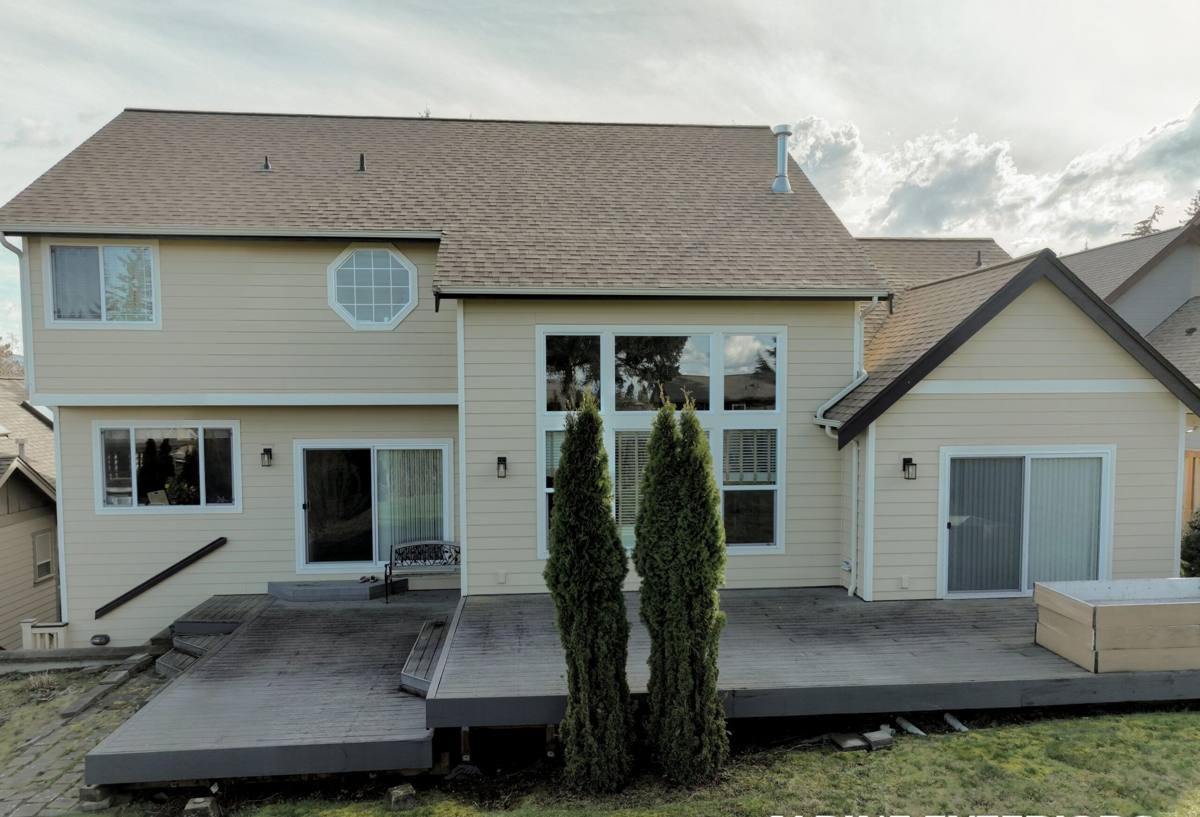
What Bellingham Homes Actually Need From a Deck
Moisture Management First
Everything about a durable deck in this region traces back to moisture control. Rain here doesn't just fall straight down — wind off the water and through the valley pushes it sideways, which means fascia boards, stair stringers, and the underside of railings take on water that a drier climate's decks never see. The ledger board connection to the house, the framing under the decking, and any built-in seating or planters all need flashing and drainage details that assume water will find a way in, because eventually it will.
Standing Up to Salt Air
Proximity to Bellingham Bay means airborne salt settles on exposed surfaces over time. That accelerates corrosion on unprotected metal — fasteners, brackets, post bases — faster than it would inland. We spec hardware rated for coastal exposure, not the minimum-code fastener, because a deck is only as strong as the connections holding it together, and corroded hardware is one of the most common hidden failure points we find on older decks in this area.
Fighting Moss the Whole Season
Whatcom County's moss season runs long — anywhere shaded and slow to dry will grow moss, and a deck surface is exactly that kind of spot for much of the year. Moss on a walking surface isn't just unsightly, it's a slip hazard, and it holds moisture against the board surface which shortens the life of both wood and composite decking. Board spacing, surface texture, and drainage underneath the deck all affect how much moss you'll be scraping off every spring.
Material Choices That Make Sense Here
There's no single "best" decking material — every option is a set of trade-offs, and the right call depends on your budget, how much upkeep you want to do, and how much shade and moisture exposure your specific site gets.
| Material | Upfront Cost | Maintenance | Notes for This Climate |
|---|---|---|---|
| Pressure-treated lumber | Lowest | Annual cleaning, periodic sealing | Needs consistent upkeep or moss and graying set in fast under our tree cover and rainfall |
| Cedar | Moderate | Regular sealing to hold color and resist moisture | Naturally rot-resistant but still needs real maintenance in a wet climate to look its best |
| Composite decking | Higher | Occasional washing, no sealing or staining | Handles moisture well; texture and drainage details still matter for moss resistance |
| PVC / capped polymer | Highest | Lowest — mostly washing | Fully resists moisture absorption, a strong fit for heavy salt-air and rain exposure sites |
We'll walk through this with you honestly based on your yard's actual sun and shade pattern, not just push the highest-margin product. A shaded, tree-covered lot near the water has different needs than an open, south-facing yard a few blocks away, even within the same neighborhood.
What a Correctly Built Deck Includes
Structure and Framing
- Ledger board properly flashed and sealed at the house connection — the single most common source of hidden rot on older decks
- Joist hangers, post bases, and fasteners rated for coastal/high-moisture exposure, not standard interior-grade hardware
- Footings sized and set below frost depth per code, with adequate drainage around each post
- Proper joist spacing and blocking for the specific decking material chosen — composite and PVC often have tighter spacing requirements than wood
- Airflow underneath the deck so the framing can actually dry out between storms instead of staying damp all winter
Surface and Railings
- Board gapping set to shed water and resist moss buildup while still being comfortable underfoot
- Stair stringers and treads detailed to avoid trapping water at the connection points
- Railing posts through-bolted to framing, not just toe-screwed to the rim joist
- Permit-compliant railing height and baluster spacing where the deck height requires it
Our Process for a Bellingham Deck Project
- On-site assessment. We look at your yard's sun/shade exposure, drainage, existing structure if it's a replacement, and how the deck will connect to the house.
- Design and material walkthrough. We go over layout, size, and material options with honest trade-offs for your specific site and budget — no pressure toward the most expensive option.
- Permitting. Most new decks and many replacements need a permit through the relevant local jurisdiction. We handle that process rather than leaving it to you.
- Demolition (if replacing). Removal of the old structure and inspection of ledger and framing condition before anything new goes up.
- Framing and structural work. Footings, posts, beams, joists, and ledger flashing — the part that determines how the deck holds up long-term.
- Decking, railing, and stairs. Installation of your chosen surface material and railing system with attention to the drainage and moss-resistance details above.
- Final walkthrough. We go over the finished deck with you and cover any maintenance specific to the material you chose.
Why a Crew That Already Works Bellingham Matters
Deck-building fundamentals are the same everywhere, but the details that make a deck last in this specific climate — hardware selection for salt exposure, flashing details for driving rain, drainage and spacing choices that slow down moss — come from having actually built and maintained decks in Whatcom County conditions, not from a general contractor's manual. Working out of Lynden, we're not driving in from out of the area for a Bellingham job; we know the permitting expectations in this part of the county and we're not guessing at how a material will hold up here, because we've seen it firsthand on other local projects.
We also stand behind the work with a straightforward warranty on our labor, separate from whatever manufacturer warranty applies to the decking material itself. If something about the structure or installation isn't right, we come back and fix it.
Maintenance: What to Expect After Installation
No deck in this climate is truly maintenance-free, even composite and PVC. Here's a realistic picture of what ongoing care looks like by material type:
- Pressure-treated or cedar: annual cleaning and a fresh coat of sealant every 1-3 years to prevent graying, cupping, and moisture absorption
- Composite: periodic washing to prevent surface mold and moss, no sealing or staining required
- PVC/capped polymer: occasional washing only; the most hands-off option for a wet, moss-prone yard
- All materials: keep gutters and downspouts near the deck clear so runoff isn't dumping extra water onto or under the structure
- All materials: trim back overhanging branches where practical to cut down on shade and debris that feed moss growth
Repair, Replace, or Build New
If you already have a deck showing soft spots, loose railings, or heavy moss staining, it's worth having it assessed before assuming it needs full replacement. Sometimes the framing is sound and it's the surface boards or railing hardware that failed — a repair can extend the deck's life for a fraction of full replacement cost. Other times, especially on older wood decks where the ledger connection has been compromised by years of trapped moisture, full replacement is the honest recommendation. We'll tell you which situation you're in and why, rather than defaulting to whichever answer is more profitable for us.
If you're planning a new deck or need to replace one that's past its useful life, we're happy to come take a look and give you a straightforward, no-pressure estimate. There's no cost or obligation to have us walk the site with you — just fill out the form below and we'll get in touch.