 Lynden Siding
 James Hardie Siding, Installed for What Custer Actually Deals With
Custer is a quieter corner of Whatcom County, sitting inland from the water but still well within reach of the salt-laden air, wind-driven storms, and long wet season that shape exterior work across this part of the county. When a Custer homeowner calls us about siding, the conversation almost always starts the same way: something on the house — trim, an old lap board, a section of wall under a downspout — has started to fail years before it should have, and they want to know what will actually hold up here. On siding, our answer is James Hardie fiber cement, installed to spec, and this page is about what that looks like in practice for a home in Custer rather than in general terms.
We only install James Hardie siding, full stop, and we've written elsewhere about why we standardized on it. This page isn't that argument repeated. It's the practical version: which Hardie products make sense for a Custer property, what a correct installation actually involves, how our process runs from first call to final walkthrough, and why it matters that we already work this area regularly instead of treating it as a one-off drive-out job.
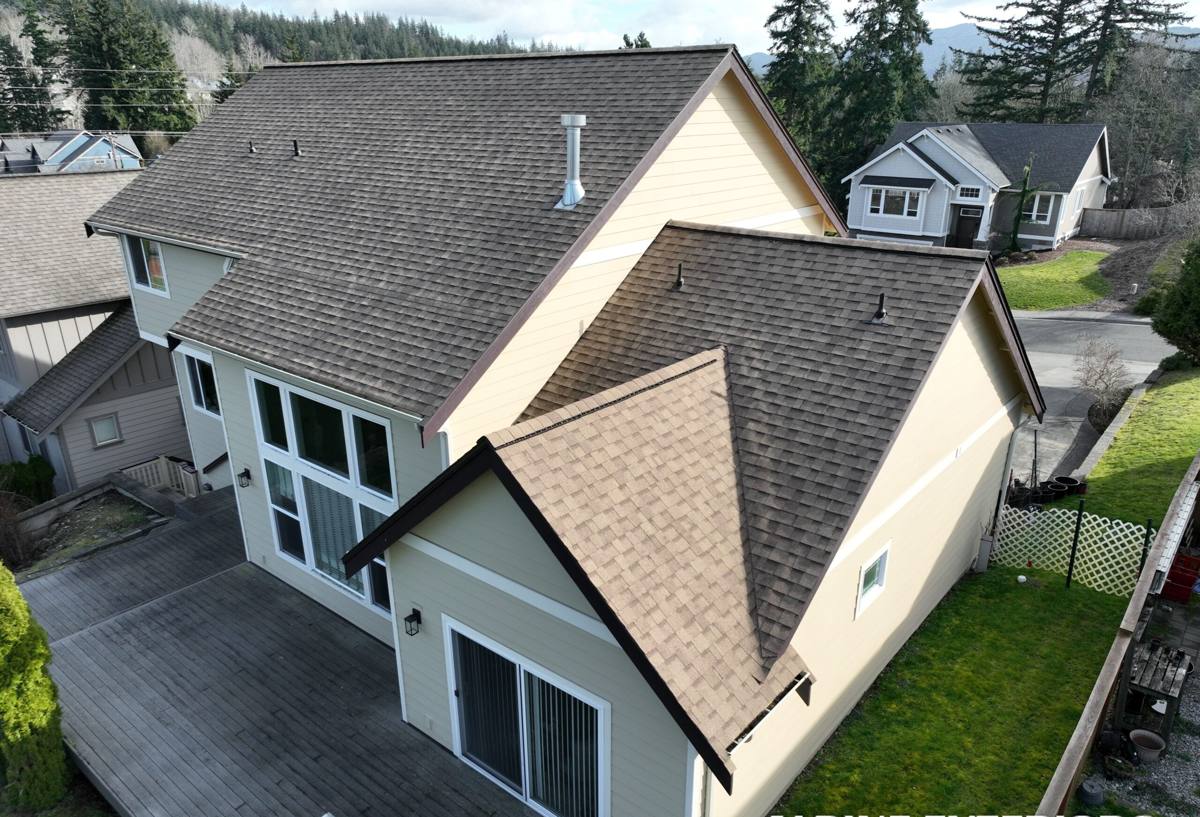
What Custer's Climate Actually Asks of a Siding System
Three conditions shape how siding performs here, and they don't act alone — they compound over years. Salt-laden marine air travels inland on winter storms and settles into fasteners, trim hardware, and factory finishes gradually rather than all at once. Wind moving across the open, flat terrain around Custer pushes rain sideways into wall assemblies instead of letting it run straight down and off, which is a harder test on lap joints and trim seams than a simple rainfall total suggests. And mild, damp conditions through most of the calendar keep moss and mildew active on shaded and north-facing walls for a long stretch of the year, sometimes close to year-round on tree-covered lots.
None of that is dramatic weather. It's persistence, and persistence is what wears out lower-grade materials and undersized installation details over a decade or two. That's the backdrop for every product and installation decision on this page.
Matching the Hardie Product Line to the House
James Hardie makes more than one siding profile, and doing this job right means picking the one that fits the home and its exposure, not defaulting to whatever installs fastest.
| Product | Best Fit | Note for Custer Properties |
|---|---|---|
| HardiePlank lap siding | Most single-family homes, traditional or farmhouse styling | The most common choice across Whatcom County; wide range of ColorPlus colors and plank widths |
| HardieShingle | Accent gables, dormers, cottage-style homes | Reads well on exposed, wind-facing gable ends when paired with proper flashing |
| HardiePanel | Modern or vertical-siding designs, accent walls | Requires correctly detailed vertical joints to shed wind-driven rain properly |
| HardieTrim | Window and door casings, corner boards, fascia | Pairs with any of the above; keeps trim from becoming the weak point in an otherwise solid install |
We also default to the HZ5 product line for this region rather than a version engineered for hotter, drier climates. HZ5 is built around freeze-thaw cycling and sustained moisture exposure, which is a closer match to a Whatcom County winter than a line engineered mainly for heat and UV resistance. That's a manufacturer specification decision, not an upsell — it's the version of the product actually built for what this climate does to an exterior wall.
Color and Finish
James Hardie's ColorPlus finish is baked on in multiple coats at the factory rather than field-applied after installation, and it carries its own finish warranty separate from the substrate warranty. That matters here specifically because a site-applied paint job has to hold up against the same salt air and UV exposure with none of the factory-controlled application process behind it — the gap between the two tends to show up as fading or chalking years sooner on a field-painted surface.
What a Correct Installation Actually Involves
Fiber cement's long-term performance depends heavily on installation quality. The material itself resists moisture, rot, and combustion, but a rushed or out-of-spec install can undercut all of that. On every Custer job, regardless of size, we hold to the same baseline:
- Manufacturer-specified clearances from grade, roofline, and decks, so splash-back and standing water can't sit against a board edge
- Correct fastener type, spacing, and depth — over-driven or under-driven nails are a common cause of early cracking
- Properly lapped flashing at every window, door, and penetration, directing wind-driven rain out and away from seams instead of behind them
- Factory-finished edges used wherever the layout allows, with field cuts sealed per Hardie's specification rather than left exposed
- A drainage plane or rain screen behind the siding, so moisture that gets past the surface has somewhere to go instead of sitting against the sheathing
- Caulk used as a supplement to flashing, never as a substitute for it
None of this is an upgrade homeowners have to request — it's the baseline on every install we do. In a climate that delivers this much sustained moisture, these details determine whether a wall stays dry for decades or starts showing problems within a handful of wet winters.
Our Process, From First Look to Final Walkthrough
- On-site assessment. We walk the property, check existing siding and trim condition, look at sheathing where it's exposed or accessible, and note site-specific exposure — how much wind, shade, and moisture each wall actually sees.
- Written scope and product selection. We recommend a specific Hardie product line, profile, and ColorPlus color, and put the full scope in writing before work starts, including how we're handling flashing and drainage detailing.
- Tear-off and sheathing check. Removing the old siding is when hidden rot or water damage usually shows up. We flag it honestly rather than cover it, since new siding installed over compromised sheathing fails regardless of how good the siding itself is.
- Weather-resistive barrier and drainage plane. This goes on before a single piece of Hardie siding does, and it's the layer that protects the wall if moisture ever gets past the surface.
- Installation to manufacturer specification. Clearances, fastening, and flashing follow Hardie's published installation guidelines, not a shortcut version to save time.
- Trim, caulk, and touch-up. Field-cut edges get sealed, trim gets finished out, and any factory-finish touch-up uses Hardie-matched product.
- Final walkthrough. We go over the finished job with the homeowner before calling it done, including what maintenance, if any, to expect going forward.
Why a Crew That Already Works Custer Matters
A contractor who works this stretch of Whatcom County regularly already has a sense of how exposed a given lot is likely to be before ever stepping on it — which walls take the brunt of wind-driven rain, which elevations stay shaded and damp enough to grow moss faster, and how much lap a flashing detail needs to actually hold up here versus in a drier inland market. That knowledge shows up in decisions that never get spelled out on an invoice: how a corner gets flashed, whether a rain screen is specified as standard rather than offered as an upsell, which fastener grade gets used given how far marine air reaches inland to Custer.
There's a practical side to it too. A crew that regularly works Custer and the surrounding area already has a working relationship with suppliers for this specific product line, understands Whatcom County's permitting process for exterior work, and isn't learning the region's weather patterns on your project.
Warranty Coverage and What It Actually Means Locally
James Hardie backs its siding with a transferable, non-prorated limited warranty on the substrate, plus a separate warranty on the ColorPlus factory finish covering color retention. Transferability is worth taking seriously rather than treating as fine print — if the home sells before the warranty period ends, coverage generally carries over to the next owner, which matters in a market where buyers increasingly ask direct questions about exterior materials and condition. We back our installation work with our own workmanship warranty as well, separate from the manufacturer's coverage, because a good product installed to a bad spec is still a bad install.
Cost Factors for a Custer Re-Side
Every property is different, but the factors that move a Hardie siding quote up or down are consistent enough to walk through honestly before you commit to anything:
| Factor | How It Affects Cost |
|---|---|
| Sheathing condition under the old siding | Rot or water damage found during tear-off adds repair cost before new siding can go on |
| Home size and wall complexity | More corners, gables, and trim details mean more labor and material cuts |
| Product line and profile | HardiePlank generally costs less per square foot installed than HardieShingle or custom panel layouts |
| Existing drainage plane or rain screen | Adding one where none exists is additional labor, but it isn't optional in this climate |
| Access and site conditions | Tight lots, multi-story walls, or landscaping close to the house can add labor time |
We give a written, itemized estimate before any work starts, so these factors are visible rather than folded into a single lump-sum number.
Get a Free, No-Pressure Estimate
If your Custer home needs new siding, or you're just trying to figure out whether what's on the walls now is worth repairing or replacing, we're glad to take a look and give you a straight answer about what we'd recommend and why. Reach out using the form below to schedule a free estimate — no pressure, no upsell script.