 Lynden Siding
 Building a Deck That Actually Holds Up in Custer
Custer sits close enough to the water that salt air is a real factor in how a deck ages, not just a talking point. Add Whatcom County's long wet season and the moss that comes with it, and a deck built to a generic spec sheet is going to show problems years before it should. We build decks for homes in this area with those three things in mind from the first shovel of dirt: salt exposure, sustained rain, and moss.
A deck here isn't just an outdoor living space, it's a structure that spends most of the year damp, gets hit with salt-laden wind off the water, and picks up a green film on any shaded or north-facing section by late fall. None of that is unusual for this part of Washington. What matters is whether the person building your deck accounted for it or just followed a set of plans meant for a drier climate.
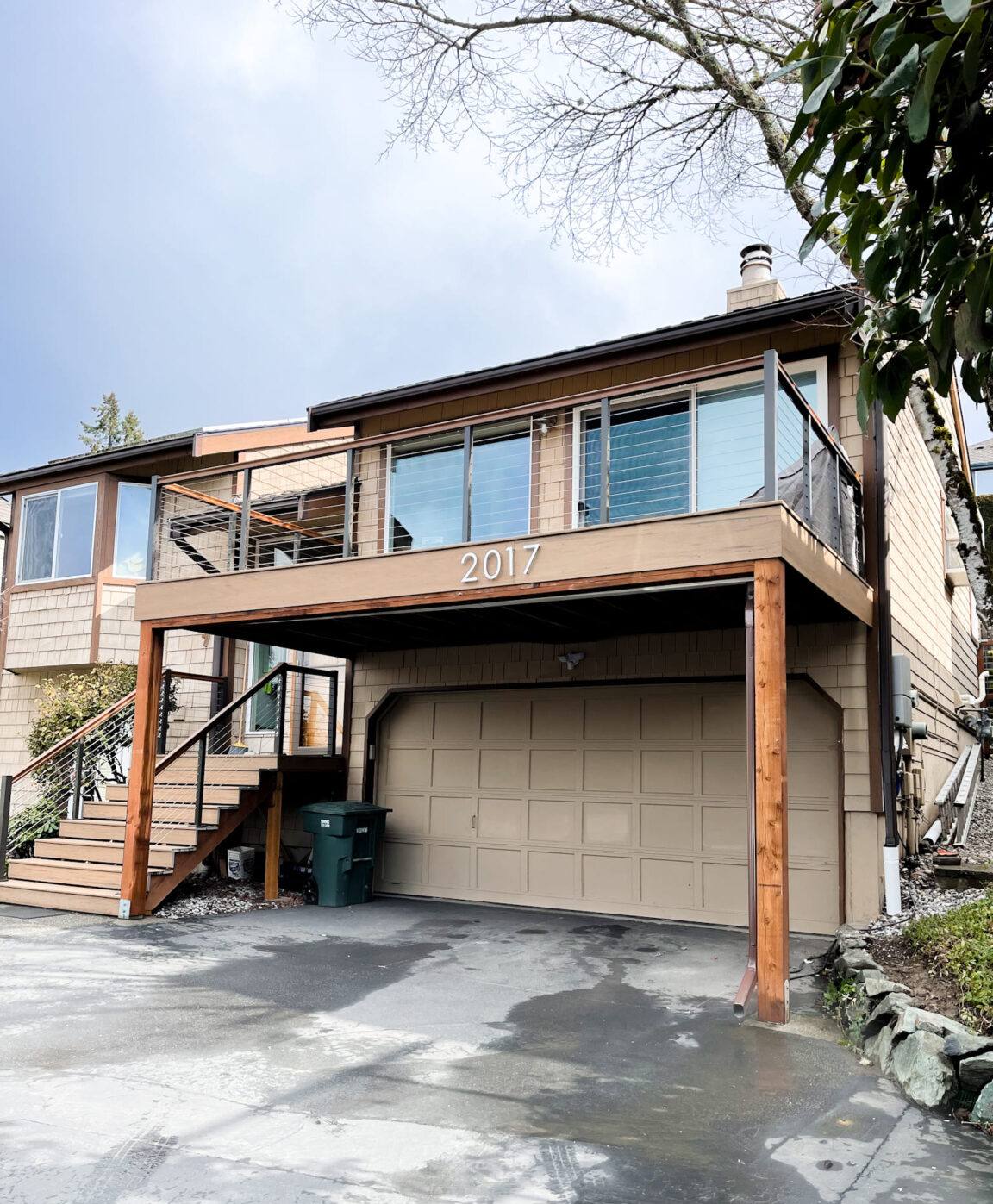
What Salt Air, Rain, and Moss Actually Do to a Deck
Salt Air and Hardware
Salt in the air accelerates corrosion on anything metal, and a deck has a lot of metal in it that you never see once it's finished: joist hangers, structural screws, post bases, ledger bolts. Standard zinc-coated hardware corrodes faster near the coast than it does even twenty miles inland. Once a fastener starts to rust, it loses holding strength long before it looks bad enough for a homeowner to notice. We spec stainless steel or heavy hot-dip galvanized hardware rated for coastal exposure on every deck we build in this area, not just as an upsell but because it's the only way the structure lasts as long as it should.
Driving Rain and Rot Points
Whatcom County doesn't get flash floods, it gets weeks of steady, wind-driven rain, and that's actually harder on a deck than a hard downpour. Wind-driven rain gets pushed sideways into gaps that vertical rain never reaches: under ledger boards, behind fascia, into end grain where boards butt against the house. The spots that rot first on a poorly built deck are almost always the same: the ledger board connection to the house, the tops of posts, and any place where two pieces of wood meet without a gap for water to escape.
Moss Season and Surface Wear
From fall through spring, any shaded or low-airflow section of decking here will grow moss if it isn't addressed. Moss holds moisture against the deck surface long after the rain stops, which speeds up wood decay underneath it and turns the boards slick and dangerous to walk on. Deck orientation, gaps between boards, and how much of the structure sits in shade all affect how bad this gets, and it's something we plan around during design, not something we leave for the homeowner to fight every winter.
Decking Material Options for This Climate
There's no single right material for every deck, but some options handle Custer's conditions better than others. Here's how the common choices actually compare once salt air, rain, and moss are factored in.
| Material | Moisture Behavior | Moss Resistance | Maintenance |
|---|---|---|---|
| Pressure-treated wood | Absorbs and releases moisture readily; needs sealing to control swelling and checking | Low — porous surface holds spores | Annual cleaning and periodic sealing |
| Cedar | Naturally rot-resistant but still needs finish maintained | Moderate — better than treated pine, still needs cleaning | Sealing every 1-2 years to keep rot resistance active |
| Composite decking | Does not absorb water into the board itself | Higher, but surface texture still needs periodic washing | Occasional cleaning, no sealing or staining |
| PVC/capped composite | Fully moisture-sealed board | Highest of common options | Lowest — rinse and occasional cleaner |
We don't push composite or PVC on every job. A well-built and properly maintained cedar or treated-wood deck can last decades in this climate, and some homeowners prefer the look and lower upfront cost. What we won't do is install any of these materials without the framing, fastening, and drainage details that keep them performing the way the material is supposed to. A composite deck board over rotting joists is still a deck that's going to fail.
The Parts of a Deck That Fail First Out Here
When we get called out to look at an aging or problem deck in this area, the damage is almost always concentrated in a handful of places. Building it right the first time means treating these as the priority, not an afterthought.
The Ledger Board Connection
This is the board that attaches the deck to the house, and it's the single most common failure point on decks built without proper flashing. Water gets behind the ledger, into the house's wall framing, and causes damage you can't see until it's extensive. Correct flashing detail here isn't optional in our process.
Footings and Post Bases
Footings need to be sized and set to local frost depth requirements, and post bases need to keep the post itself off the concrete so it isn't sitting in standing water after every rain. We use post bases that create a real air gap, not just decorative caps.
Joist Hangers and Structural Fasteners
As covered above, this is where salt air does the most damage over time if the wrong hardware is used. Every hanger and structural screw on a deck we build is rated for the exposure it's actually going to see.
Board Spacing and Airflow Underneath
Decking boards need consistent gaps for drainage, and the structure underneath needs airflow so the framing can dry out between rain events. A deck built low to the ground with poor ventilation underneath will hold moisture against the joists year-round, which is exactly the setup that leads to hidden rot.
Our Deck Building Process
1. Site Assessment
We look at sun exposure, drainage on the lot, proximity to the water, and how the deck will tie into the house before we design anything. A deck on a shaded, low-airflow side of the house needs different detailing than one that gets full sun most of the day.
2. Design and Permitting
Whatcom County requires permits for most deck construction, and footing depth, guardrail height, and stair requirements are all set by code, not preference. We handle the permit process and build to what the county requires, including inspections at the framing stage.
3. Framing
This is where the long-term durability of the deck is actually decided. Ledger flashing, footing depth, joist hanger selection, and post base detailing all happen here, and it's the stage that's completely invisible once the decking goes down.
4. Decking Installation
Board spacing, fastening method, and layout are set to shed water and allow airflow, whether you're going with wood, composite, or PVC.
5. Railings, Stairs, and Finish Work
Guardrails and stair rails are built to code height and spacing requirements, and any wood surfaces are sealed before we consider the job done.
Permits and Code Basics for Whatcom County Decks
Most decks attached to a house, or any deck above a certain height, require a building permit in Whatcom County. Requirements that typically apply include minimum guardrail height for elevated decks, spacing limits on guardrail balusters, footing depth sufficient to reach below the local frost line, and proper flashing at the house connection. These aren't formalities. Inspectors check the framing stage specifically because that's where the failures described above get built in or avoided. We pull permits and schedule inspections as a standard part of every deck project, not as an add-on.
Maintenance Checklist for a Custer Deck
A well-built deck still needs upkeep in this climate. Here's what actually matters:
- Rinse or sweep debris off the deck surface regularly through fall and winter to slow moss growth
- Clean visible moss with a deck-safe cleaner rather than a pressure washer alone, which can damage wood fibers and composite surfaces
- Check and reseal wood decking on the schedule appropriate to the wood species, typically every 1-2 years
- Inspect the ledger board area annually for any signs of water staining or soft wood
- Keep gutters and downspouts near the deck clear so runoff isn't dumping directly onto or under the structure
- Look at exposed hardware periodically for early rust, especially on older decks not built with coastal-rated fasteners
Why a Crew That Already Works in Custer Makes a Difference
A lot of deck problems in this area trace back to a crew that builds the same way regardless of where the job is. A deck design and material list that works fine forty miles inland can be the wrong call a few miles from the water. We build decks throughout the Lynden and greater Whatcom County area, including Custer, and the hardware, flashing details, and material recommendations we use reflect what actually holds up here, not a generic regional average.
We're also familiar with the permitting process through Whatcom County specifically, which keeps the inspection and approval side of your project moving instead of stalling on paperwork issues.
If you're planning a new deck or replacing one that's showing its age, we're happy to take a look and put together a straightforward estimate. No pressure, no inflated scope, just an honest read on what your project needs and what it will cost. The form below is the easiest way to get that conversation started.