 Lynden Siding
 Custom Windows Built for Custer's Coastal Climate
Custer sits close enough to Puget Sound and the Strait of Georgia that salt-laden air is a real factor in how windows age here, not just a talking point. Add Whatcom County's long wet season — driving rain that comes in sideways off the water, months of low sun angle, and a moss season that seems to start earlier every year — and you've got a climate that is genuinely hard on window frames, seals, and glazing. Custom windows for a Custer home aren't about luxury upgrades. They're about matching the unit to openings that are often original to the house, and to conditions that punish anything installed carelessly or made from the wrong materials.
We install and replace windows throughout the Lynden area, and Custer jobs come with their own pattern: older farmhouses and rural properties with non-standard rough openings, newer builds along wind-exposed stretches near the water, and everything in between. "Custom" in this context usually means one of two things: windows sized to fit an opening that doesn't match a stock size, or a style and configuration chosen to solve a specific problem — glare off the water, wind load on a west-facing wall, or a historic look the homeowner wants to keep.
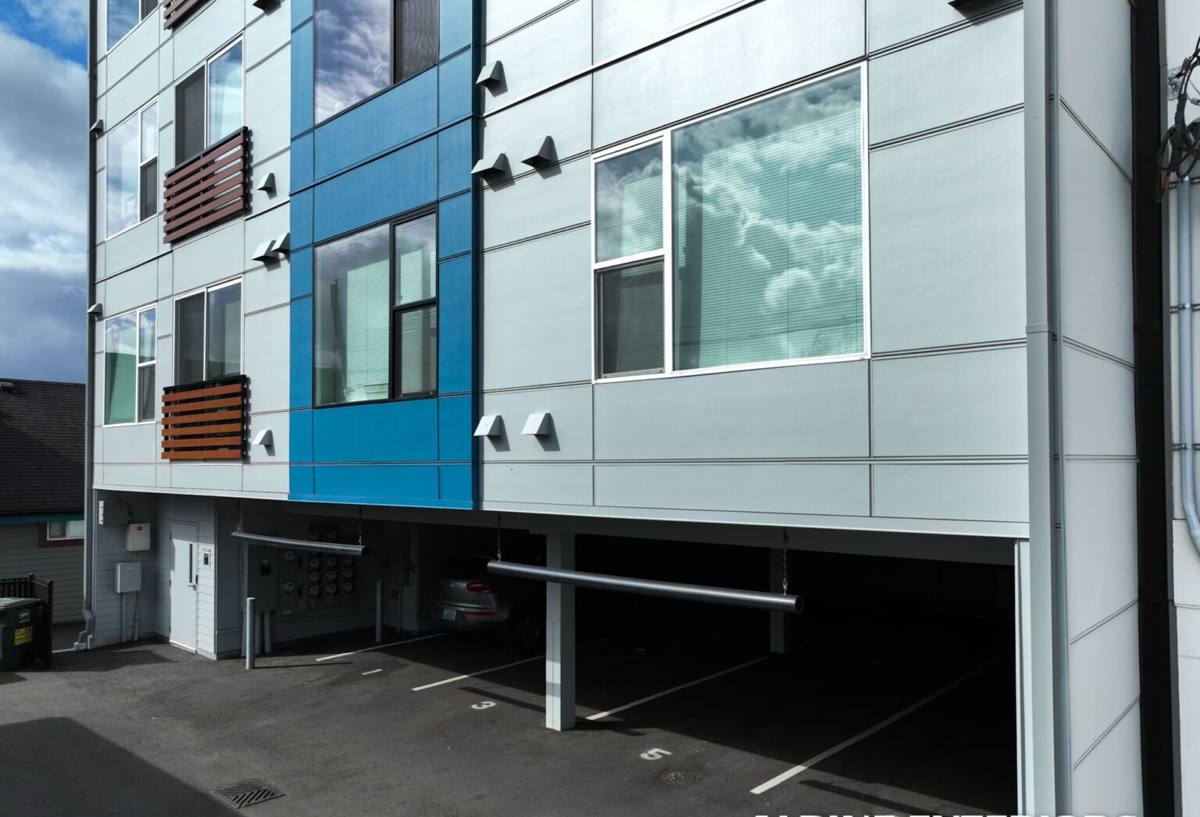
What Custer's Climate Actually Does to Windows
Before talking about products or process, it's worth being specific about what's working against a window installed in this area:
- Salt air corrosion — airborne salt accelerates corrosion on lower-grade metal hardware, fasteners, and some vinyl reinforcement components over years of exposure.
- Wind-driven rain — Custer's open, low-lying terrain near the water means rain doesn't just fall, it gets pushed sideways into wall assemblies. Flashing and sill pan details matter more here than in sheltered inland lots.
- Prolonged dampness — long stretches of gray, wet weather keep humidity elevated around window openings, which is exactly the condition mold and wood rot need if a seal has failed.
- Moss and organic buildup — moss doesn't just grow on roofs. It takes hold on horizontal window sills, trim ledges, and anywhere water sits, holding moisture against wood and paint longer than it should stay.
- Temperature swings — Whatcom County gets real cold snaps and real summer heat. Frame and glass materials that don't handle expansion and contraction well eventually show it as sticking sashes or failed seals.
None of this means windows fail fast here. It means the margin for a sloppy install is thinner than it is in a drier climate, and it means material choice matters more.
What "Custom" Windows Solve in a Custer Home
Non-standard openings
A lot of the housing stock around Custer and greater Lynden predates modern stock window sizing. When a rough opening doesn't match a standard size, you have two options: resize the opening (more invasive, more cost, more risk of disturbing existing siding and framing) or order a custom-sized unit built to fit what's already there. In most retrofit situations, a properly built custom unit is the cleaner, less disruptive path — it preserves the existing exterior trim and cladding line instead of forcing a rebuild of the opening.
Wind and water exposure
On more exposed lots, we sometimes recommend a different glazing package, a heavier-duty frame, or specific hardware rated for higher wind loads. This isn't upselling — it's matching the product to what that particular wall actually faces. A window on a sheltered side of the house doesn't need the same spec as one taking direct weather off open fields or water.
Style and function together
Custom doesn't only mean size. It can mean casement windows in a spot where a double-hung won't seal as tight against driving rain, or a fixed picture window paired with operable units on either side to balance ventilation with weather resistance. It can also mean matching a specific grille pattern or trim profile to keep an older home's character intact.
Frame Material: What We Recommend and Why
| Material | How it handles this climate | Our take |
|---|---|---|
| Vinyl (quality-grade) | Resists moisture and salt corrosion well; no painting; good thermal performance | Our default recommendation for most Custer homes — durable, low-maintenance, cost-effective |
| Fiberglass | Excellent dimensional stability through temperature swings; very strong against wind load | Worth the added cost on highly exposed sites or where long-term stability matters most |
| Wood (clad or unclad) | Classic look but requires diligent upkeep in damp, salt-air conditions; unclad wood is especially vulnerable to moss and rot at sills | We'll install it if that's the look a homeowner wants, but we're upfront about the added maintenance burden here |
| Aluminum | Conducts heat and cold readily and can be prone to corrosion pitting near salt air over time | Rarely our first suggestion for residential work in this area unless there's a specific design reason |
We're not against wood or aluminum outright — there are legitimate reasons homeowners choose them. Our job is to explain the maintenance and moisture trade-offs honestly before you commit, not after the first wet winter shows you what we meant.
Installation Details That Matter More Here Than Elsewhere
A window is only as good as the opening it's sealed into. In a climate with this much wind-driven rain, the installation details around the unit do as much work as the unit itself:
- Sill pan flashing — a properly sloped, sealed pan at the bottom of the opening gives any water that gets past the exterior a path back out instead of into the wall cavity.
- Weather-resistive barrier integration — the window's flanges need to be correctly lapped into the house wrap or building paper, following proper shingle-style layering so water sheds outward at every layer.
- Low-expansion sealant, applied correctly — too much foam or the wrong sealant around a frame can bow it and cause operational problems; too little leaves gaps for wind-driven rain to exploit.
- Correct shimming and leveling — an out-of-square install stresses seals early and is often the real reason a "good" window starts leaking or sticking within a few years.
- Exterior trim and caulk lines — the finish work is also the first line of defense against moss taking hold on horizontal surfaces near the window.
This is the part of the job that doesn't show up in a product brochure, and it's where most window failures we get called out to fix actually originate — not in the unit itself, but in how it was set.
Our Process for a Custer Window Project
- On-site assessment. We measure existing openings, check for rot or moisture damage around current frames, and look at the specific exposure your walls face — wind direction, water proximity, sun and shade patterns.
- Product and material discussion. Based on that assessment, we walk through frame material, glazing, and style options suited to the opening and exposure, with honest pros and cons for each.
- Custom measurement and ordering. For non-standard openings, we take precise measurements so the replacement unit fits without forcing changes to your existing trim or siding.
- Removal and opening prep. Old units are removed carefully, and we inspect the opening for any hidden rot, moss-related sill damage, or flashing issues before the new window goes in — problems are far cheaper to fix now than after a new window is sealed over them.
- Installation with proper flashing and sealing. This is where the details above get executed — sill pan, WRB integration, correct sealant, correct shimming.
- Exterior finish and cleanup. Trim, caulking, and site cleanup, with a final check that everything operates and seals correctly.
Why a Crew That Already Works Custer Matters
Window installation quality depends a lot on judgment calls made on site — how much to trust an existing rough opening, whether an old sill needs to be rebuilt before a new window goes in, how much flashing overlap a particular wall assembly needs. A crew that's already done this work around Custer and the broader Lynden area has already seen how the local combination of salt air, wind exposure, and moss buildup plays out on real houses, not just in a manual. That means fewer surprises mid-project and installation choices that are already calibrated to what actually holds up here, rather than generic best practices from a drier or more sheltered region.
It also means we're not guessing at things like typical rough opening quirks in older Whatcom County construction, or which sides of a property tend to take the worst of the weather. That local pattern recognition is part of what you're paying for when you hire local versus a crew passing through.
Simple Maintenance Checklist for Custer Homeowners
- Wipe down and inspect sills and tracks for moss or organic buildup at least twice a year, especially after fall storms.
- Check exterior caulk lines annually for cracking or separation, particularly on walls facing prevailing wind and rain.
- Keep gutters and downspouts clear so roof runoff isn't sheeting down over window openings.
- Operate every window at least once each season — a sash that's hard to open or close can signal a frame or seal problem worth catching early.
- Look for condensation between panes, which usually means a seal failure in a dual- or triple-pane unit and won't resolve on its own.
Get a Straight Answer for Your Home
Every Custer property is a little different — different exposure, different age of construction, different rough openings. If you're dealing with drafty, foggy, or hard-to-operate windows, or you're planning ahead for a project, we're happy to come take a look and give you a clear, no-pressure estimate for what your home actually needs. Use the form below to get started.