 Lynden Siding
 Building a Deck That Holds Up in Kendall
Kendall sits in the wetter, greener stretch of Whatcom County, closer to the foothills and the Nooksack River than to downtown Lynden. That means more tree cover, more shade, more standing moisture in the yard, and a longer stretch of the year where a deck surface simply doesn't get a chance to dry out between rain events. Add in the marine-influenced air that moves through this part of the county and a moss season that can run from October well into spring, and you've got conditions that are tough on any exterior wood surface. A deck built here has to handle sustained dampness, not just occasional rain.
Composite decking exists specifically for this kind of climate. But "composite" isn't one product — it's a category, and the difference between a deck that looks good for fifteen years and one that stains, warps, or grows algae within three often comes down to which composite was used and how the substructure underneath it was built. This page covers what a correct composite deck install looks like for a Kendall property, not decking in general.
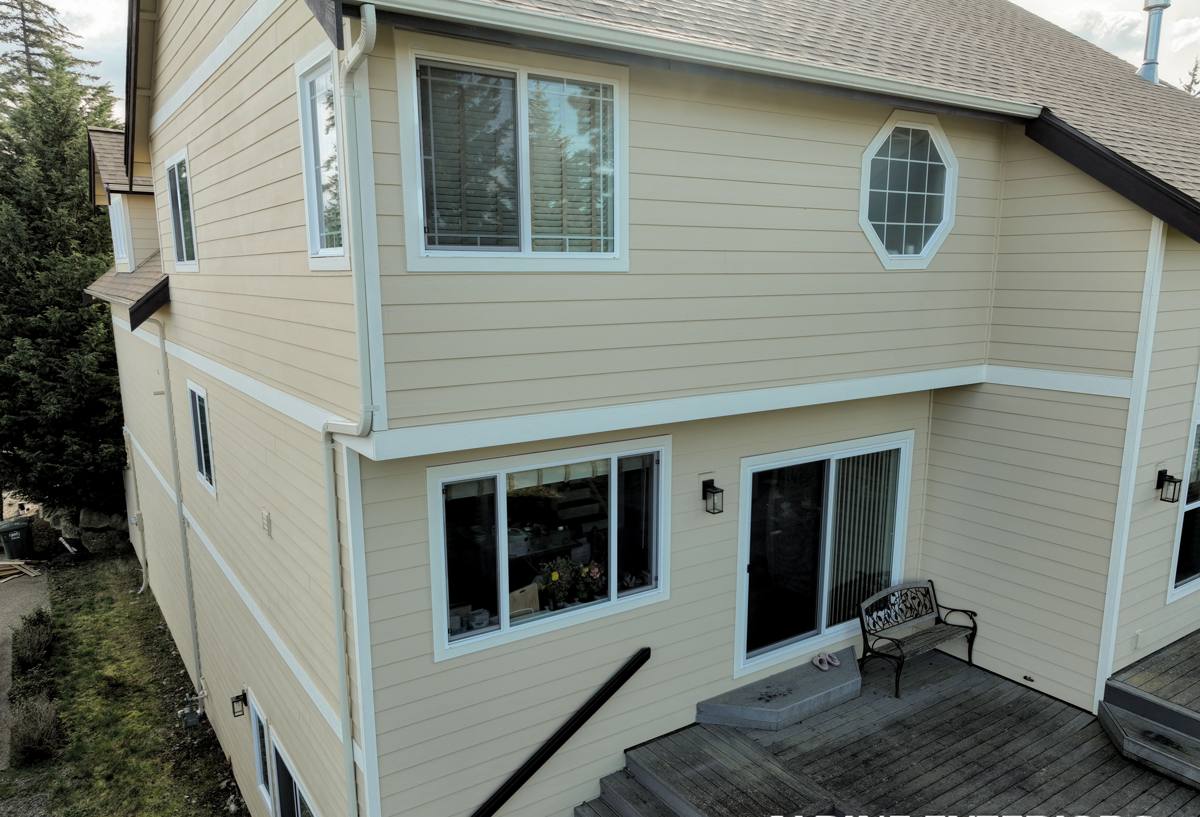
What the Local Climate Actually Does to a Deck
It's worth being specific about the failure modes we see in this area, because they shape every decision in the build:
- Moss and algae growth on shaded boards and in board gaps where debris collects and stays wet
- Slow drying time under tree canopy, which keeps board undersides and joists damp for days after rain
- Freeze-thaw cycling at footings during cold snaps, which can heave an undersized or shallow footing over a few winters
- Fastener and hardware corrosion from prolonged moisture exposure, especially where salt-tinged marine air reaches inland on west winds
- Fine driving rain that gets pushed sideways under railings and against house-side ledger boards, not just straight down onto the deck surface
None of these are dramatic on their own. They're slow, cumulative problems — which is exactly why they get missed by installers who are used to drier climates or who are cutting corners on things nobody sees once the boards are down.
Where This Shows Up Fastest
On a typical Kendall lot, the shaded side of a deck — usually the side facing mature trees or a fence line — will show moss and surface staining well before the sun-exposed side does. Board ends and the underside of the frame near grade are the other early trouble spots, since that's where moisture lingers longest and airflow is worst.
Why Composite Makes Sense for This Property Type
Wood decking isn't a bad product, but it demands a maintenance schedule — stripping, sanding, sealing, and re-sealing — that most homeowners don't keep up with, and in a climate this damp, a missed sealing year shows up fast as graying, cupping, or soft spots. Composite decking, specifically the capped variety, doesn't need that cycle. The board's outer shell is a moisture-resistant polymer wrap, so it isn't absorbing water the way wood fibers do, and it isn't a food source for the mold and algae that thrive in shaded, damp corners of a yard.
That doesn't mean composite is maintenance-free — nothing exposed to Whatcom County weather year-round truly is — but the maintenance shifts from "structural preservation" to "surface cleaning," which is a much lower bar to keep up with.
What a Correct Composite Deck Build Involves
The boards get the attention because they're what you see. The part that actually determines whether the deck lasts is underneath.
Substructure
Joists and beams should be pressure-treated lumber rated for ground contact where applicable, with joist tape applied over the top edge of every joist before boards go down. That tape is a cheap step that a lot of installers skip — it's the single biggest factor in how long the frame lasts, because it keeps water from wicking into the joist through screw penetrations and cut ends.
Footings
Footings need to be sized and set below the local frost depth so they don't shift with freeze-thaw cycling. On a wooded or sloped Kendall lot, that also usually means grading or adding drainage so water isn't pooling against the footings between rain events.
Fasteners and Framing Hardware
We use corrosion-resistant, code-rated hardware — hot-dip galvanized or stainless, depending on the connection — and hidden fastener clip systems on the board surface where the product allows it, which avoids the exposed screw heads that trap water and eventually corrode or stain the board around them.
Airflow Underneath
Low decks, especially on shaded lots, need enough clearance and skirting design to let air actually move under the deck. A deck that's boxed in tight to grade with no ventilation stays damp longer after every rain, which accelerates everything from mold to hardware corrosion.
Board Spacing and Direction
Correct gap spacing between boards lets water and debris pass through instead of collecting. On shaded, tree-heavy lots we also think about board direction and layout relative to where leaves and needles will accumulate, since debris trapped between boards is one of the main drivers of moss growth on an otherwise sound deck.
Comparing Decking Options for a Property Like This
| Material | Moisture Behavior | Maintenance | Typical Lifespan Here |
|---|---|---|---|
| Pressure-treated wood | Absorbs water, prone to cupping/checking without upkeep | Annual cleaning, periodic sealing | 10–15 years with consistent maintenance |
| Uncapped composite | Better than wood, but shell can still absorb some surface moisture over time | Regular cleaning, more prone to staining/mildew in shade | 15–20 years |
| Capped composite | Sealed polymer shell resists moisture absorption on all sides | Periodic washing only | 25+ years, most carry long manufacturer warranties |
We install capped composite almost exclusively on shaded or damp Kendall lots for one straightforward reason: uncapped boards give moisture and algae more surface to work with, and on a lot with real tree cover that difference shows up within a few seasons, not decades.
Our Process
- Site visit — we look at sun exposure, drainage, existing grade, and how the deck ties into the house before recommending anything
- Design and material selection — board style, color, and railing options matched to the home and to how much shade and moisture the deck will actually see
- Permitting — we handle the permit application and inspections required for the jurisdiction
- Demo and framing — old structure removed if needed, new substructure built to code with proper footings and joist protection
- Decking and railing install — boards, fascia, and railing system installed with attention to spacing, fastener pattern, and airflow
- Final walkthrough — we go over care and cleaning specific to the product installed before we consider the job done
Living With a Composite Deck in a Moss-Prone Yard
Even a properly built capped composite deck benefits from a bit of seasonal attention on a shaded, wooded lot. This isn't the intensive sanding-and-sealing routine wood requires — it's basic upkeep that takes an hour or two a few times a year.
- Sweep leaves, needles, and debris out of board gaps regularly, especially in fall
- Rinse the surface periodically to keep pollen and organic buildup from taking hold, particularly on shaded sections
- Use a soft-bristle brush and a composite-safe cleaner for any surface algae or mildew rather than a pressure washer on high pressure, which can damage the board's cap layer
- Keep gutters and downspouts near the deck clear so runoff isn't dumping extra water onto or under the structure
- Trim back overhanging branches where practical to get a bit more sun and airflow onto the deck surface
- Check railing posts and stair connections once a year for any looseness, since ground movement from freeze-thaw can work hardware loose over time
Permits and Structural Requirements
Deck construction in unincorporated Whatcom County areas like Kendall typically requires a building permit, with requirements tied to deck height, size, and attachment to the home. Footing depth, ledger attachment, and railing height are all inspected points, not just recommendations, and getting them wrong can mean a failed inspection or a deck that has to be partially rebuilt. We handle the permit process as part of the job rather than treating it as the homeowner's problem to sort out.
Why a Crew That Already Works This Area Matters
A lot of what makes a composite deck last in Kendall isn't in the product spec sheet — it's knowing that a shaded lot near tree cover needs different board spacing and airflow planning than an open, sun-exposed yard a few miles away, or that footings on a sloped, wooded property need extra attention to drainage that a flat, cleared lot wouldn't. That's the kind of judgment that comes from having built and maintained decks across this specific stretch of Whatcom County, not from a generic install checklist. It also means we're not guessing at local permitting requirements or frost depth standards — we already know them.
If you're weighing a new deck or replacing an aging wood one, we're happy to take a look at your property, talk through what the site actually needs, and give you a straightforward, no-pressure estimate. There's a form below to get that conversation started.