 Lynden Siding
 Why Board & Batten Suits Wiser Lake Homes
Wiser Lake sits in the kind of rural, tree-lined stretch of Whatcom County where board and batten siding just looks right. The vertical lines echo the barns, outbuildings, and farmhouse-style homes scattered around the lake and the surrounding acreage, and the pattern reads well against mature evergreens and open pasture in a way that busier siding profiles don't. It's also a practical choice for homes with a mix of gable ends, dormers, and accent walls, since board and batten can be run full-height or paired with a different siding style below to break up a large elevation.
None of that changes the fact that board and batten is still a wall system, not just a look. Every vertical joint, every batten, and every seam is a place water can find its way behind the siding if the installation isn't detailed correctly. On a lake-adjacent lot with heavy tree cover, that detailing matters more than it would on a dry, open, in-town lot.
What Lynden's Climate Actually Does to Vertical Siding
Whatcom County sits in a marine-influenced climate zone, and homes around Wiser Lake feel every part of it. Air carrying salt off the Salish Sea and Bellingham Bay reaches inland on a regular basis, driving winter and fall rainstorms come in sideways more often than straight down, and shaded, moisture-holding lots keep siding damp long after a storm passes. Add mature tree canopy — common on lake lots and rural acreage alike — and you get a moss season that can run more than half the year on north-facing and shaded walls.
Board and batten adds a wrinkle that flat lap siding doesn't have: the battens themselves. Every batten covers a vertical seam, and every batten is also a horizontal ledge where wind-driven rain, needles, pollen, and moss spores can collect if the reveal and fastening aren't done right. On older homes around the lake finished in cedar or primed wood board and batten, that's usually where the damage starts — swollen battens, soft spots at the base, and streaking that keeps coming back within weeks of a cleaning.
How James Hardie Board & Batten Is Built for This
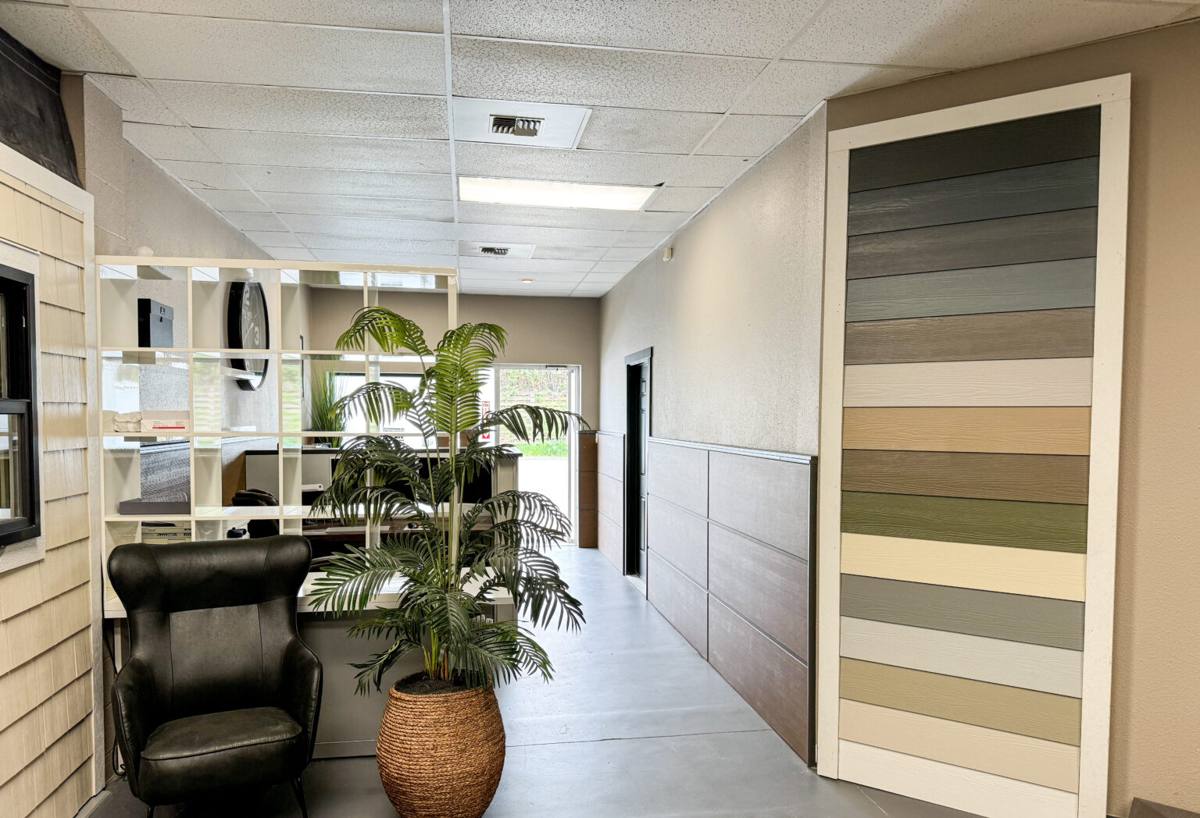
We install James Hardie fiber cement exclusively, and board and batten is one of the places that decision pays off the most. Hardie's vertical siding panels and HardieTrim boards, used as the battens, are engineered specifically for wet Pacific Northwest climates under Hardie's HZ5 product designation. Fiber cement doesn't have the organic wood fiber that moss and algae feed on the way cedar and primed wood products do, which matters directly for a moss season this long.
The ColorPlus factory finish is baked on in a controlled environment, not brushed or sprayed on site, which means the color holds up to UV and moisture exposure without the chalking and fading that field-applied paint develops over a few Pacific Northwest winters. It also means the color at the cut edges and around trim is consistent, which is the kind of detail that stands out on a full board and batten elevation where every vertical line is visible from the road or across the water.
Fiber cement doesn't swell, cup, or split the way wood battens do when they take on moisture and dry out repeatedly through a wet fall and a damp spring. That cycle is exactly what happens to wood board and batten on a shaded, lake-proximate lot, and it's the main reason those systems fail years before fiber cement does when installed to the same standard.
What a Correct Board & Batten Installation Actually Involves
The material is only half the equation. A board and batten system installed without the right details behind it will trap moisture no matter how good the panels are. On every job we do around Wiser Lake, that means:
- A drainage gap (rainscreen) behind the panels, so any moisture that does get past the cladding has somewhere to drain and dry instead of sitting against the sheathing
- Fasteners driven into solid framing at the spacing Hardie's installation instructions specify, not just into the panel face
- Correct panel and batten spacing to allow for expansion and contraction through temperature and moisture swings
- Flashing at every horizontal seam, window head, door head, and roofline intersection — the points where board and batten systems most often fail when they're rushed
- A minimum ground clearance at the base of the wall, which matters more on lake-adjacent lots where grade and soil tend to hold moisture longer after a rain
- Sealant used only where Hardie's specifications call for it — over-caulking a board and batten wall traps moisture behind the joint instead of letting it drain, which does more harm than good
None of these steps show up in a finished photo. They're also exactly what separates a board and batten wall that looks good for two years from one that holds up for decades.
Cost and Complexity Factors on a Lake-Area Home
| Factor | Why It Matters Around Wiser Lake |
|---|---|
| Tree canopy over the wall | Shaded walls stay damp longer and need moss-resistant material and detailing more than open, sun-exposed walls |
| Wall exposure (lake-facing vs. sheltered) | Lake-facing and prevailing-wind walls take more driving rain and need extra attention at seams and flashing |
| Existing siding condition | Rot or hidden moisture damage found during tear-off can require sheathing repair before new siding goes on |
| Trim and batten detail level | More corners, dormers, and accent transitions mean more cuts, more flashing points, and more labor |
| Home height and stories | Second-story and steep-roof walls require more staging and access time |
| Site access | Rural acreage lots and lakeside driveways can affect how easily material and equipment reach the work area |
Our Process, Start to Finish
We start with a walkthrough of the home, looking at each elevation's exposure, tree cover, and current siding condition before we ever talk product or price. If there's existing siding coming off, we check the sheathing underneath for soft spots or hidden moisture damage while it's exposed, since that's the only point in the project where it's visible. Any repairs get made before anything new goes up — covering damaged sheathing with new siding just hides a problem that gets worse.
From there, the sequence is a weather-resistant barrier, the rainscreen drainage gap, the Hardie panels, the battens, and then trim and flashing at every seam, window, door, and roofline. We schedule around the wettest stretches of the year where we can, since installing over a still-damp wall or in the middle of a heavy rain system works against the very moisture management the system depends on.
Signs Your Current Siding Is Already Losing the Fight
Board and batten problems around Wiser Lake tend to show up gradually, and by the time they're obvious from the ground, there's usually more going on behind the wall than the surface suggests. Worth checking for:
- Soft or spongy spots when you press on a board or batten, especially near the base of the wall
- Dark streaking or moss that returns within a few weeks of being cleaned off
- Peeling, bubbling, or chalking paint on wood or older composite siding
- Visible gaps opening up at vertical seams or where battens meet trim
- Boards or battens that look warped, bowed, or no longer sit flat against the wall
- A noticeable jump in heating costs, which can point to air and moisture getting past a compromised wall
Any one of these on its own isn't necessarily an emergency, but a few of them together on a shaded or lake-facing wall usually means the siding is past the point where cleaning or spot repair solves the problem.
Why It Matters to Hire a Crew That Already Works Wiser Lake
Board and batten detailing isn't one-size-fits-all, and a wall that faces open water or sits under heavy tree cover needs different attention than a sheltered wall on the same house. A crew that already works this area knows which elevations around the lake take the worst weather, which lots hold moisture longest under tree canopy, and how to sequence a project around Whatcom County's wet-season timing so the wall isn't closed up over damp sheathing. That local familiarity also extends to practical things like site access on rural and acreage lots and what Whatcom County's permitting and inspection process expects for exterior work — details that are easy to get wrong for a crew that doesn't work here regularly, and that end up costing the homeowner time or rework.
Maintenance After Installation
A correctly installed Hardie board and batten system doesn't ask for much. There's no repainting on the schedule the way there is with wood — the ColorPlus finish is designed to hold its color for years, not seasons. The main maintenance task around Wiser Lake is staying ahead of moss and algae before it establishes: an occasional gentle rinse of shaded walls keeps growth from getting a foothold, and a quick annual look at the caulking around windows, doors, and trim catches anything that needs attention before it becomes a bigger repair. That's a fraction of the upkeep a wood board and batten wall demands in this climate.
If your Wiser Lake home's siding is showing signs of moisture damage, or you're planning a board and batten project and want it detailed correctly the first time, we're happy to walk your property and give you a straightforward, no-pressure estimate — just fill out the form below.