 Lynden Siding
 Building a Deck That Can Actually Handle Blaine's Weather
Blaine sits right on the water at the northwest corner of Whatcom County, and that location shapes everything about how a deck should be built here. Salt-laden air rolls off the bay, rain comes in sideways more often than straight down, and shaded or north-facing sections of a yard can stay damp for weeks at a stretch during the gray months. A deck built to a generic, one-size-fits-all spec might look fine the day it's finished and still cause problems within a few seasons. A deck built for Blaine's specific conditions is a different animal — and the difference shows up in the hardware, the flashing, the framing details, and the material choices, not just the finished look.
This page covers what a custom deck built for a Blaine property actually needs, what separates a correctly built deck from one that just looks correct, and how we approach these projects when we're working in this part of Whatcom County.
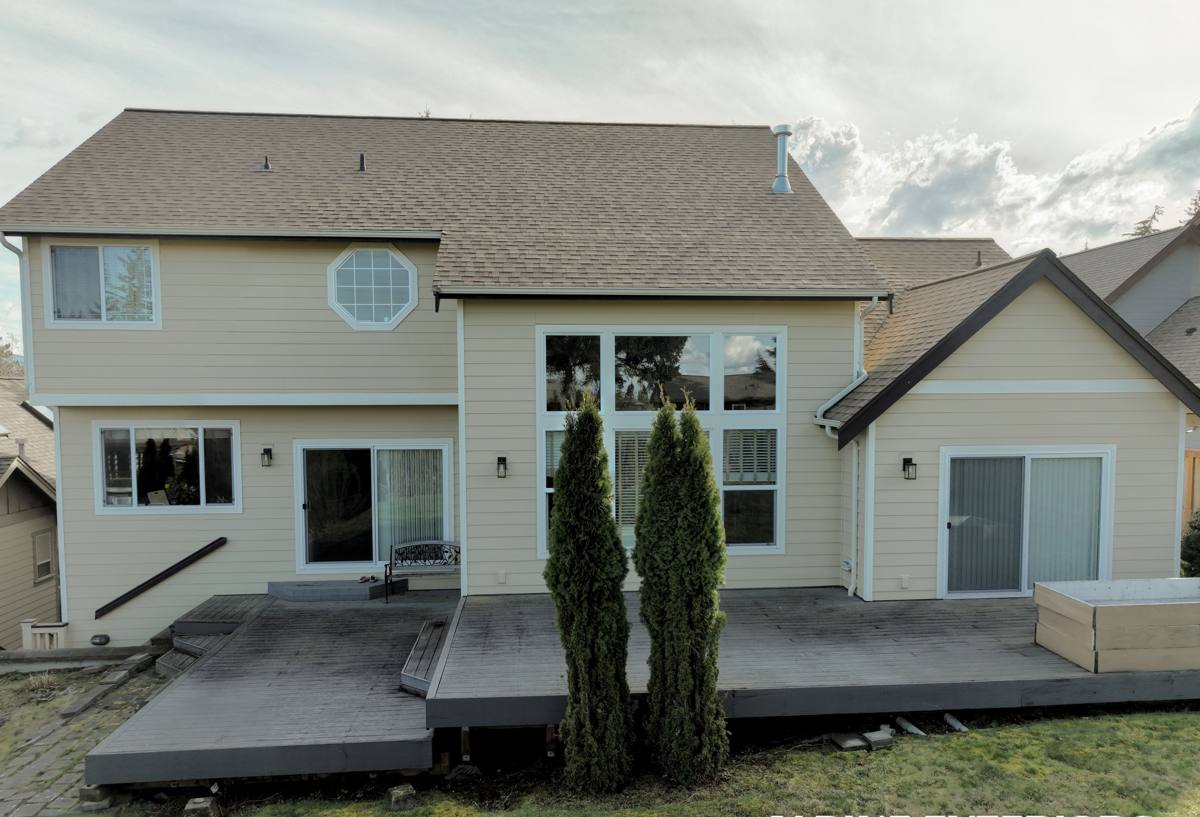
What Blaine's Climate Does to a Deck Over Time
Every coastal town in the Pacific Northwest deals with moisture. Blaine's combination of salt air, wind-driven rain, and long stretches of shade and humidity puts a few specific stresses on outdoor structures that inland builds don't face in the same way.
Salt Air and Metal Hardware
Airborne salt accelerates corrosion on anything metal — screws, joist hangers, bolts, post bases, railing brackets. Standard electro-galvanized fasteners that hold up fine 20 or 30 miles inland can start rusting and staining a deck within a couple of years this close to the water. Rust isn't just cosmetic; corroded fasteners lose holding strength, and a joist hanger that's rusted through is a structural problem, not a maintenance one.
Driving Rain and Water Intrusion
Wind off the water pushes rain sideways, which means water gets driven into places a calm-weather deck design would never expose — up under ledger boards, into post-to-beam connections, behind poorly lapped flashing. The ledger board (where the deck attaches to the house) is the single most common failure point on decks in this climate, because water that gets behind it and can't escape leads to rot in both the deck framing and the house's rim joist.
Moss, Algae, and a Long Wet Season
Whatcom County's moss season runs long — shaded decking, north-facing stairs, and anything under tree cover can stay damp enough to grow moss and algae for much of the fall through spring. Beyond looking bad, a mossy deck surface is genuinely slick underfoot, which is a real safety issue on stairs and landings. Material choice, board spacing, and airflow underneath the deck all affect how much of a moss problem you'll actually have.
Choosing the Right Decking Material for a Coastal Property
There's no single "best" decking material for every Blaine home — it depends on budget, how much upkeep you want to do, and how exposed the deck is to weather. Here's how the common options actually perform in this climate.
| Material | How It Handles Salt Air & Moisture | Moss/Algae Resistance | Maintenance |
|---|---|---|---|
| Pressure-treated wood | Holds up well if properly sealed and re-sealed on schedule; end grain and fastener holes are the weak points | Needs regular cleaning; textured grain holds moisture and organic buildup | Annual cleaning, re-staining or sealing every 2-3 years |
| Cedar | Naturally moisture- and rot-resistant, but still needs sealing near salt air to prevent graying and checking | Better than treated pine but still needs periodic cleaning | Sealing every 1-2 years to maintain appearance and protection |
| Composite decking | Won't rot or absorb water the way wood does; performs well long-term in coastal air | Can still grow surface moss/algae in shaded, low-airflow spots — cleans off easily | Occasional washing; no staining or sealing required |
| Capped composite / PVC | Best moisture and salt-air performance of the group; fully sealed outer layer | Smooth cap sheds moisture fastest, lowest moss retention | Lowest maintenance; occasional washing |
We install all of these depending on the homeowner's goals. Wood keeps the upfront cost down and gives a traditional look, but it demands real upkeep in this climate to stay ahead of moisture. Composite and capped composite cost more up front but take the maintenance burden off the table almost entirely — for a lot of Blaine homeowners tired of re-sealing a deck every couple of years, that trade-off is worth it.
What a Correctly Built Deck Actually Involves
A deck that lasts in this climate isn't about using better-looking boards — it's about the parts you don't see once the project is done.
Footings and Framing
Footings need to go below frost depth and bear on solid, undisturbed soil, which matters on the mix of sandy, clay, and fill soils you find around Blaine properties. Framing lumber should be rated for ground contact where it's within splash range of soil or standing water, and joist spacing should account for the decking material's actual span rating rather than a generic spacing that "should be fine."
Ledger Attachment and Flashing
Given how much of a coastal deck's failure risk starts at the ledger board, this connection gets the most attention. That means proper flashing that directs water away from the house rather than behind the deck, correctly sized and spaced lag bolts or through-bolts (not just deck screws), and a gap or membrane where the ledger meets the siding so water has somewhere to go instead of pooling against the house.
Fasteners and Hardware Grade
For coastal builds, we use stainless steel or heavy hot-dip galvanized fasteners and connectors rather than standard electro-galvanized hardware. It costs more up front, but replacing rusted-out joist hangers or fastener heads a few years in costs far more — and by then it usually means pulling up decking to get at the framing underneath.
Railings, Stairs, and Code
Railing height, baluster spacing, and stair geometry all need to meet current building code, and inspectors in this area do check these details. Beyond code compliance, railing post connections are another spot where undersized hardware causes problems over time — a railing that flexes or loosens is usually a hardware issue, not a design flaw.
Designing a Deck Around How Blaine Weather Actually Behaves
Good deck design isn't just about square footage and layout — it's about working with the wind and rain patterns instead of ignoring them.
- Orienting covered sections or roof overhangs to block the prevailing wind-driven rain rather than just providing shade
- Spacing boards and detailing the substructure for airflow underneath, which dries the deck faster and cuts down on moss growth
- Positioning stairs and high-traffic paths away from the shadiest, dampest corners of the yard where moss builds up fastest
- Planning drainage so water sheds off the deck surface and away from the house foundation, not toward it
- Choosing a partially covered or pergola-topped design for homeowners who want to use the deck through the wetter months, not just in summer
None of this changes what the deck looks like from the yard. It changes how it performs in February.
Our Process, From Estimate to Finished Deck
We keep the process straightforward and give you real information at each step, not just a sales pitch.
- On-site visit and assessment — we look at the site itself: sun and shade exposure, drainage patterns, soil, and how the deck ties into the house.
- Design and material discussion — we go over layout options and material trade-offs honestly, including what each choice will actually cost you in upkeep over time.
- Written estimate — a clear scope and price, with no vague allowances hiding the real cost.
- Permitting — we handle the permit and inspection process for the jurisdiction the property falls under, so you're not chasing paperwork.
- Build — footings, framing, ledger and flashing work, decking, railings, and finish work, done in that order with each stage built to hold up before the next one covers it.
- Final walkthrough — we go over the finished deck with you, including basic care guidance specific to the material you chose.
Keeping a Blaine Deck in Good Shape Year-Round
Whatever material you choose, a little regular attention goes a long way in this climate. A basic seasonal checklist:
- Sweep debris and standing leaves off the deck surface regularly, especially in fall — trapped organic matter holds moisture against the boards
- Rinse or lightly scrub shaded areas and stairs before moss gets established, rather than after it's already a slip hazard
- Check railing posts and stair stringers once a year for any looseness at the connection points
- Inspect the ledger board area where the deck meets the house for any staining, soft spots, or gaps in flashing
- For wood decks, stick to a sealing or staining schedule rather than waiting until it visibly needs it
- Keep gutters and downspouts near the deck clear so roof runoff isn't dumping extra water onto or under the deck
Why Local Experience Matters for This Job
A deck built to a generic spec can pass a first inspection and still fail early in this climate — the problems that show up from salt air and driving rain tend to appear two, five, ten years down the road, not on day one. Crews that already work in and around Blaine and the rest of Whatcom County know which hardware grade actually holds up this close to the water, how the local permitting process runs, and which framing details matter most given the soil and drainage on coastal lots. That's the kind of judgment that's hard to get from a builder who mostly works inland and treats every deck the same way.
We've built our process around this region's weather specifically, from the fasteners we spec to how we detail ledger flashing, because a deck here has to survive conditions a lot of standard deck plans were never designed for.
If you're planning a new deck or replacing one that hasn't held up, we're happy to come take a look and give you a straightforward, no-pressure estimate — just fill out the form below to get started.