 Lynden Siding
 Board & Batten Siding for Bellingham, Built by a Crew That Knows Whatcom County
Board and batten keeps showing up on Bellingham homes for a good reason: the vertical lines look sharp on a modern remodel and just as at-home on an older farmhouse-style build near the water. What doesn't change with the style is the physics underneath it. Board and batten is a wall made almost entirely of vertical seams — a batten strip covering the joint between two boards, running the full height of the wall. Every one of those seams is a place water can try to get behind the siding, and in Bellingham that's not a small concern. Salt air off the bay, wind-driven rain, and a moss season that can run most of the year on shaded walls all put real pressure on a profile with this many joints.
We're a Lynden-based crew, and Bellingham is part of our regular service area — not a one-off trip. That matters on a job like this, where the difference between a board and batten wall that looks fine for a couple years and one that holds up for decades comes down to details most homeowners never see: fastener spacing, batten clearance, flashing laps. We install James Hardie fiber cement exclusively, and every seam and flashing detail on this page is built around what Whatcom County's climate actually does to a wall over time, not around what looks good on install day.
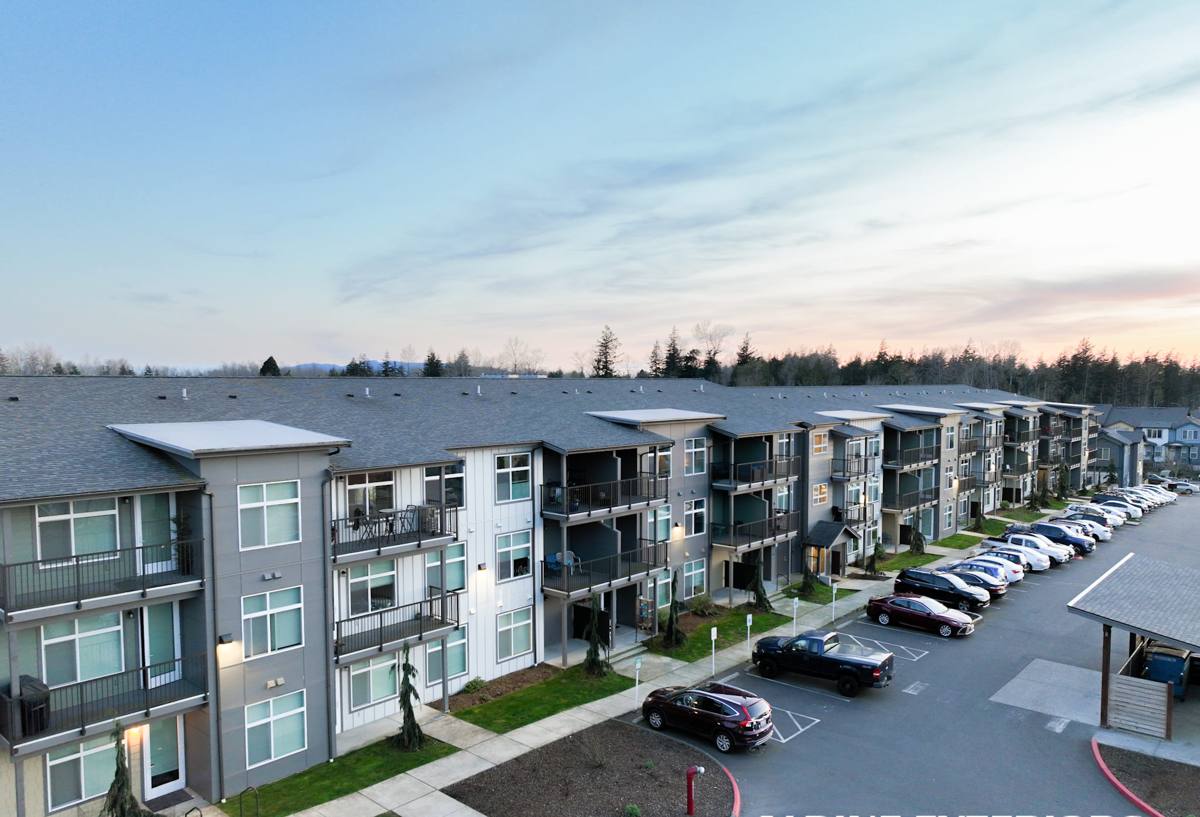
What Bellingham's Climate Asks of a Board & Batten Wall
Wind-Driven Rain and a High Seam Count
Rain in this part of the county rarely falls straight down. Wind off the water pushes it sideways, and a vertical profile with battens running the full height of a wall gives that wind-driven rain a lot of joint length to test. A batten that's face-nailed with no room to move, or caulked shut instead of properly lapped and back-primed, turns into a wick that draws moisture toward the fastener line instead of shedding it away from the wall.
Salt Air and Fastener Life
The salt exposure common to homes near Bellingham Bay and the Salish Sea is hard on any exposed metal, and board and batten uses more fasteners per square foot than a standard lap profile — both the boards and the battens need to be secured. Getting the fastener spec right, corrosion-resistant, properly sized, correctly spaced, carries more weight on this profile than on most others, because there's simply more metal in the wall for salt air to work on.
A Long Moss Season on Shaded Walls
North-facing and tree-covered walls around Bellingham hold moisture longer than sun-exposed ones, and that extended dampness is exactly what moss and mildew need to take hold. A batten set tight against a board with no ventilation gap traps that moisture right where it can't dry out, which over a few wet seasons shows up as staining, softened substrate underneath, and paint or finish failure right at the seam.
Why We Only Install James Hardie on This Profile
Board and batten magnifies whatever weaknesses a siding material already has, simply because there's more seam length and more exposed edge per square foot than a standard lap profile. That's part of why our crew doesn't offer LP SmartSide, vinyl, Cemplank, Allura, primed spruce, or cedar board and batten. Those are legitimate products, and other contractors install them competently — but on a profile with this many joints, in a climate this consistently wet, we standardized on one system we trust completely.
| Material | Behavior at Batten Seams | Upkeep in This Climate | Realistic Lifespan |
|---|---|---|---|
| James Hardie fiber cement | Dimensionally stable; doesn't swell or cup at the joint | Low; factory finish resists moss and fading | 30+ years installed to spec |
| LP SmartSide (engineered wood) | More sensitive at cut edges and fastener holes when they take on moisture | Moderate; edge sealing needs periodic attention | 15-25 years, climate-dependent |
| Vinyl | Can warp or gap at battens with temperature swings; seams less rigid | Low visible upkeep, but hidden moisture issues are hard to catch | 20-30 years, variable |
| Cedar | Absorbs moisture readily at every seam without regular sealing | High; repainting or resealing on a recurring cycle | 15-25 years with consistent maintenance |
Fiber cement's core doesn't expand and contract with moisture the way wood-based products do, which is exactly the property that matters most on a wall built entirely out of vertical seams. Hardie's factory-applied ColorPlus finish also means the cut edges we prime on site are the exception rather than the rule, unlike field-painted materials where every board face depends on how well paint holds up outdoors year after year.
What a Correct Board & Batten Install Actually Involves
The finished look is simple — vertical boards, battens over the joints — but a correct install has more happening behind that surface than most other siding profiles:
- Weather-resistive barrier installed and lapped correctly before any siding goes up, with no gaps at seams or penetrations
- A drainage gap or rainscreen behind the siding so moisture that does get past the surface can dry out instead of sitting against the wall sheathing
- Boards fastened with corrosion-resistant fasteners at the spacing James Hardie's install spec calls for, not just "enough to hold it up"
- Battens set with proper clearance rather than caulked tight, so the wall can shed water instead of trapping it against the substrate
- Properly flashed and lapped transitions at windows, doors, corners, and the base of the wall, where a vertical run meets a horizontal surface
- Field-cut edges primed before installation, since the factory-cured finish only protects the face and factory edges
Skip any one of these steps and the wall can still look correct for a year or two. The problems that follow — staining at seams, soft spots near the base, finish failure along the battens — take a few wet seasons to surface, which is exactly why a corner-cutting install can get away with it right up until it's the homeowner dealing with the repair bill.
Our Process for a Bellingham Board & Batten Project
Site Visit and Wall Assessment
We start by walking the specific walls involved — which ones take the weather head-on, which are shaded and slow to dry, and whether the existing wall assembly already has moisture problems that need addressing before new siding goes up. Installing board and batten over hidden rot or inadequate drainage just buries the same problem under new material for a few more years.
Planning the Layout Before Anyone Cuts a Board
Batten spacing, corner details, and how the siding meets windows, trim, and rooflines get worked out before install day. On a profile with this many seams, planning the details on paper first avoids the kind of field improvisation that's where corners tend to get cut on a rushed job.
Installation to Manufacturer Spec
Every fastener, gap, and flashing lap follows James Hardie's published installation requirements for this climate zone, not a generic national standard. That's what keeps the manufacturer's warranty intact, and it's also what keeps the wall performing the way it's supposed to for decades rather than years.
Final Walkthrough
We walk the finished job with you, cover what little maintenance board and batten actually needs, and make sure you know what a healthy seam and a problem seam look like if you ever want to check the wall yourself down the road.
Cost Factors Worth Knowing Before You Get Quotes
Board and batten typically runs somewhat higher than standard lap siding installed in the same material, mostly because of the extra labor and fastener count per square foot. A few factors move the number more than homeowners usually expect:
| Factor | Why It Affects Cost |
|---|---|
| Wall height and complexity | More corners, dormers, and trim transitions mean more cuts and flashing detail per square foot |
| Existing siding removal and substrate condition | Rot or moisture damage found underneath old siding has to be repaired before new board and batten goes up |
| Batten spacing and reveal width | Tighter spacing or a custom reveal pattern adds material and labor over a standard layout |
| Trim and color package | ColorPlus finish options and coordinating trim details vary the material cost per square foot |
| Access and site conditions | Steep lots, limited staging area, or multi-story walls add time regardless of material |
We don't quote a number without seeing the walls, because two homes with the same square footage can land in very different places once removal, substrate repair, and layout complexity are factored in. What we can promise is a written estimate that breaks those factors out, so you know exactly what's driving the price rather than a single bottom-line figure.
Signs an Existing Wall Is Already Behind
If you're weighing whether it's time to replace board and batten, lap siding, or another profile on a Bellingham home, a few signs tend to show up before the damage is obvious from the street:
- Persistent moss or dark staining concentrated at seams or on shaded, north-facing walls
- Soft or spongy spots when you press on the siding near the base of the wall or below windows
- Paint or finish that's peeling or bubbling specifically along batten edges rather than evenly across the wall
- Visible gaps opening up between boards and battens that weren't there when the siding was new
- A musty smell or visible staining on interior walls that back up to exterior siding runs
Any one of these on its own might be minor. Several together, especially concentrated on the shaded side of a home, usually means moisture has been getting behind the siding for a while and it's worth having someone look at the wall assembly, not just the surface.
Why a Local Crew That Already Works Bellingham Matters
Board and batten done right depends on getting dozens of small details correct in a climate that doesn't forgive shortcuts — and that's easier for a crew that works this specific corner of Whatcom County regularly. We're not driving in from out of the region to bid a job and disappear if a warranty question comes up later. Bellingham is part of our regular route from Lynden, which means we've seen how walls in this area age, which orientations tend to hold moisture longest, and where a rushed install from years back tends to show its problems first. That local pattern recognition is hard to replace with a generic install checklist, no matter how good the crew otherwise is.
It also means we're realistic with homeowners about what board and batten needs here versus what it might need in a drier climate. A spec sheet written for a national market doesn't automatically account for salt air and a moss season that runs most of the year — a crew that works this area consistently does.
If you're weighing board and batten for a Bellingham home, we're happy to walk the walls, talk through what your specific site needs, and put together a clear, no-pressure estimate — just fill out the form below.