 Lynden Siding
 Metal Roofing for Aldergrove Homes, From a Crew That Works the Border Area
Aldergrove sits right against the US-Canada line, close enough to Lynden that a lot of the homes here deal with the exact same weather we see on our side of the border. Long, wet winters. Heavy coastal cloud cover. Moss that doesn't quit from October through April. If you're weighing metal roofing for a house in Aldergrove, you're not just picking a material — you're picking a roof that has to survive a specific climate, and that's worth understanding before you sign anything.
We're based in Lynden, Whatcom County, Washington, and we've built our roofing crew around jobs in this exact corridor — Lynden, the county line, and communities just across into British Columbia like Aldergrove. That matters more than most homeowners realize, because a roof that's engineered and installed for, say, a dry inland climate doesn't behave the same way out here.
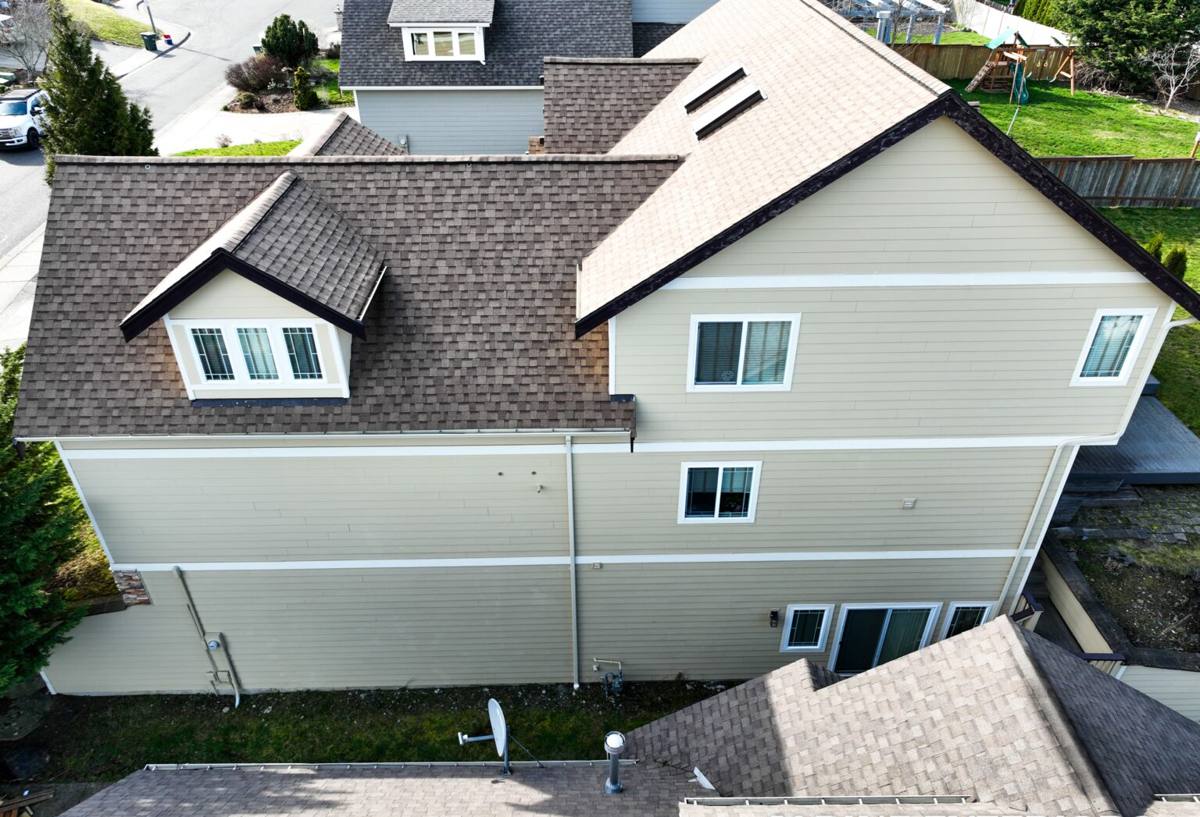
Why the Local Climate Changes What "Correct" Looks Like
Three things define roofing conditions around Aldergrove and Lynden, and each one pushes toward a different set of decisions when it comes to metal roofing.
Salt Air and Moisture
Even well inland from the Strait of Georgia, this part of the Fraser Valley and Whatcom County gets enough marine air moving through that metal fasteners, flashing, and panel edges see more corrosion pressure than they would in a dry climate. Cheap fasteners or mismatched metals will show rust streaks and pitting years before a properly specified system will.
Driving Rain
Rain here doesn't fall straight down very often — wind-driven rain is the norm for a good chunk of the season. That means water gets pushed sideways under laps, around penetrations, and into any gap that a fair-weather installation might get away with elsewhere. Seam design, underlayment choice, and flashing detail work all have to assume the rain is coming in at an angle, not just from above.
A Long Moss Season
Shade, moisture, and mild temperatures are a perfect combination for moss growth on north-facing slopes and anywhere debris collects. Moss holds moisture against a roof surface, and on the wrong material that shortens its life. Metal roofing handles moss far better than most alternatives, but panel profile and slope still matter for how much moss actually takes hold.
Why Metal Roofing Fits This Climate Well
We don't push metal roofing on every homeowner — it's not the right call for every budget or every home. But for the conditions Aldergrove sees, it has real advantages worth laying out honestly.
- Sheds water fast. Steep-sided panel profiles move driving rain off the roof before it has a chance to work under a seam.
- Resists moss better than shingles. Moss struggles to get a foothold on a smooth, non-porous metal surface the way it does on the granular texture of asphalt shingles.
- Long service life. A correctly installed metal roof with a good coating system is typically rated to outlast asphalt shingles by decades, which matters when you're factoring in the cost of re-roofing a home twice versus once.
- Handles wind well. Properly fastened metal panels resist the kind of wind-driven rain and gusts that come through with winter storms off the coast.
- Low ongoing maintenance compared to materials that need regular moss treatment and granule inspection.
The trade-off is upfront cost and the fact that a metal roof is only as good as its installation — more on that below.
Panel Types and What Actually Suits This Area
"Metal roofing" covers a range of products, and the right one depends on the home, the roof pitch, and the budget. We'll walk through the honest trade-offs rather than pushing whatever's easiest to install.
| Panel Type | Best For | Trade-Offs |
|---|---|---|
| Standing seam (concealed fasteners) | Most residential roofs, especially where long-term weathertightness matters most | Higher material and labor cost, but the fewest penetration points for water to exploit |
| Exposed-fastener panels | Budget-conscious projects, outbuildings, some simpler roof lines | Lower upfront cost, but fasteners need periodic inspection since they're a potential leak point over time |
| Metal shingles/shakes | Homes where a traditional shingle or shake look is wanted with metal's durability | More seams than standing seam panels, so detailing at each course matters more |
For most Aldergrove-area homes dealing with driving rain and long wet seasons, we lean toward standing seam because fewer exposed fasteners means fewer places for wind-driven water to find a way in. But roof complexity, budget, and the look you want all factor into the final recommendation — we'll walk your specific roof with you rather than assume one answer fits every house.
What a Correct Metal Roof Installation Actually Involves
A lot of roofing problems trace back not to the material but to shortcuts in how it went on. For this climate, a handful of details are non-negotiable in our process:
- Ice and water shield at eaves, valleys, and penetrations. These are the spots where wind-driven rain and any winter ice concentrate — they need self-adhered membrane, not just felt.
- Compatible metals throughout. Fasteners, flashing, and panels need to be matched to avoid galvanic corrosion, which accelerates in humid, salt-influenced air.
- Proper panel overlap and seam direction so that wind-driven rain is shed rather than pushed into a lap by prevailing storm direction.
- Ventilation that actually works with the roof assembly — trapped moisture under a metal roof causes problems just as fast as water getting in from outside.
- Flashing detail at every penetration — vents, chimneys, skylights — since these are consistently where leaks originate on any roof type.
- Fastener torque and spacing to spec, especially on exposed-fastener systems, since over- or under-driven screws are a common source of early leaks.
None of this is exotic. It's disciplined, unglamorous installation work — and it's exactly the kind of thing that gets rushed on a crew that doesn't regularly work this climate.
Our Process for an Aldergrove Metal Roof Project
1. On-Site Assessment
We walk the roof, check the deck condition underneath, look at ventilation, and note anything — valleys, dormers, chimneys — that needs extra attention in the plan.
2. Straight Talk on Panel Type and Cost
We'll explain which panel system fits your roof and budget, and why, including the honest downsides of each option rather than just the upsides.
3. Tear-Off or Overlay Decision
Depending on the condition of the existing roof and local code, we'll advise whether a tear-off to bare deck or an overlay is appropriate — we don't default to the more profitable option, we default to the correct one for your roof.
4. Installation
Deck inspection and repair as needed, underlayment and ice/water shield placement, panel installation with correct overlap and fastening, and flashing detail at every penetration.
5. Final Walkthrough
We go over the finished roof with you before calling the job done, including how to spot early signs of any issue in the years ahead.
Cost Factors Worth Understanding Upfront
We won't quote a number without seeing your roof, but these are the variables that actually move the price:
| Factor | Why It Matters |
|---|---|
| Panel type | Standing seam typically costs more per square than exposed-fastener panels, due to material and labor complexity |
| Roof complexity | More valleys, dormers, and penetrations mean more flashing detail and labor hours |
| Existing roof condition | Deck repairs or a full tear-off add cost versus a roof in good structural shape |
| Roof pitch and access | Steep or hard-to-access roofs take longer and require more safety setup |
| Coating/finish | Higher-grade coatings resist fading and corrosion longer, at a higher material cost |
Why a Crew That Already Works Aldergrove Matters
Roofing crews that mostly work drier, inland climates sometimes bring habits that don't translate well to the Fraser Valley and Whatcom County corridor — lighter underlayment specs, less attention to wind-driven rain detailing, assumptions about moss that don't hold up here. A crew that regularly works Lynden, the county line, and communities like Aldergrove has already seen what happens when those shortcuts meet a real Pacific Northwest winter, and builds accordingly.
There's also a practical side: being close by means we can respond quickly if you have a question after the job, and we're not treating your roof as a one-off out-of-territory project. We do this work regularly in this exact area, in this exact climate, and that shows up in the details.
Questions to Ask Any Roofing Contractor Before You Hire
- Are you licensed and insured to work on both sides of the border if needed, and what does your warranty actually cover?
- What underlayment and ice/water shield spec do you use, and why?
- How do you handle fastener and flashing compatibility to prevent corrosion?
- Can you walk me through how your panel seams handle wind-driven rain specifically?
- What's your process if a leak shows up after installation?
A contractor who answers these clearly and specifically — rather than with generic reassurance — is one who actually understands the climate they're building for.
If you're weighing metal roofing for a home in the Aldergrove area, we're happy to take a look and give you a straight, no-pressure estimate. There's a form below — tell us a bit about your roof and we'll follow up with honest answers, not a sales pitch.