 Lynden Siding
 Building New in Acme? The Windows Are Where the Home Either Stays Dry or Doesn't
If you're framing a new home out in Acme, you already know this isn't a subdivision with a hundred identical lots. It's Whatcom County foothill country — wooded lots, longer driveways, homes that sit closer to the tree line and the Nooksack River drainage than anything in town. That setting is part of why people build out here, but it also means a new house takes on more moisture exposure than a comparable build closer to Lynden's core. Windows installed during framing are one of the few components that get exactly one chance to be done right. Once siding, trim, and interior finish go on top of them, a flashing mistake is buried for years — sometimes until it shows up as rot in a wall cavity.
This page is specifically about new-construction window installation for Acme-area builds — not window replacement on an existing home, which is a different job with different rules. If you're a builder, GC, or owner-builder putting up a house in this part of Whatcom County, here's what actually matters.
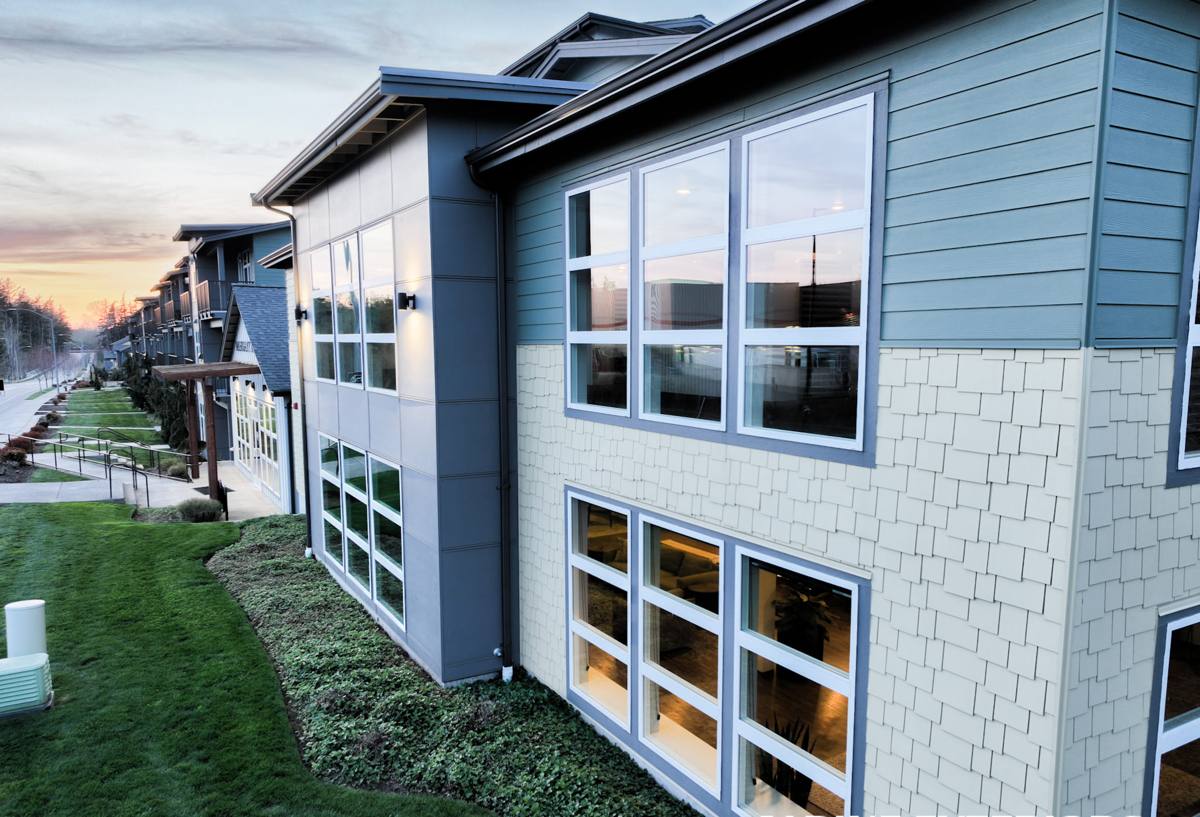
What Acme's Setting Asks of a New Window Install
Acme sits back from Bellingham Bay, but the marine-influenced air that defines this region doesn't stop at the water's edge — it rides up the Nooksack valley along with the rain. Add in tree cover, shaded north sides, and the long stretch of gray months every year, and you get the same driving rain, humidity, and moss growth that shows up across Whatcom County, just with more shade and slower drying time on wooded lots.
For a new-construction window opening, that means three things in practice:
- Wind-driven rain needs a real drainage plane behind the window, not just caulk at the trim
- Shaded, slow-drying framing needs the opening sealed correctly the first time — there's less sun to bake out a mistake
- Moss and algae staining on sills and trim is a long-term appearance issue, so material choice and detailing at the sill matter as much as the flashing itself
None of this is exotic. It's standard best-practice window installation done without shortcuts, applied consistently, on every opening in the house.
New-Construction Windows Aren't "Replacement Windows Installed Early"
This distinction trips up a lot of first-time owner-builders. A replacement window is designed to go into an existing, already-flashed opening — it's often a "pocket" or "insert" unit that fits inside the old frame. A new-construction window is a different product entirely: it typically has a nailing flange around the perimeter that gets integrated directly into the house wrap and flashing system before siding ever goes on.
Because the window becomes part of the wall's water management system — not something added after the fact — the sequencing has to happen in the right order, every time:
- Rough opening framed square, level, and to the correct dimension (undersized or oversized openings cause callback problems later)
- Sill pan flashing installed first, sloped to drain outward, before the window ever sets
- Window set, shimmed for square and plumb, and fastened per the manufacturer's schedule
- Flanges integrated with the house wrap in shingle-lap fashion — top last, so water sheds over every layer below it
- Sealant used only where it's supposed to carry water, not as a substitute for correct flashing order
Get the order wrong — flange over the wrap instead of under it at the head, for instance — and the mistake doesn't show up at final walkthrough. It shows up in three or five years as a stain on the interior sill or soft trim outside.
Frame Material: What Holds Up in This Climate
New construction gives you a clean choice of frame material, since you're not constrained by an existing opening. For a wooded, shaded Acme lot with long damp stretches, here's how the common options actually compare in real-world use:
| Frame Material | Moisture Behavior | Maintenance | Where It Fits Best |
|---|---|---|---|
| Vinyl | Won't rot; can expand/contract with temperature swings | Low — occasional cleaning | Most budget-conscious new builds; solid all-around choice |
| Fiberglass | Very stable, minimal expansion, holds paint well | Low | Homes wanting a higher-end finish or larger window spans |
| Wood or wood-clad | Needs a fully intact exterior clad or finish to keep moisture out of the core | Higher — finish must be maintained | Owners set on a wood interior look who accept the upkeep |
| Aluminum | Durable but conducts heat/cold and can condense in cold, damp conditions | Moderate | Best reserved for specific architectural applications |
Our default recommendation for shaded, damp Acme lots is vinyl or fiberglass, because both shed water without depending on a maintained painted or stained surface. Wood-clad is a fine choice too, but it's an honest trade-off — you're taking on upkeep in exchange for the look, and that upkeep matters more here than it would in a drier climate.
Glass Package and Ratings
For new builds in the Nooksack valley, we typically spec double-pane, low-E glass with argon fill and a warm-edge spacer as the baseline, not an upgrade. In a climate with this much sustained dampness and cool nights, a poor spacer or cheap seal shows up early as interior condensation on cold mornings — which then becomes a moisture source of its own on sills and trim. We size the U-factor and solar heat gain coefficient to the window's orientation and shading rather than using one spec across the whole house; a shaded north window and an exposed west window don't perform the same way.
Our Process for New-Construction Window Installs
We work directly with the builder or framer's schedule, since window install timing on a new build is tighter than on a remodel — the house isn't weathertight until this step is done correctly.
- Rough opening verification — we check every opening against the ordered window sizes before install day, catching framing errors while they're still cheap to fix
- Sill pan and flashing install — done per manufacturer instructions and shingle-lap sequencing, not generic "best guess" caulking
- Setting and fastening — square, plumb, and level checked on every unit, with shims and fasteners per the window manufacturer's schedule
- Integration with house wrap — flanges taped and lapped correctly so the drainage plane stays continuous around every opening
- Final check — operation, hardware, and seal check before we sign off, so nothing gets discovered after siding is already on
We coordinate timing so windows go in once framing is squared away but before house wrap and siding close up access — trying to fix a flashing issue after siding is installed costs far more than doing it right the first pass.
Why a Crew That Already Works in Acme Matters
Acme isn't downtown Lynden. Longer driveways, well and septic systems instead of municipal hookups, wooded and sloped lots, and inspection scheduling through Whatcom County rather than city permitting all change how a build day actually runs. A crew that's already done window work out here knows to plan for slower site access, knows which local building department reviewers want to see certain flashing details documented, and isn't learning the terrain on your job.
It also matters for the moss and staining side of things. A crew that only works in drier, more open parts of the county may not think twice about sill drainage detailing that keeps standing moisture off a window sill under a tree canopy. That's a small detail with a long payoff — or a long-term staining and rot problem — depending on whether it's handled at install.
What Drives Cost on a New-Construction Window Package
New-construction window pricing is driven by different factors than a replacement job, since you're buying and installing a full package rather than swapping units one at a time.
| Factor | Why It Moves the Price |
|---|---|
| Number and size of openings | More glass and larger spans mean more material and labor per unit |
| Frame material | Vinyl is typically the most economical; fiberglass and wood-clad cost more |
| Glass package | Low-E coatings, argon fill, and impact-rated or upgraded spacers add cost but pay back in comfort and condensation resistance |
| Special shapes or large spans | Custom sizes, picture windows, and large sliders cost more than standard operable units |
| Site access and scheduling | Wooded, sloped, or long-driveway lots can affect delivery and staging time |
Lead time is worth planning for early — new-construction windows are typically ordered to spec once the framing plan is locked, and manufacturer lead times can run several weeks. Ordering late is one of the most common causes of schedule delays on a new build.
Questions Worth Asking Before You Sign Off on a Window Package
- Is the sill pan flashing method specified in writing, not just verbally described?
- Does the quote specify frame material and glass package by name, or just "vinyl windows"?
- Who verifies rough openings against the ordered window sizes before installation day?
- What's the lead time from order to delivery, and does it fit the framing schedule?
- Is house wrap integration included in the window install, or handled separately by another trade?
Getting clear answers to these before the contract is signed avoids the most common source of disputes on new builds: two trades each assuming the other one handled the flashing integration.
Getting a New-Construction Window Package Right, Once
A new build only gets one first pass at getting windows sealed into the wall correctly. Done right, an Acme home should go decades without a window-related moisture problem, even through the wettest, mossiest stretches of the year. Done poorly, the flashing mistakes are buried under trim and siding and don't surface until real damage has already happened.
If you're planning a new build in Acme or elsewhere near Lynden, we're happy to walk through your window plans and give you a straightforward, no-pressure estimate. Use the form below to get started.