 Lynden Siding
 Storm Damage Roof Repair Built for Birch Bay Conditions
Birch Bay sits right up against the water, which means the storms that roll through don't just bring rain — they bring wind-driven rain, salt-laden air, and long stretches of damp shade that inland roofs never have to deal with. A roof that would hold up fine on a dry, sheltered lot a few miles inland can fail years earlier out here if it wasn't installed or repaired with that exposure in mind. When we get called out for storm damage repair in this area, we're not just patching a leak — we're accounting for the specific way this coastline beats up a roof over time.
This page covers what storm damage actually looks like on a Birch Bay roof, what a repair needs to include to actually fix the problem, and how our process works from the first call to the finished job.
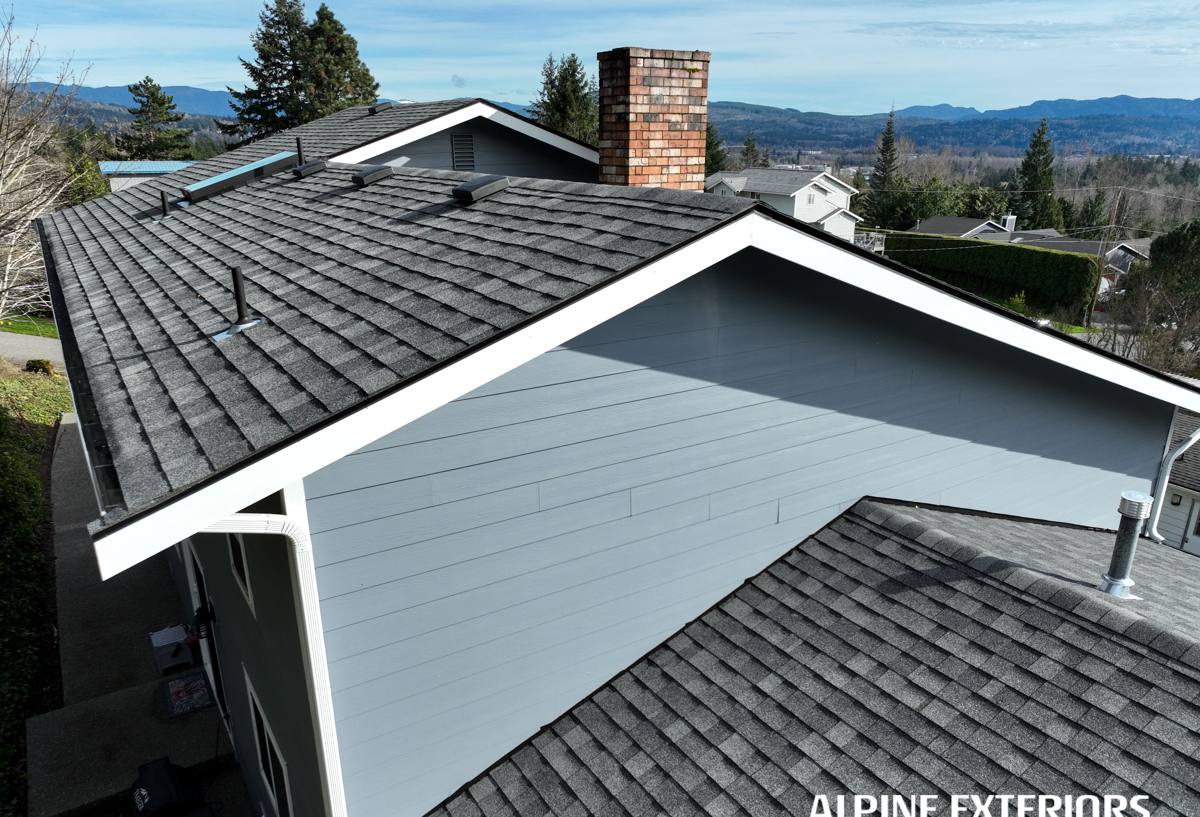
Why Coastal Whatcom County Roofs Age Differently
Salt Air and Metal Components
Salt spray carried in off the water accelerates corrosion on anything metal — flashing, fasteners, gutters, vents. A roof inland might get another decade out of its flashing before it starts to pit and fail; a roof exposed to that salt air often shows corrosion much sooner, especially around chimneys, skylights, and valleys where flashing does the most work.
Driving Rain, Not Just Rain
Storms here rarely fall straight down. Wind pushes rain sideways and up under shingle edges, into gaps around vents, and behind flashing that would otherwise shed water fine in a calm rain. That's why storm damage often shows up as an interior leak weeks after the actual wind event — water worked its way in slowly rather than pouring through an obvious hole.
The Long Moss Season
Western Whatcom County's wet, mild winters and shaded, north-facing roof sections give moss a long growing window. Moss holds moisture against the roofing material, lifts shingle edges as it grows, and quietly breaks down the granule surface underneath it. A roof with unmanaged moss going into a windstorm is far more likely to lose shingles than a clean one, because the moss has already loosened what wind needs to pull free.
What Storm Damage Actually Looks Like on a Birch Bay Roof
Not all storm damage is dramatic. Some of it is obvious and some of it hides until it's caused real trouble. What we typically find after a wind or rain event in this area:
- Shingles lifted, cracked, or blown off entirely, often concentrated on the side of the roof that faces the prevailing wind and water
- Flashing pulled loose or bent around chimneys, skylights, and roof-to-wall transitions
- Granule loss and bruising from wind-driven debris, which weakens shingles without necessarily removing them
- Gutter and downspout separation from wind load, which redirects water onto fascia and siding instead of away from the house
- Moss-damaged sections that finally gave way under wind stress, even though the moss had been building for a season or more
- Soft or discolored decking found once shingles are pulled back, usually where a slow leak had been running longer than anyone realized
The tricky part is that the visible damage and the real damage aren't always the same thing. A handful of missing shingles can be a fifteen-minute fix, or it can be the visible sign of decking underneath that's been absorbing water for months.
What a Correct Storm Damage Repair Actually Involves
Inspection First, Not Guesswork
We start on the roof itself, not just from photos or a description over the phone. That means checking the full roof plane around the damaged area, not just the spot that's visibly missing shingles — wind damage is rarely as contained as it looks from the ground. We also check the attic side when there's any sign of a leak, because staining, damp insulation, or discoloration on rafters tells us how long water has actually been getting in.
Fixing the Cause, Not Just the Symptom
Replacing a few shingles over damaged flashing or soft decking is a short-term patch, not a repair. A correct job addresses whatever let water in — resealing or replacing flashing, cutting out and replacing any compromised decking, and installing proper underlayment before new shingles go back down. In a place with this much wind-driven rain, we also pay close attention to how the repair ties into the surrounding roofing, since a poorly integrated patch can create a new leak point right at its edges.
Matching Materials Honestly
We'll match your existing shingle color and profile as closely as the manufacturer's current lineup allows, but we're upfront when an exact match isn't possible — shingle lines change over time, and a roof section repaired years after the original install may show some visible difference. For roofs with widespread moss damage or age-related wear alongside storm damage, we'll tell you plainly if a full replacement makes more sense than continuing to patch.
Our Process, Start to Finish
- Initial contact and scheduling — we get a description of the damage and get someone out promptly, especially if there's an active leak.
- On-roof inspection — a full assessment of the damaged area and surrounding roof sections, plus an attic check if there's any sign of water intrusion.
- Written scope and estimate — a clear explanation of what's damaged, what needs to be done, and an honest cost range before any work starts.
- Documentation — photos and notes you can use for an insurance claim if the damage qualifies, whether or not we're the ones handling the claim conversation.
- Repair work — decking, underlayment, flashing, and shingles addressed in that order, not shingles slapped over an unresolved problem underneath.
- Cleanup and walkthrough — debris removed, gutters checked for damage from the repair or the original storm, and a final look together before we consider it done.
Repair vs. Replace: What Actually Drives the Decision
Storm damage repair makes sense for isolated damage on a roof that's otherwise in reasonable shape. It stops making sense once the damage is widespread, the roof is already near the end of its service life, or moss and age-related wear mean a repair today just delays a bigger job next storm season. Here's how we weigh it:
| Factor | Favors Repair | Favors Replacement |
|---|---|---|
| Extent of damage | Localized to one section or slope | Spread across multiple roof planes |
| Roof age | Well within its expected service life | Already near or past typical lifespan |
| Decking condition | Solid, dry, only the damaged spot affected | Soft or water-stained decking in several areas |
| Moss history | Minimal or well-maintained | Long-term, widespread moss damage |
| Approximate cost | Often a few hundred to a couple thousand dollars for targeted work | Full replacement runs considerably higher, but resets the clock |
We'll always lay out both options honestly when the situation is genuinely borderline. There's no benefit to us talking a homeowner into a full replacement that a solid repair would handle — or into a repair that's just going to fail again next winter.
Insurance Claims: What We Can and Can't Promise
Wind and storm damage is often covered under standard homeowners' policies, but coverage details, deductibles, and what counts as "storm damage" versus "wear and tear" vary by policy and insurer. We're not adjusters and we won't promise a claim will be approved. What we can do is document the damage clearly with photos and a written scope, give you an honest assessment of whether the damage looks storm-related or age-related, and be available if your adjuster wants to talk through what we found on the roof.
Keeping a Birch Bay Roof Ahead of the Next Storm
Most storm damage we repair didn't come out of nowhere — it started as something smaller that the wind and rain finally exploited. A few things worth checking regularly, especially before winter storm season:
- Moss buildup on shaded or north-facing roof sections, particularly along ridges and in valleys
- Loose, lifted, or curling shingle edges anywhere on the roof, not just the side that faces the weather
- Flashing around chimneys, skylights, and vent pipes showing rust, gaps, or separation from the roofing
- Gutters and downspouts that are sagging, pulling away from the fascia, or clogged with debris
- Any interior ceiling staining, even faint, especially after a windy rainstorm
Catching these early usually means a smaller, cheaper repair instead of an emergency call after the next windstorm finishes the job.
Why It Matters to Hire a Crew That Already Works This Area
A roofer who mostly works drier, inland neighborhoods can still do competent work, but they're not necessarily thinking about salt-air corrosion on flashing fasteners or how a long moss season changes the maintenance timeline. Working regularly along the Whatcom County coastline means we're used to diagnosing damage patterns specific to wind-driven rain and salt exposure, not just treating every storm repair the same way we would twenty miles inland. That local pattern recognition is often the difference between a repair that holds and one that reopens the next time a storm comes through.
If you've got storm damage on your roof — or you're not sure whether what you're seeing is storm damage or just wear — we're happy to take a look and give you a straight answer. Fill out the form below for a free, no-pressure estimate.