 Lynden Siding
 Siding Repair for Abbotsford's Wet Side of the Border
Abbotsford, BC sits just north of the international border, a short drive from our base in Lynden, and the weather doesn't change much crossing that line. Homes here deal with the same pattern all year: long stretches of driving rain, moist marine air pushed up the Fraser Valley, humidity that lingers well past the wet season, and a moss and algae season that can run eight months or more on north- and shade-facing walls. None of that is dramatic on its own, but siding takes the accumulated toll of it, year after year, whether the wall is brick veneer, vinyl, wood, or fiber cement.
Siding repair in this climate is rarely about one dramatic failure. It's almost always about small, ignored entry points for moisture — a cracked caulk joint, a piece of trim that pulled away, a corner that was never flashed correctly at installation — that get worse every wet season until the damage shows up as soft trim, staining, or a section that visibly bows. Catching and fixing that early is cheaper and far less disruptive than waiting until it becomes a rot problem behind the wall.
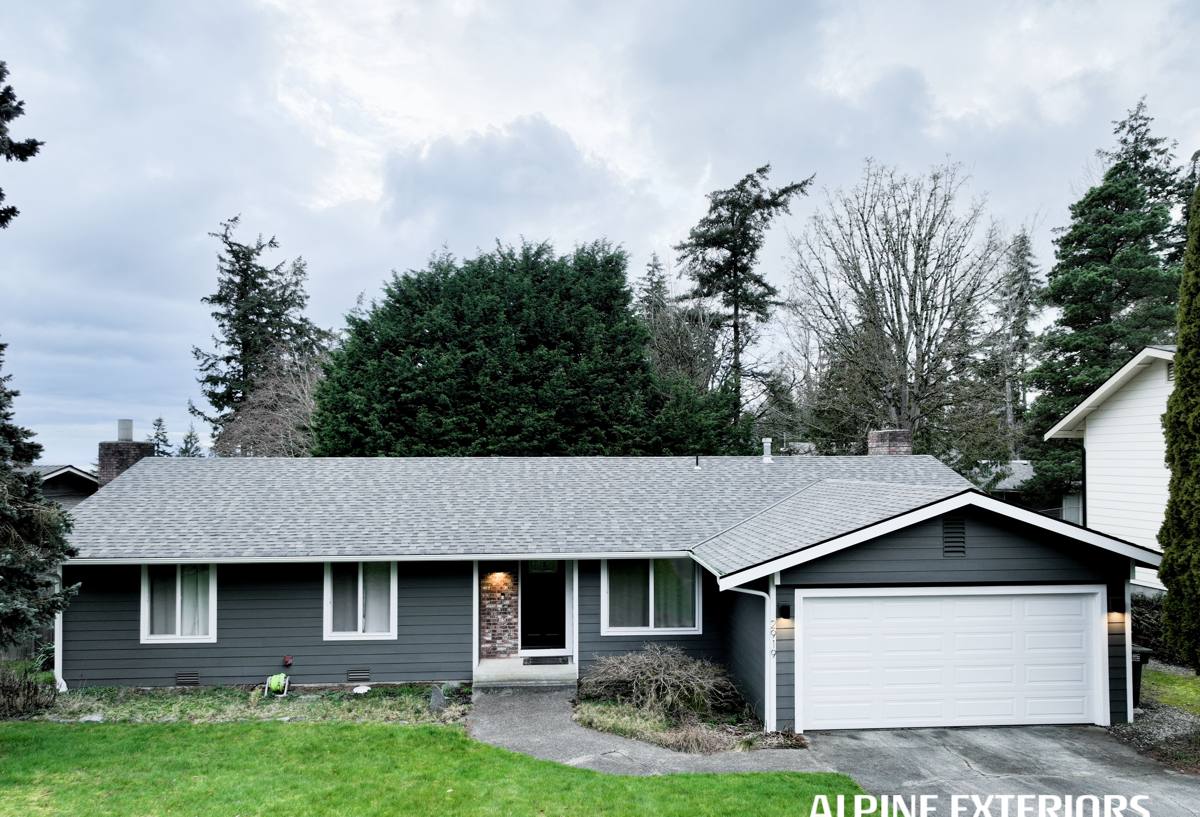
Warning Signs Abbotsford Homeowners Shouldn't Ignore
Visual clues from the ground
Most siding problems announce themselves before they become structural. Walking the perimeter of the house once or twice a year, especially after a hard winter, is the cheapest inspection you'll ever do.
- Panels or boards that look warped, bowed, or slightly separated from the wall
- Persistent dark streaking, green film, or moss buildup that keeps returning after cleaning
- Cracked, shrunken, or missing caulk at joints, corners, and around windows and doors
- Soft or spongy trim boards, especially near the bottom of walls or under windows
- Peeling or bubbling paint on trim, which usually means moisture is trapped underneath
- Visible gaps where siding meets flashing, fascia, or the foundation
- A musty smell or unexplained damp patch on an interior wall that backs onto exterior siding
Signs the damage has gone deeper
If you press on trim or siding near the ground and it gives, or if there's visible daylight through a seam, the issue has likely moved past the surface. At that point the repair needs to address what's happening behind the cladding, not just what's visible from the driveway. This is also where the biggest cost differences show up between a repair caught early and one caught late — the labor to open up and rebuild a wall assembly dwarfs the labor to reseal a joint.
What a Correct Siding Repair Actually Involves
Diagnosing the actual cause first
A repair that only addresses what's visible usually fails again within a season or two. Before any board is pulled or any caulk gun comes out, the actual water path needs to be traced: is it coming from a failed seal, a missing kick-out flashing, a clogged gutter overflowing onto the wall, or grade sloping toward the foundation instead of away from it? Repairing the siding without fixing the cause just buys a little time.
Matching the material and finish
For fiber cement siding, a proper repair means matching the profile, exposure, and factory finish of the existing product so the patch doesn't stand out or perform differently than the surrounding wall. Mismatched material — a different board profile, a field-painted patch next to a factory-finished ColorPlus wall, or a different manufacturer's product entirely — creates a visible seam and, more importantly, a spot where the two products expand, contract, and weather differently over time.
Rebuilding flashing and drainage, not just patching
Correct repair work restores the drainage plane behind the siding — housewrap, flashing, and the gap that lets any moisture that does get in drain and dry out — rather than just sealing the surface with caulk and hoping. Caulk is a maintenance item, not a waterproofing strategy on its own.
Repair or Replace? How We Make the Call
Not every problem area means the whole wall or the whole house needs new siding. We look at how localized the damage is, how old the existing siding is, and whether the underlying materials are compatible with a clean repair.
| Factor | Favors Repair | Favors Replacement |
|---|---|---|
| Extent of damage | Isolated to one wall or a few boards | Recurring across multiple elevations |
| Age of existing siding | Newer, still within its expected service life | Original siding is decades old and failing broadly |
| Material condition | Sound material, isolated moisture entry point | Widespread rot, delamination, or swelling |
| Material match available | Same or compatible product still obtainable | Discontinued profile or color, poor match |
| Underlying sheathing | Dry and intact once opened up | Sheathing itself is soft or compromised |
When a home is otherwise sound and the damage is contained, targeted repair is the honest recommendation — we're not going to push a full re-side on a house that doesn't need one. When the underlying wood is compromised or the pattern of failure is spreading, we'll say so plainly and explain why patching would just be spending money on a temporary fix.
Why We Repair With Fiber Cement, Not Vinyl or Foam Patches
We install and repair only James Hardie fiber cement siding. That's a deliberate standard, not a limitation on what we're capable of doing. Vinyl siding and foam-backed panel systems are common enough that homeowners sometimes ask us to simply patch in whatever is already on the wall, and we understand the instinct to keep things matching. But vinyl expands and contracts with temperature swings in a way that doesn't age well next to fiber cement, and it's not a product we stand behind installing or repairing to our standard. Fiber cement patched with fiber cement, using a matched HZ5 climate-engineered product and ColorPlus factory finish where available, holds its shape, its paint, and its fire resistance consistently across the wall.
If your home currently has vinyl, LP SmartSide, or another product we don't install, we'll still give you an honest read on the repair versus replacement question — we just won't pretend that patching one product with a fundamentally different one is a long-term fix. In many of those cases, a partial re-side with Hardie on the affected elevation is the more durable and often more cost-effective path than repeatedly patching an aging product.
Our Siding Repair Process for Abbotsford Properties
Being based just across the border in Lynden means Abbotsford calls aren't a special trip for us — it's territory we already know, with the same weather patterns and the same failure points we see on our home side of the line.
- Initial estimate: a walk-through of the affected areas, photos, and an honest first read on repair versus replacement
- Root-cause inspection: checking flashing, grading, gutters, and drainage — not just the siding itself — to find why the damage happened
- Scope and quote: a written scope covering material, labor, and what's being fixed structurally, not just cosmetically
- Removal and assessment: pulling back damaged sections to confirm sheathing and framing condition before closing the wall back up
- Rebuild: correct housewrap, flashing, and drainage gap restored, then matched Hardie siding installed to manufacturer spec
- Final check and cleanup: caulking, touch-up finish work, and a walk-through so you know exactly what was done and why
Keeping Repaired Siding From Failing Again
A good repair should outlast the original problem, but a few habits make a real difference in a climate that stays this wet this often. Keep gutters clear so water isn't sheeting down the wall behind them. Trim back vegetation that keeps a wall shaded and damp, since that's exactly where moss and algae take hold fastest. Check caulk joints at trim, corners, and penetrations once a year, since caulk is a wear item with a limited service life even when everything else is fine. And keep an eye on grade and drainage near the foundation — a lot of long-term siding damage traces back to water that was never a siding problem in the first place, just water with nowhere else to go.
What Siding Repair Typically Costs
Costs vary widely based on how much has to come off the wall and how much of the structure underneath needs attention, so we won't quote a number without seeing the damage. In general, a small, surface-level repair — a section of trim, a few boards, resealing a joint — sits at the low end of the range. A repair that involves opening the wall, replacing sheathing, and rebuilding flashing before the new siding goes back on costs meaningfully more, simply because most of that labor is invisible once the job is done. The factors that move the number most are how much of the wall has to be opened up, whether the sheathing underneath is sound or needs replacement, and how much matched material is needed to keep the repair from standing out.
If you're seeing any of the warning signs above on a home in Abbotsford, we're glad to take a look and give you a straight answer on what's actually going on — no pressure, no upsell to a full re-side unless that's genuinely what the house needs. Use the form below to request a free estimate.