 Lynden Siding
 Roof Repair in Acme: A Wooded Corner of Whatcom County That Wears On a Roof
Acme is a smaller, more heavily wooded community than a lot of the towns in our Whatcom County service area, and that changes what a roof deals with year to year. Homes here often sit under mature conifer canopy, tucked into the timber and river-drainage terrain that defines this part of the county. That shade keeps roof planes damp longer after every rain, and it means needles, cones, and branch debris collect in valleys and gutters at a rate that homes on more open lots simply don't experience. Add in the same driving rain, long moss season, and salt-tinged marine air that works its way across this whole region, and you get a roof that can fail at the details years before the shingles themselves are actually worn out.
This page is specifically about roof repair for Acme homes — not a full tear-off and replacement, and not a generic roofing overview. Repair is its own kind of job: it depends on correctly diagnosing what's actually failing, matching materials to what's already on the roof, and fixing the real cause instead of just covering the symptom. Lynden Siding Installer handles roofing, siding, windows, and decks across this area, and on repair work specifically, our approach starts with figuring out why a roof is leaking or failing before anyone touches a shingle.
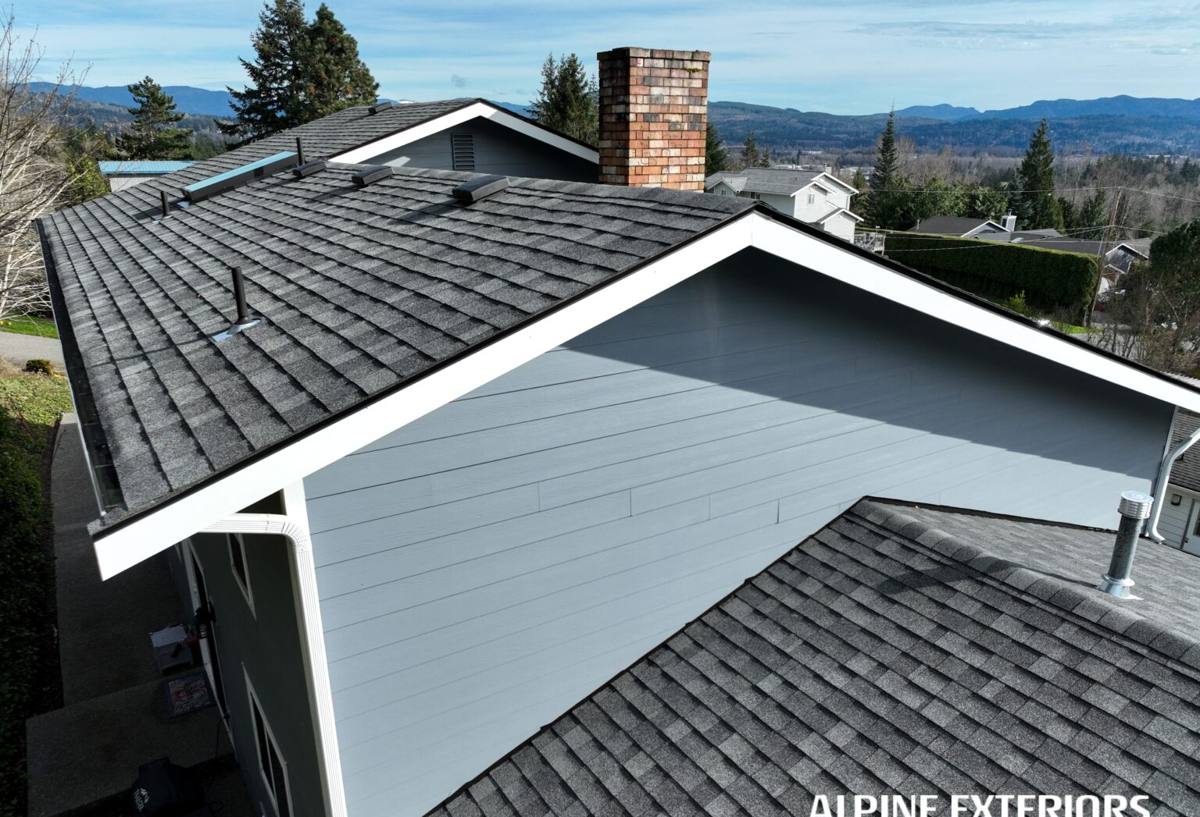
Why Acme Roofs Need Repair Sooner Than You'd Expect
Heavy Tree Cover and a Long Moss Season
Shaded, tree-covered lots are common in and around Acme, and shade is exactly what moss and algae need to establish and spread. A roof plane that never gets a full afternoon of direct sun can stay damp for days after a storm passes, and moss that's allowed to spread doesn't just look bad — it holds water against the roofing material and can work its way under shingle tabs and along nail lines, loosening fasteners and opening small gaps that grow into leaks over a few wet seasons.
Needle and Debris Buildup
Conifer needles and cones collect in valleys, behind chimneys, and along gutter lines faster on a wooded Acme lot than on a home with an open roofline. That debris holds moisture right where water is already trying to drain, and a clogged valley or gutter run is one of the more common, preventable causes of the interior water staining we get called out for.
Driving Rain and Weak Flashing Details
Rain in this part of Washington rarely just falls straight down and runs off. Wind pushes it sideways into valleys, around chimneys and vent pipes, and under flashing that wasn't lapped correctly to begin with. Most leaks we trace back to their source don't start in the open field of the roof — they start at a flashing detail that was installed as an afterthought rather than as part of the water-shedding system.
Salt Air, Even This Far Into the County
Acme sits well inland, but the marine air that defines weather across northern Whatcom County still reaches this far into the county over time. It's a slower, quieter effect than what a shoreline home deals with, but it still accelerates corrosion on exposed fasteners, nail heads, and lower-grade flashing metal, which is part of why a repair that looks fine going in can fail again within a couple of years if the hardware underneath wasn't upgraded along with it.
Repair or Replace? How to Tell the Difference
Not every roof problem in Acme calls for a full replacement, and not every leak can be permanently fixed with a patch. Here's how we generally sort that out during an inspection.
| Situation | Repair Usually Makes Sense | Replacement Is Usually the Honest Answer |
|---|---|---|
| Age of roofing material | Roof is under roughly 15 years old with isolated damage | Roof is near or past its expected material lifespan overall |
| Extent of damage | Damage is localized to one section, valley, or penetration | Multiple areas are failing independently across the roof |
| Deck condition | Roof deck underneath is sound and dry | Rot or soft spots are found in the decking during inspection |
| Moss/algae staining | Surface growth without granule loss or lifted shingles | Growth has caused visible shingle deterioration underneath |
| Leak history | First occurrence, clear single cause identified | Recurring leaks in different spots over multiple seasons |
We'll give you a straight answer either way. A roof that genuinely just needs a repair doesn't need to be sold a full replacement, and a roof that's failing broadly doesn't get helped by another round of patches.
What a Correct Roof Repair Actually Involves
Finding the Real Source of a Leak
Water almost never shows up on the ceiling directly below where it entered the roof. It travels along rafters, sheathing, and underlayment before it finds a gap to drip through, which means a repair based on where the stain appears inside the house instead of an actual roof and attic inspection is a guess, not a fix. We trace leaks from the attic side wherever possible and confirm the actual entry point before we start any repair work outside.
Matching Materials Instead of Patch-and-Pray
A repair that uses the wrong shingle profile, an incompatible underlayment, or mismatched flashing metal can create a new weak point even while it fixes the old one. On an older roof, that sometimes means sourcing a close match rather than an exact one, and being upfront with you about what that match will look like rather than surprising you after the fact.
Flashing Repair Done Right
When the cause is a flashing failure — at a valley, chimney, skylight, or roof-to-wall transition — the fix has to re-integrate the flashing with the underlayment and shingle courses around it, not just run a bead of caulk over the gap. Caulk is a short-term seal at best in a climate this wet; it's not a substitute for flashing that's properly lapped and shedding water the way it was designed to.
Moss and Debris Remediation
Where moss or built-up debris is part of the problem, that gets cleared as part of the repair, not left for the homeowner to deal with separately. On roofs with heavy tree cover, we'll also talk through practical moss-prevention steps — zinc or copper strips, more frequent debris clearing — so the same repair isn't needed again in two years.
Common Roof Repairs We Handle in Acme
| Repair Type | Typical Cause on a Wooded Acme Lot |
|---|---|
| Valley leak repair | Needle and debris buildup trapping moisture against aging flashing |
| Flashing repair or replacement | Corroded or improperly lapped metal at chimneys, walls, and vents |
| Vent boot and pipe collar repair | Rubber boots cracking with age and UV exposure, letting water track down the pipe |
| Moss and algae remediation | Extended shade under tree canopy keeping roof planes damp |
| Isolated shingle replacement | Wind lift, impact damage, or granule loss on individual sections |
| Storm and wind damage repair | Fallen branches or debris impact common on tree-lined properties |
Our Roof Repair Process
- In-person inspection: We get up on the roof and check the attic ourselves, rather than quoting a repair sight unseen.
- Honest diagnosis: We show you what we found and explain what's actually causing the problem, including whether repair or replacement is the right call.
- Written estimate: You get a clear scope covering what's being repaired, the materials being used, and what it costs, before any work starts.
- The repair itself: Work is done to the same standard as a full installation — correct flashing integration, proper fastening, and materials matched to the existing roof wherever possible.
- Debris clearing and cleanup: Valleys, gutters, and the surrounding property are cleared of old material and debris before we consider the job finished.
- Final walkthrough: We review the completed repair with you and explain any maintenance steps worth keeping on your radar going forward.
Why Hiring a Crew That Already Works in Acme Matters
A roofer who mostly works open, sun-exposed rooflines in town isn't necessarily thinking about needle buildup in a shaded valley or how much faster moss spreads under a stand of mature conifers. A crew that's spent time on wooded, rural Whatcom County properties has already seen where those roofs actually fail, and that shapes what gets checked during an inspection and what gets built into a repair.
It also matters after the work is done. A repair warranty only means something if the company behind it is still reachable a few years later, not a name that did one job in the area and moved on. Lynden Siding Installer works this part of the county on an ongoing basis, which is exactly the kind of local presence worth asking any contractor about before you hire them.
A Practical Checklist Before You Hire
- Did they physically inspect the roof and attic, or quote from a description alone?
- Does the estimate name the actual cause of the problem, not just "roof repair" as a line item?
- Are flashing, underlayment, and material matching addressed specifically in the scope?
- Do they carry current WA contractor licensing, liability insurance, and workers' compensation?
- Can they speak to work they've actually done on wooded or rural Whatcom County properties?
- Is there a clear workmanship warranty on the repair itself, separate from any material warranty?
Signs Your Acme Roof Needs Repair Now
- Water staining on ceilings or in the attic, especially near valleys, chimneys, or vent pipes
- Visible moss or algae buildup on shaded roof planes, particularly under tree cover
- Debris accumulation in valleys or gutters that doesn't clear on its own between storms
- Curling, cracked, or missing shingles after a windstorm or falling branch
- Daylight visible through the roof deck from inside the attic
- Granules collecting in gutters or at the base of downspouts, signaling shingle wear
Catching any of these early is usually the difference between a straightforward repair and a much larger problem once the next wet season sets in.
If you're dealing with a leak, storm damage, or a roof that just needs an honest look, we're glad to come out and take a look at no cost and no pressure. Use the form below to request a free roof repair estimate for your Acme home.