 Lynden Siding
 Windows Take a Different Kind of Beating in Nooksack
Nooksack sits in the river valley east of Lynden, in the low, open farmland that runs through this part of Whatcom County. It's a beautiful place to have a house, but it's also a place where weather doesn't let up for months at a time. Marine air pushes inland off the Salish Sea and carries a fine edge of salt with it, driving rain comes in sideways on a windy afternoon instead of falling straight down, and the shaded, damp stretches of fall and winter grow moss on anything that holds moisture — roofs, siding, and window sills included.
Windows are one of the first places that weather finds a weak spot. A window opening is a hole cut into the wall, and everything about how it's flashed, sealed, and fitted determines whether that hole stays dry or slowly feeds water into the framing behind it. In a climate like this one, the difference between a window that's "put in" and one that's installed correctly shows up within a few wet seasons, not decades.
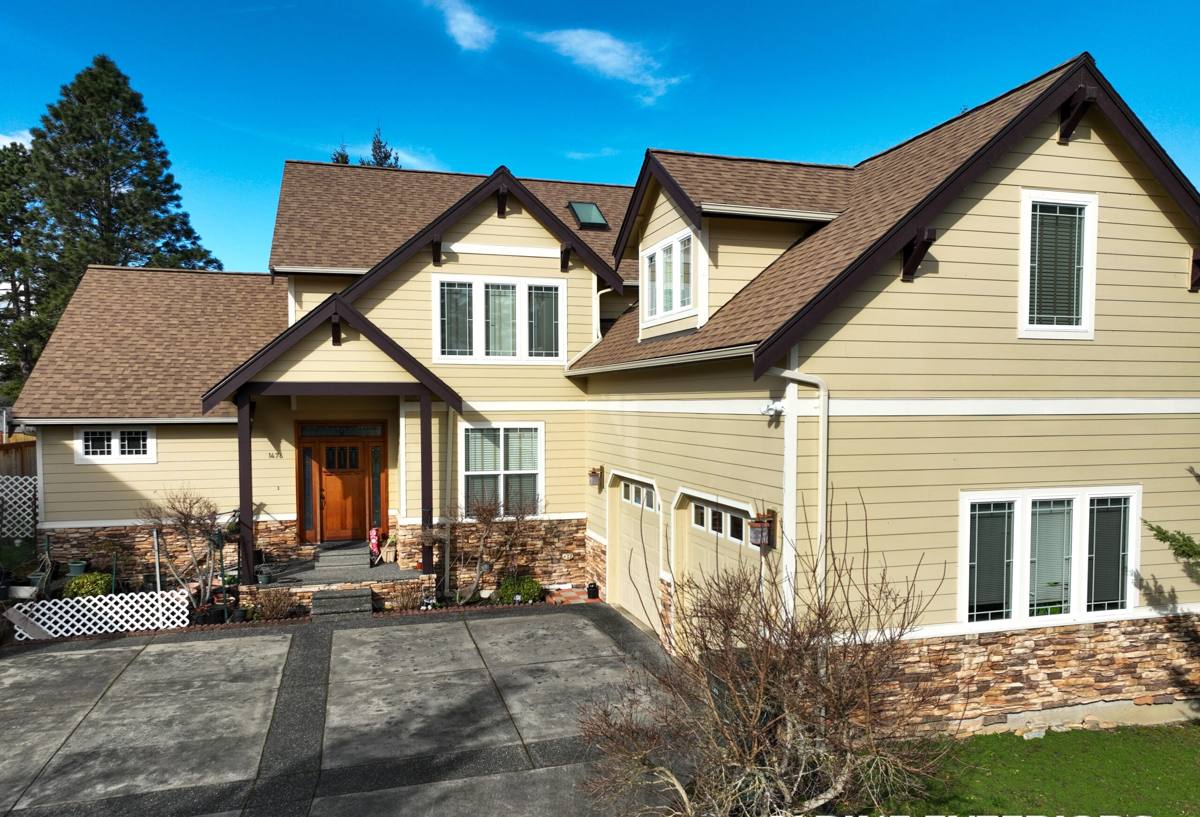
Signs Your Windows Are Ready for Replacement
Most homeowners don't think about their windows until something's already gone wrong. Here's what we look for, and what you can check yourself:
- Condensation or fogging trapped between the panes — a sign the seal between the glass layers has failed
- Drafts you can feel near the frame, especially on windy days coming off the valley
- Wood sills or lower corners that feel soft, spongy, or show visible rot
- Sashes that stick, bind, or have swollen shut for the wet season and won't move
- Daylight or visible gaps around the frame when you look from outside
- Paint or caulking that keeps failing at the same window no matter how often it's touched up
- Moss or dark staining building up on the sill or trim faster than on the rest of the house
Any one of these on its own might just need a repair. Several at once, especially on the sides of the house that catch the prevailing wind and rain, usually means the window and its installation are both due for replacement.
What a Correct Window Installation Actually Involves
Replacing a window is not just unscrewing the old unit and screwing in a new one. Done right, it's a sequence of steps that all matter, and skipping or rushing any one of them is usually where the next leak starts.
The old window comes out down to the rough opening, and that's the first real chance to see what's actually going on behind the trim. On older homes in this area, it's not unusual to find framing or sheathing that's taken on water over the years without anyone knowing — the siding looked fine from outside while the wood behind it was slowly failing. That gets addressed before anything new goes in, not covered back over.
Flashing and Water Management
In a climate with regular wind-driven rain, flashing sequence is what actually keeps water out — more than the window itself. Flashing at the head of the opening needs to go behind the weather-resistive barrier, and flashing at the sill needs to sit over it, so that any water moving down the wall sheds outward and away from the framing at every layer, the way shingles overlap on a roof. If the house wrap is lapped backward or the tape isn't sealed at the corners, water finds that gap eventually — often not until a hard storm, and often well behind the window before anyone notices.
Sill Pans and a Second Line of Defense
A sill pan under the window is cheap insurance against the water that gets past the primary seal — and in a valley that sees driving rain for months at a stretch, something eventually will get past it. The pan catches that water and directs it back out through the wall rather than letting it sit on bare wood. It's a small part with an outsized effect on how long the installation lasts.
Fit, Fasteners, and Air Sealing
A window that isn't shimmed square and plumb will bind, won't seal evenly along the weatherstripping, and will wear out its own hardware faster. Around the frame, gaps get filled with a low-expansion foam sized for windows, not a bead of caulk — caulk alone doesn't insulate, and the wrong foam can bow the frame out of square as it cures. The interior air seal and the exterior water seal are treated as two separate jobs, because a wall that's airtight but not weatherproof, or weatherproof but leaking conditioned air, both cause problems over time.
Full-Frame Replacement vs. Insert Replacement
Not every window job is the same scope. Which approach makes sense depends on the condition of the existing frame, not just the age of the glass.
| Factor | Full-Frame Replacement | Insert (Pocket) Replacement |
|---|---|---|
| Best for | Rotten or water-damaged framing, or changing the window size | Sound, square existing frames with no hidden damage |
| What gets disturbed | Opening is stripped to the rough framing; some siding removal | Existing frame stays in place; minimal siding disturbance |
| Cost factor | Higher — more labor, more materials, more time | Lower — faster install, less material |
| Long-term value | Fixes hidden problems (rot, poor flashing) at the same time | Only a good value if the frame is confirmed sound first |
| Common in this area | Older wood-frame farmhouses with original windows | Newer homes with first-generation vinyl reaching end of life |
We don't default to the cheaper option just because it's cheaper. If we open up a wall and find damage, an insert replacement over rotten framing just seals the problem back in.
Choosing Materials for This Climate
Frame material and glass package both matter more here than they would in a drier part of the state. Vinyl and fiberglass frames both hold up well against constant moisture as long as the corners are properly welded or fastened and the drainage paths in the frame aren't blocked — wood-clad frames need more attention to end-grain sealing to avoid the rot that shows up first at the corners.
On glass, we weigh U-factor more heavily than solar heat gain here. This region doesn't get the intense direct sun that makes solar heat gain the priority in sunnier climates — keeping heat from escaping through the glass on a cold, wet, overcast day is the bigger win for comfort and heating bills. Double-pane with a good low-E coating covers most homes; triple-pane adds a real benefit for noise and condensation resistance in rooms that run consistently damp, but it's not a must-have for every window in the house.
How We Approach a Nooksack Window Job
Every job starts with an on-site look, not a phone quote. We measure the openings, check the condition of the framing and siding around each window, and ask about any drafts, sticking, or moisture issues the homeowner has already noticed. Windows on the sides of the house that catch the prevailing wind and rain get extra attention during that walk — they're usually the ones that need it.
- Assessment and measurement, including a look at framing and siding condition around each opening
- Product selection matched to the window's exposure and the home's specific needs
- Scheduling around the weather — we don't leave an opening exposed overnight during a heavy rain stretch
- Removal and inspection of the rough opening before anything new goes in
- Installation with correct flashing sequence, sill pan, shimming, and insulation
- Interior and exterior finish work, then a full walkthrough with the homeowner
- Warranty paperwork covering our labor separately from the manufacturer's product warranty
Why a Local Crew Makes a Difference
A crew that already works Nooksack and the rest of the Lynden area day to day recognizes the patterns specific to this valley — which exposures take the worst of the wind-driven rain, where moss and rot tend to show up first on the area's older wood-frame farmhouses, and how open, unsheltered lots differ from tighter in-town properties. That's not something a crew passing through for a single job picks up on the first visit.
There's also the accountability that comes with being local. A contractor based in this community has a reputation to stand behind here for years, not just until the truck leaves the driveway. If a question comes up after the job is done, we're not far away.
Living With Windows Built for This Weather
A correct installation is most of the battle, but a little upkeep keeps it working. Keep weep holes and window tracks clear of moss and leaf debris so water can actually drain the way it's designed to. After a long wet stretch, it's worth wiping down sills where standing water tends to collect. Check the exterior caulk line at the trim once a year and touch it up before it fails outright — and make sure gutters and grading are still directing water away from the wall rather than down it, since even a perfect window installation can't fully compensate for water pooling against the siding above it.
If your windows in Nooksack or anywhere around Lynden are drafty, fogged, or just overdue, we're happy to take a look and give you a straightforward, no-pressure estimate — no obligation, just an honest read on what your home actually needs. The form below is the easiest way to get started.