 Lynden Siding
 Board & Batten Siding Built for Maple Falls' Climate
Maple Falls sits up in the foothill country east of Lynden, in the timber and river-valley terrain that leads toward Mount Baker. It's a different environment than the open farmland closer to town — more tree cover, more shade, more standing moisture on the north sides of homes and outbuildings. Add in the driving rain that moves through Whatcom County for much of the year, the salt-tinged marine air that reaches well inland off the Sound, and a moss season that can run eight months or longer in shaded spots, and you've got a climate that is genuinely hard on exterior materials. Siding here doesn't just need to look right — it needs to shed water fast, resist moss and mildew colonization, and hold its finish without constant upkeep.
Board and batten is one of the most requested siding styles for homes in this part of the county, and for good reason — it suits the cabin, farmhouse, and mountain-modern architecture common around Maple Falls. But the style only works long-term if it's built on the right material and installed with the moisture-management details this climate demands. This page covers what that actually looks like.
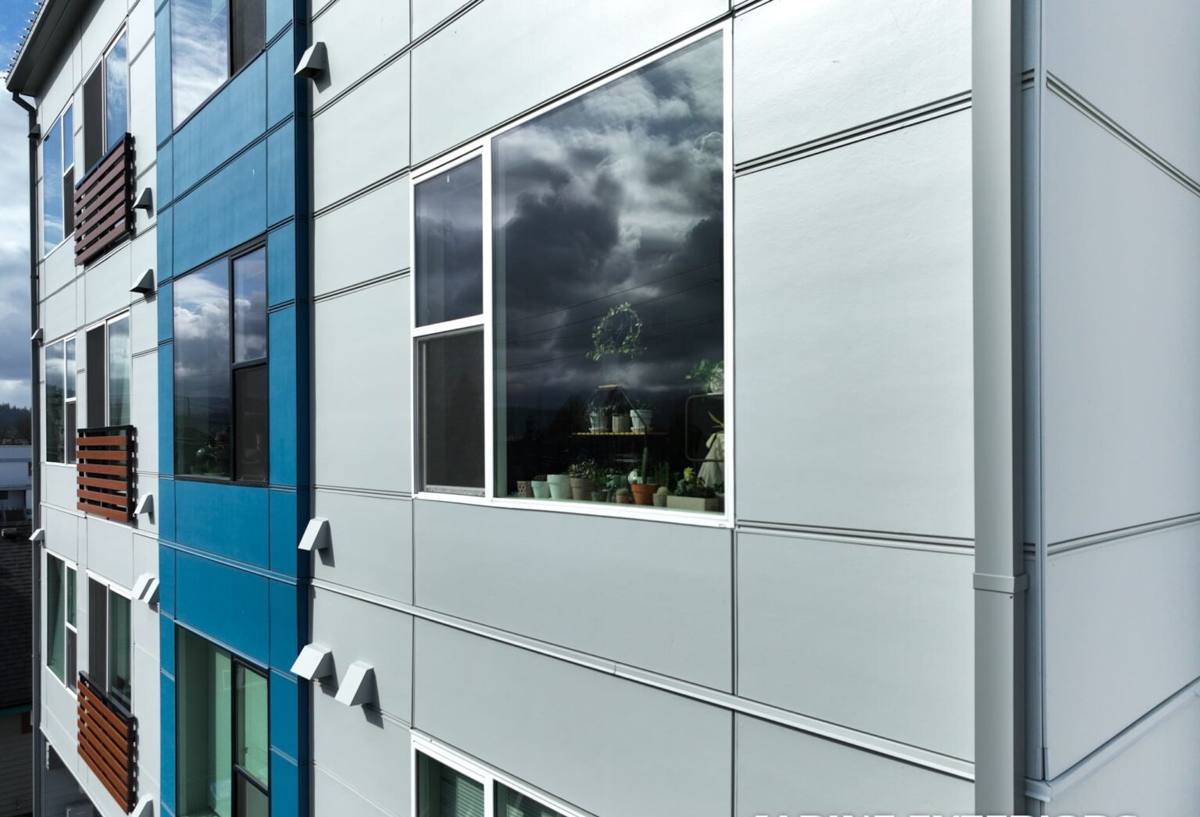
What Maple Falls Homes Need From Their Siding
Before talking about board and batten specifically, it's worth being honest about what the site conditions around Maple Falls actually do to a house exterior over time:
- Shade and tree cover slow drying time after rain, which is exactly what moss, algae, and mildew need to establish and spread.
- Elevation and forest exposure mean more direct contact with wind-driven rain and, in winter, freeze-thaw cycling that stresses joints and seams.
- Longer wet seasons than the immediate coast put more cumulative moisture load on a wall assembly over the life of the siding.
- Rural, wooded lots often mean less air movement across exterior walls compared to open farmland, which slows evaporation even further.
None of this is a reason to avoid board and batten — it's a reason to be deliberate about the material and the installation details behind it. A siding product that's marginal on moisture resistance in a dry, open location will struggle noticeably faster on a shaded Maple Falls lot.
Why Board & Batten Fits This Area
The Look
Board and batten uses wide vertical panels with narrow strips — battens — covering the seams between them. It's a traditional profile that reads as barn, farmhouse, or mountain cabin, which fits naturally with the rural character around Maple Falls. It also works well on gable ends, accent walls, and outbuildings paired with horizontal siding elsewhere on the same home, giving a layered, custom look without a full vertical re-side.
Where It Works Best
Vertical board and batten is a strong fit for A-frame and steep-roof homes common in foothill and mountain settings, for detached shops and garages, and for full exteriors on farmhouse-style builds. The vertical lines also shed water differently than horizontal lap siding — water runs down the face of the board rather than resting on a horizontal reveal — which is a genuine practical advantage in a high-rainfall area, provided the underlying installation is done correctly.
What a Correct Board & Batten Installation Involves
Board and batten looks simple from the outside — flat panels, narrow strips — but the parts you don't see are what determine whether it lasts twenty years or needs rework in five.
Behind the Panels
Every board and batten job we install goes over a proper water-resistive barrier and a drainage gap (a rainscreen), not directly against sheathing. In a climate with Maple Falls' rain volume and shade-driven slow-dry conditions, that gap is what lets incidental moisture behind the panel actually drain and evaporate instead of sitting against the wall assembly. Window and door heads get proper flashing, and any horizontal transitions — like where board and batten meets a lower band of skirting or a different siding type — get flashed, not just caulked.
Panel & Batten Layout
Batten spacing should be planned before the first panel goes up, not adjusted on the fly — it affects both the finished look and how many fastening and seam points the wall ends up with. Panels need a minimum ground clearance to keep splashback and standing snow away from the bottom edge, which matters more in Maple Falls than in the lowlands given typical winter conditions at elevation.
Fasteners & Sealants
Fasteners need to be corrosion-resistant and installed to the manufacturer's pattern — not just "enough nails to hold it." Sealant belongs only at the specific joints the manufacturer calls for, not smeared across every seam as a substitute for correct flashing; over-caulking a fiber cement installation actually traps moisture in the wrong places.
- Water-resistive barrier plus a drainage gap behind every panel
- Flashing at all window heads, door heads, and horizontal transitions
- Minimum ground clearance maintained at the base of the wall
- Corrosion-resistant fasteners installed to the manufacturer's spacing pattern
- Sealant used only where specified — not as a substitute for flashing
- Factory-finished panels with field-painted cut edges properly sealed
- Batten layout planned and confirmed before installation begins
James Hardie vs. the Alternatives for Board & Batten
Board and batten is available in several materials, and we get asked regularly why we only install James Hardie fiber cement rather than vinyl or engineered wood panel systems. Here's the honest comparison, based on how each performs in a wet, shaded, moss-prone climate like Maple Falls' — not on brand claims.
| Factor | James Hardie Fiber Cement | Vinyl Board & Batten | Engineered Wood (e.g. LP SmartSide) |
|---|---|---|---|
| Moisture resistance | Engineered fiber cement, doesn't swell or rot from water exposure | Won't rot, but seams and panels can warp or bow with temperature swings | Wood-based core is more vulnerable to moisture intrusion at cut edges and damaged spots |
| Moss & mildew resistance | Non-organic material resists colonization; factory finish sheds growth more easily during cleaning | Resists moss itself but seams and J-channels trap moisture and debris | Organic wood fiber content is more susceptible to fungal growth if the surface is compromised |
| Fire performance | Non-combustible | Combustible | Combustible |
| Finish durability | Factory-applied ColorPlus finish, backed by its own coating warranty | Color is baked into the material but can fade and chalk over time | Field or factory paint that needs more frequent maintenance and touch-up |
| Long-term maintenance | Periodic washing; no repainting cycle under normal conditions | Low maintenance but prone to cracking/cupping in freeze-thaw conditions | Requires diligent caulking and repainting to protect the wood core |
None of these alternative products are junk — vinyl and engineered wood both have legitimate uses. But for a climate that stacks driving rain, salt-influenced air, and heavy shade on top of each other, we've standardized on James Hardie because it holds up to that combination with the least long-term risk to the homeowner.
Cost Factors for Board & Batten Siding Projects
Every board and batten job is priced on its own specifics, but the same handful of factors drive most of the variation we see on Maple Falls-area homes.
| Factor | Why It Affects Cost |
|---|---|
| Existing siding removal | Tear-off, disposal, and sheathing inspection/repair add labor beyond a new-construction install |
| Batten spacing & trim detail | Tighter batten spacing and additional trim (corners, window casing) mean more material and labor |
| Wall height & access | Multi-story sections, steep rooflines, and limited equipment access on wooded lots increase labor time |
| Moisture damage found during tear-off | Rotten sheathing or framing discovered once old siding comes off has to be repaired before new siding goes on |
| Color & finish selection | Factory ColorPlus finishes vary in cost by line; custom field-painted trim adds labor |
Our Process, Start to Finish
- On-site assessment. We walk the property, check existing siding and sheathing condition, and note shade, drainage, and access specifics unique to the lot.
- Written estimate. A clear scope and price based on what we actually found — no guessing from a drive-by.
- Tear-off and prep. Old siding comes off, sheathing is inspected and repaired where needed, and the water-resistive barrier and drainage gap go in correctly the first time.
- Installation. Panels and battens go up to Hardie's fastening and flashing specifications, not shortcuts.
- Final walkthrough. We inspect the finished job with you before calling it done, and register the manufacturer warranty on your behalf.
Why Hire a Crew That Already Works Maple Falls
Siding work on foothill and forested lots isn't identical to siding work on an open lot in town. Wooded properties often mean longer driveways, tighter equipment access, more scaffolding or ladder planning around trees, and a wall assembly that's been sitting in more shade and more moisture than a comparable Lynden lowland home. A crew that's already worked this part of the county knows to look for those conditions before they become a surprise mid-project — moisture trapped behind old siding, moss growth that's worked into trim and corner boards, or ground clearance that's been compromised by years of landscaping buildup against the foundation.
It also matters for the long haul. Board and batten siding installed correctly with James Hardie materials is meant to last decades with minimal upkeep — but that depends on the installer understanding the site conditions it's going into, not just the general specs on a data sheet.
Maintaining Board & Batten Siding in a Moss-Prone Climate
Correctly installed James Hardie board and batten needs far less maintenance than wood or engineered wood alternatives, but "less" doesn't mean "none," especially on a shaded Maple Falls lot. A periodic gentle wash — garden hose and soft brush, not a pressure washer aimed directly at seams — keeps moss and algae from establishing on the surface. Keeping gutters clear and vegetation trimmed back from the wall face helps airflow and drying time. And an annual look at caulked joints and trim, especially after the first hard winter, catches small issues before they become bigger ones.
If you're planning a board and batten project in Maple Falls, we'd be glad to take a look at your home and talk through what it actually needs. The estimate is free, there's no pressure, and you can fill out the form below to get started.