 Lynden Siding
 Why Blaine Homes Are Hard on Windows
Blaine sits right on the water at the northern edge of Whatcom County, and that location shapes everything about how windows age here. Salt-laden air off Semiahmoo Bay and Drayton Harbor gets carried inland on the wind, settling on window frames, hardware, and screens. Over years, that salt film speeds up corrosion on aluminum tracks, steel fasteners, and even some vinyl cladding, especially on the sides of a house that face open water. Add in Whatcom County's driving rain, which comes in sideways during winter storms rather than falling straight down, and you get water pushed into gaps and seams that would stay dry in a calmer climate.
Then there's the moss and mildew season, which in this part of Washington can run eight months out of the year. Constant dampness on siding and trim keeps window perimeters wet longer than they should be, and that moisture works its way into wood sashes, sills, and framing if the original installation wasn't sealed correctly. None of this means Blaine homes need exotic solutions — they need windows and installation details chosen for a coastal, wet climate, installed by people who understand what that climate actually does to a building over time.
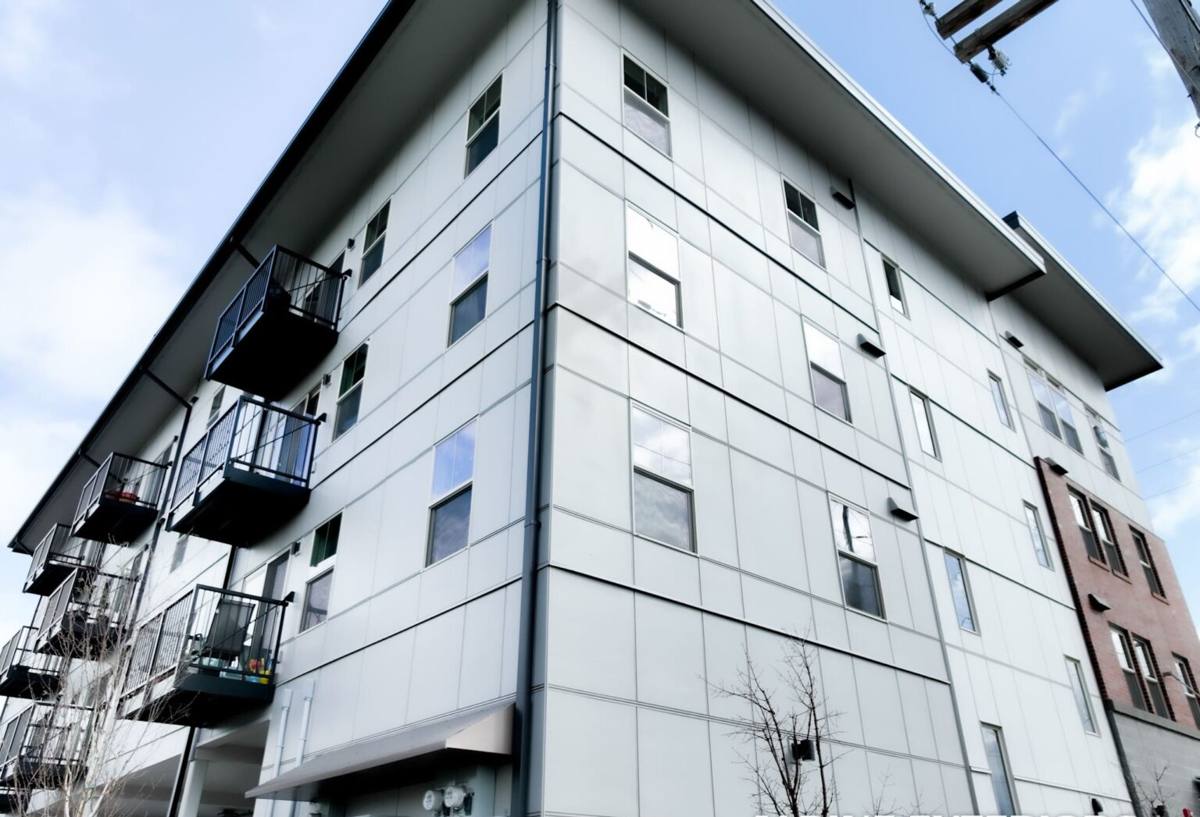
Signs a Blaine Home Needs Window Replacement
Windows rarely fail all at once. They show warning signs first, and in a salt-air, high-rain environment those signs often show up earlier than the manufacturer's warranty timeline would suggest. Homeowners in Blaine should watch for:
- Fogging or a permanent haze between panes, which means the seal has failed and the insulating gas has escaped
- Corrosion or white/green residue on aluminum tracks, hinges, or locking hardware
- Soft or discolored wood at the sill or bottom corners of the frame — a sign water has been getting in, not just condensing
- Drafts you can feel near the frame edges, especially during winter storms with wind off the water
- Windows that stick, won't latch fully, or have visibly warped frames
- Paint or finish that keeps failing in the same spot no matter how often it's touched up
- Visible gaps between the window frame and siding, or caulk that's cracked and pulling away
Any one of these can be a minor fix. Several together, especially on the water-facing side of a house, usually mean the window and its surrounding flashing have reached the end of their useful life.
Choosing Materials That Actually Hold Up Here
Not every window product sold in Washington is a good match for a coastal town like Blaine. The right choice depends on how much salt exposure a given wall faces, how much sun it gets, and how the frame material handles sustained dampness.
Frame Material Comparison
| Material | Salt Air Performance | Maintenance | Best Use in Blaine |
|---|---|---|---|
| Vinyl (quality, welded corners) | Good — won't corrode, minimal metal hardware exposed | Low — occasional cleaning | Most walls, especially water-facing sides |
| Fiberglass | Very good — stable in temperature swings and moisture | Low | Homes wanting a stiffer, more dimensionally stable frame |
| Aluminum (uncoated or poorly coated) | Poor — prone to pitting and corrosion near salt air | Higher — needs monitoring and refinishing | Generally avoided on exposed elevations |
| Wood (unclad) | Weak against sustained moisture without diligent upkeep | High — regular painting/sealing required | Only with a durable exterior cladding or in fully protected areas |
We don't install unclad wood windows or bare aluminum on exposed, water-facing walls in Blaine as a matter of professional standard — not because those products are inherently bad everywhere, but because the maintenance burden and corrosion risk in this specific climate outweighs the benefit. Where a homeowner wants a wood interior look, clad wood or fiberglass options give that appearance with better long-term moisture behavior on the exterior face.
What a Correct Installation Actually Involves
The window unit itself is only part of the job. In a high-rain, salt-air environment, the installation details around the window matter as much as the product, because that's where water intrusion actually starts.
Flashing and Water Management
Every opening needs proper flashing that directs water down and out, over the siding below, rather than letting it track behind the wall assembly. On older Blaine homes we often find flashing that was skipped entirely or installed backward, which lets driving rain work its way behind the trim during storms.
Sealants and House Wrap Integration
Caulk alone is not a moisture barrier — it's a secondary defense. The window flange needs to be integrated with the house wrap or building paper in the correct shingle-lap order (top piece over the one below it) so water sheds outward at every layer. Skipping this step is one of the most common causes of hidden rot we find behind trim on older homes.
Sill Pans and Sloped Sills
A sill pan under the window creates a dedicated drainage path for any water that does get past the exterior seal, directing it back outside instead of into the wall cavity. This is inexpensive to do correctly during installation and expensive to fix later.
Insulation Around the Frame
Gaps between the window frame and the rough opening need to be filled with a low-expansion foam or backer rod, not left open or over-packed with rigid foam that can bow the frame. Correct insulation here also cuts down on the condensation that shows up on interior glass during cold snaps.
Full-Frame Replacement vs. Insert Replacement
Not every window in a Blaine home needs the same approach. Two main methods exist, and the right one depends on the condition of the existing frame:
| Approach | What It Involves | Best For |
|---|---|---|
| Insert (pocket) replacement | New window fits inside the existing, sound frame | Frames that are still solid and square, faster and less invasive |
| Full-frame replacement | Old frame is removed down to the rough opening, new flashing and sill pan installed | Frames with rot, corrosion, water damage, or out-of-square openings — common on older water-facing walls |
Insert replacement is often the right call and costs less, but it only works if the existing frame and surrounding structure are actually dry and sound. On homes where we find soft wood or corrosion during inspection, we recommend full-frame replacement even though it costs more, because installing a new window into a compromised opening just traps the same problem behind a new frame.
Our Process
- On-site assessment — we inspect each window from both inside and outside, checking frames, sills, flashing, and the surrounding siding for hidden moisture damage
- Honest recommendation — insert or full-frame, by opening, with the reasoning explained plainly
- Product selection — matched to sun and salt exposure on that specific wall, not a one-size answer for the whole house
- Removal and prep — old units removed, rough openings checked and repaired if needed before anything new goes in
- Flashing, sill pan, and house wrap integration — done in the correct order every time, not just caulked over
- Installation and insulation — window set level and square, gaps filled correctly, hardware tested
- Exterior finish work — trim, caulking, and paint matched to the home so the new window doesn't look bolted on
- Final walkthrough — every window operated and checked with the homeowner before we call the job done
Cost Factors for Blaine Homeowners
Window replacement costs vary a lot based on scope, and we'd rather explain the variables than throw out a number that doesn't apply to your house. Broadly, a straightforward insert replacement runs less per window than a full-frame replacement with rot repair and new flashing, and larger or custom-shaped windows cost more than standard sizes.
| Factor | Why It Affects Cost |
|---|---|
| Insert vs. full-frame | Full-frame requires more labor, new flashing, and sometimes siding repair |
| Frame material | Fiberglass typically costs more than vinyl; both cost more than replacing like-for-like with basic vinyl |
| Hidden damage | Rot or corrosion found once old windows come out adds repair scope |
| Number of windows | Doing a whole elevation or whole house at once is more efficient per-window than one-offs |
| Access and height | Second-story or hard-to-reach openings take more time and equipment |
We give firm, itemized quotes after the on-site inspection, not before, because guessing at rot or flashing condition from a photo does homeowners a disservice.
Why Local Experience in Blaine Matters
A crew that mostly works inland doesn't always think about salt exposure, wind-driven rain angles, or how long a wall stays damp during Whatcom County's wetter months. Working regularly in Blaine and the surrounding coastal parts of the county means we've seen what happens to different products and installation methods over years in this specific environment — which frame finishes hold up, which flashing details actually keep water out during a real winter storm, and which shortcuts show up as rot five years later. That experience shapes the recommendations above; it's not generic advice pulled from a manufacturer's brochure.
If you're noticing drafts, fogged glass, sticking sashes, or visible wear on your windows, we're happy to take a look and give you a straightforward, no-pressure estimate — no obligation, just an honest read on what your home actually needs. Use the form below to get started.